
Can You Lose 20 Lbs in 2 Months on Semaglutide? | PeptideIQ
Can I Lose 20 Lbs in 2 Months on Semaglutide? A Realistic Timeline
Can I lose 20 lbs in 2 months on semaglutide? Yes, but it's the aggressive edge of normal, not the average. Most people on semaglutide lose 1-2 lbs per week in the first month, which puts 20 lbs by week 8 within reach mainly for people starting at a higher body weight or with strong dose adherence — for everyone else, that same 20 lbs typically lands closer to week 10-16.
One number worth anchoring to: in the landmark STEP 1 trial, participants lost an average of 15.2% of body weight over 68-104 weeks, not 8 weeks — the headline results everyone quotes are a much longer runway than most people assume.
Can I Lose 20 Lbs in 2 Months on Semaglutide? What Does the Average Timeline Look Like?
The average semaglutide user loses 1-2 lbs per week during the first four weeks, then the pace slows as the dose titrates and the body adjusts. Clinical trial data shows roughly 15-20% total body weight loss over 68 weeks — a marathon curve, not a sprint.
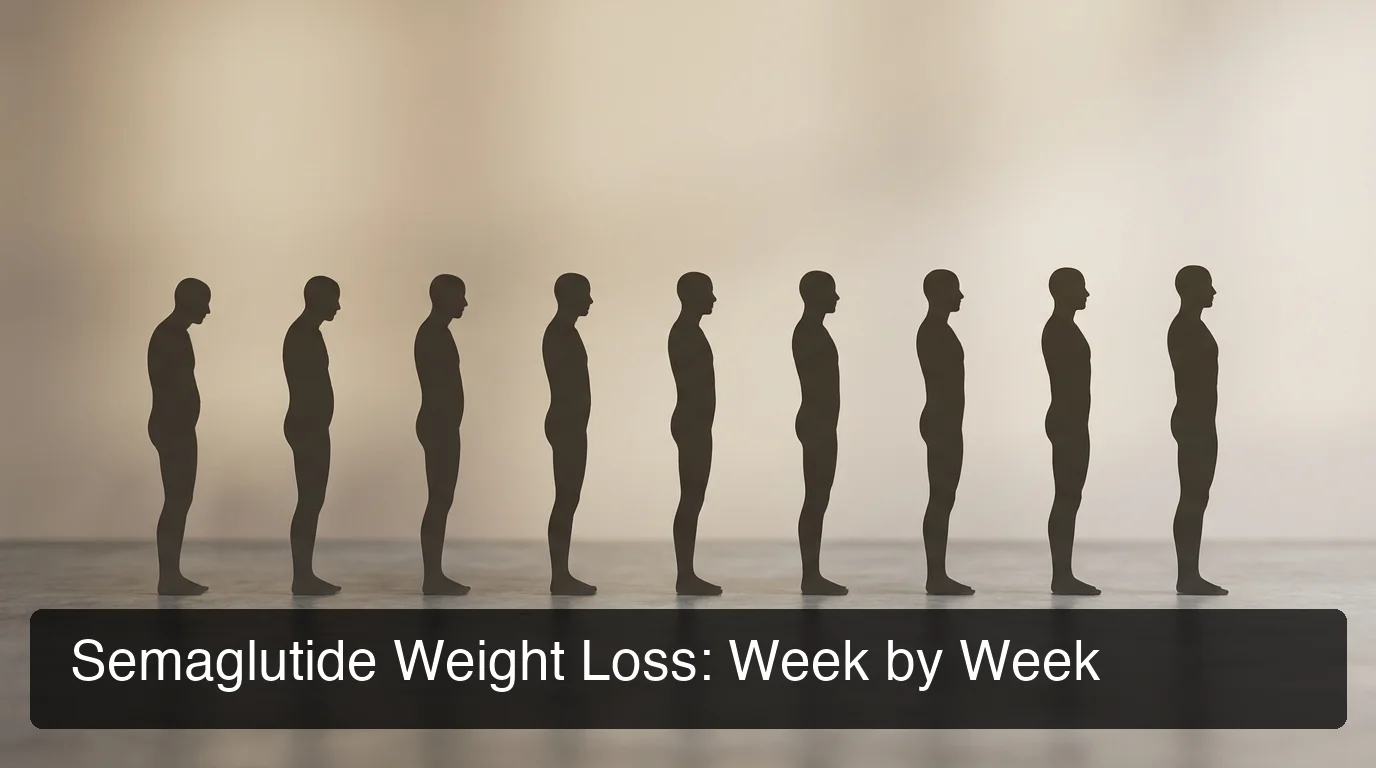 Early weeks move fast. What happens after week 8 is where most people lose the plot.
That first-month drop is partly real fat loss and partly water weight and appetite-driven calorie reduction kicking in fast. It feels dramatic because it is, relative to what comes next.
By week 8, most protocols are still in an early titration phase — many people haven't even reached their target maintenance dose yet. The semaglutide dosage chart titration schedule matters here: someone escalated to a higher dose earlier will generally see faster early loss than someone on a slow, conservative titration.
Key Takeaways
- Average semaglutide users lose 1-2 lbs per week in the first 4 weeks; 20 lbs in 8 weeks is achievable for some but not guaranteed.
- Weight loss typically plateaus after 8-12 weeks if the protocol isn't adjusted — this is normal, not failure.
- Individual results vary based on starting weight, diet adherence, dose consistency, exercise, and metabolism.
- You can't tell if you're on track without logging your actual weekly numbers against the expected curve.
- Dose adjustments and protocol tweaks are the next move once a plateau hits — measuring the impact of each change is what tells you if it worked.
How Much Weight Do People Lose Per Week on Semaglutide?
Weekly loss isn't flat across a semaglutide cycle — it front-loads hard, then tapers. Weeks 1-4 typically bring 1-2 lbs weekly, weeks 5-8 slow to roughly 0.5-1.5 lbs, and anything past week 8 depends heavily on dose, diet, and whether a plateau has set in.
Here's how that breaks down against the "20 lbs in 8 weeks" question specifically:
| Timeframe | Typical Weekly Loss | Cumulative Range at End of Period |
|---|---|---|
| Weeks 1-4 | 1-2 lbs/week | 4-8 lbs |
| Weeks 5-8 | 0.5-1.5 lbs/week | 6-14 lbs total |
| Weeks 9-16 | 0.5-1 lb/week (if progressing) | 10-20+ lbs total |
Multiple clinical sources land in the same neighborhood: most patients hit the 20-lb mark somewhere between week 10 and week 16, not week 8. Reaching it by week 8 usually means someone started heavier, tolerated dose escalation well, and paired the medication with a calorie deficit and consistent activity.
Why Does Semaglutide Weight Loss Plateau After 8 Weeks?
Weight loss slows around weeks 8-12 because the body adapts — resting metabolic rate drops as total mass decreases, and the initial appetite-suppression effect becomes the new baseline rather than a fresh shock to the system. It's a predictable physiological response, not a sign the medication stopped working.
A few mechanisms drive this:
- Metabolic adaptation. A lighter body burns fewer calories at rest, so the same intake produces less deficit than it did in week 1.
- Tolerance to appetite suppression. The dramatic hunger drop of the first few weeks moderates as the body adjusts to the drug.
- Titration lag. If the dose hasn't increased in a few weeks, the appetite-suppressing effect can flatten alongside it.
Reality check: A plateau at week 8-10 doesn't mean semaglutide stopped working — it means the easy calorie deficit from appetite suppression alone is no longer enough on its own.
Adherence complicates this further. Semaglutide side effects like nausea tend to peak in the first few weeks and then ease — but if they're severe enough to cause dose delays or skipped injections, that inconsistency shows up directly in the weight trend.
What Factors Affect Your Individual Weight Loss on Semaglutide?
Starting weight, dose titration speed, diet quality, activity level, and metabolic rate all shift how fast an individual loses weight on semaglutide — which is why two people on the identical dose can see meaningfully different 8-week numbers.
The biggest individual variables:
- Starting body weight. Higher starting weight generally means faster absolute pound loss, even at the same percentage rate.
- Dose and titration pace. Faster escalation to a therapeutic dose tends to accelerate early results, within tolerability limits.
- Diet and calorie intake. Semaglutide suppresses appetite, but it doesn't override a high-calorie diet entirely.
- Body composition changes. Not all weight lost is fat — semaglutide muscle loss can account for a meaningful share of the number on the scale, especially without resistance training or adequate protein.
- Medication and supplement interactions. Certain drugs and supplements can blunt or interfere with GLP-1 effectiveness, which is worth understanding before assuming a slow week means the protocol failed.
Sleep, stress, and hydration status round out the list — none of them dominate individually, but stacked together they explain most of the week-to-week variation people see.
How PeptideIQ Tracks Your Progress
 The expected curve is the benchmark — your actual numbers are what tell you if the protocol is working.
Knowing the average timeline is one thing. Knowing where you personally sit on it is the actual question that matters at week 5 or week 6.
PeptideIQ's progress tracking plots your weekly weight trend directly against the expected semaglutide curve — roughly 1-2 lbs a week early on, tapering toward a plateau by week 8 — so you can see in one chart whether you're ahead, behind, or right on pace. Every logged dose and weekly check-in feeds that comparison automatically; there's no manual spreadsheet math required.
That matters most right when the plateau hits. The app's weekly AI insight cards flag the slowdown in context — "your weight dropped less this week, and that's expected given your cycle day and titration schedule" — instead of leaving you to wonder if something's wrong. When a change is warranted, the same tracking shows whether a dose adjustment or diet tweak actually moved the number.
So, Can I Lose 20 Lbs in 2 Months on Semaglutide If I'm Realistic About It?
For most people, 20 lbs by week 8 is an ambitious but not average outcome — realistic for higher-starting-weight users with strong adherence, less likely for someone closer to their goal weight or on a conservative titration schedule. A 10-16 week timeline for that same 20 lbs is the more typical path.
The honest framing: semaglutide's own trial data spans 68-104 weeks to reach its full published results. An 8-week window captures the fastest, most motivating phase of the curve — but treating it as the whole story sets up a plateau at week 9 to feel like failure when it's actually on schedule.
If you're targeting a specific date — a wedding, an event, a deadline — the more useful question isn't "will I hit 20 lbs by week 8" but "what's my actual weekly rate so far, and does the math get me there by the date that matters." That's a per-week breakdown worth running against your own numbers rather than a population average.
Get Started with PeptideIQ
If you're a few weeks into semaglutide and can't tell whether your progress is on pace, guessing isn't a strategy — tracking your actual weekly trend against the expected curve is. PeptideIQ builds that comparison automatically from your logged doses and check-ins.
Download PeptideIQ on the App Store
FAQ
Can you realistically lose 20 lbs in 2 months on semaglutide?
It's possible but not typical. Most users see 10-20 lbs by week 8 depending on starting weight and adherence, with 20 lbs more commonly reached between week 10 and 16. Higher starting body weight and consistent dosing make the faster end more achievable.
How much weight do you lose in the first month on semaglutide?
Most people lose 4-8 lbs in the first four weeks, averaging 1-2 lbs per week. This early phase often reflects both appetite-driven calorie reduction and initial water weight, which is why the rate typically slows after month one.
Why did my semaglutide weight loss stop after 8 weeks?
A slowdown around week 8-12 is normal metabolic adaptation, not a stalled medication. Resting metabolism drops slightly as body weight decreases, and the initial appetite suppression becomes the new baseline — both predictable, not signs of failure.
Is 1 pound a week normal on semaglutide?
Yes. One pound per week sits squarely within the typical range, especially past the first month as the initial rapid-loss phase tapers. Consistent weekly loss, even at a slower rate, generally tracks with long-term trial outcomes.