

Semaglutide Muscle Loss: Causes & Prevention | PeptideIQ
Semaglutide Muscle Loss: Causes, Data & How to Prevent It
Semaglutide delivers real weight loss — but clinical trial data shows that roughly 40–45% of that weight reduction comes from lean mass, not fat. Knowing why this happens and how to prevent it is the difference between a successful protocol and one that leaves you lighter but metabolically weaker.
 Muscle preservation during semaglutide therapy requires targeted effort — but it's entirely achievable.
Key Takeaways
- Semaglutide causes metabolic shifts that accelerate muscle breakdown alongside fat loss, but the effect is manageable with the right protocol.
- The STEP-1 trial found approximately 45% of weight lost on semaglutide came from lean mass — 6.92 kg out of 15.3 kg total weight reduction.
- Strength training 3x/week and protein intake above 1.6g/kg bodyweight are the two highest-impact muscle preservation strategies on GLP-1 therapy.
- Muscle loss on semaglutide is partially reversible after stopping the drug, but prevention is significantly easier than recovery.
- Specific peptides like BPC-157 and TB-500 support lean mass preservation during GLP-1 cycles, particularly when stacked with resistance training.
Contents
- What Causes Muscle Loss on Semaglutide?
- How Much Muscle Do You Lose on Semaglutide?
- What's the Difference Between Semaglutide Muscle Loss and Fat Loss?
- How Can You Prevent Muscle Loss While Taking Semaglutide?
- Can You Build Muscle While on Semaglutide?
- Does Semaglutide Muscle Loss Go Away After Stopping?
- Should You Use Peptides to Prevent Muscle Loss on Semaglutide?
- Frequently Asked Questions
What Causes Muscle Loss on Semaglutide?
Semaglutide causes muscle loss primarily through an aggressive caloric deficit combined with reduced protein synthesis signaling. GLP-1 receptor activation suppresses appetite so effectively that most users fall well below the protein intake threshold needed to protect lean tissue, triggering the body to break down muscle for energy and amino acid recycling.
 GLP-1 receptor activation creates metabolic shifts that can accelerate lean mass catabolism when protein intake is insufficient.
The core mechanism is straightforward: in a caloric deficit, your body uses both fat and muscle as fuel. Semaglutide creates deficits large enough — often 500–1000 calories/day — that the body accelerates catabolism across all tissue types, not just fat stores.
Why GLP-1 Receptors Change the Equation
GLP-1 receptors are found not just in the gut and pancreas, but in skeletal muscle tissue. Emerging research suggests that semaglutide may directly influence muscle protein turnover rates — reducing both synthesis and breakdown signals, but with a net catabolic effect under caloric restriction.
Additionally, semaglutide-driven appetite suppression often leads to reduced total protein consumption. When daily protein drops below 1.2g/kg bodyweight, muscle becomes a target for energy extraction at a rate that outpaces natural maintenance.
Key insight: The appetite suppression that makes semaglutide so effective for weight loss is the same mechanism that causes users to under-eat protein — the root driver of lean mass loss.
How Much Muscle Do You Lose on Semaglutide?
Clinical data from the STEP-1 trial found that lean mass decreased by 6.92 kg against a total weight reduction of 15.3 kg — approximately 45% of weight lost was lean tissue. Across studies, the range is 25–45% of total weight loss coming from lean mass, depending heavily on whether resistance training and protein intake were part of the protocol.
This range is consistent across GLP-1 research. Mayo Clinic's review cites 25–40% of weight loss on GLP-1 therapy coming from lean mass, while Sword Health's analysis puts the upper end at 39%. Users who follow structured resistance training show lean mass loss ratios as low as 15–20%.
Comparing Semaglutide Muscle Loss Across Studies
| Study / Source | Total Weight Lost | Lean Mass Lost | % From Lean Mass |
|---|---|---|---|
| STEP-1 Trial (semaglutide) | 15.3 kg | 6.92 kg | ~45% |
| Mayo Clinic GLP-1 Review | Variable | Variable | 25–40% |
| Sword Health Analysis | Variable | Variable | Up to 39% |
| With resistance training protocol | Variable | Lower | 15–20% |
The bottom line: without targeted intervention, nearly half of weight loss on semaglutide may come from muscle. This is the single most critical data point to understand before starting GLP-1 therapy.
By the numbers: In a 15 kg weight loss, up to 6–7 kg could be lean muscle mass without a prevention protocol — roughly equivalent to the muscle on one arm and leg combined.
What's the Difference Between Semaglutide Muscle Loss and Fat Loss?
Fat loss and muscle loss feel identical on the scale but have opposite effects on long-term metabolism. Losing fat reduces stored energy and improves insulin sensitivity. Losing muscle reduces your basal metabolic rate, weakens force production, and makes weight regain significantly more likely after stopping semaglutide.
This distinction matters clinically. Every kilogram of lean mass lost lowers your resting metabolic rate — making it harder to maintain weight loss after the protocol ends. A person losing 15 kg with 45% from lean mass has a worse metabolic outcome than one losing 15 kg with only 15% from lean mass, even though the scale reads identically.
Why Body Composition Matters More Than the Scale
Muscle loss on semaglutide is associated with what practitioners call "skinny fat" — reduced scale weight without meaningful improvement in fat percentage or functional strength. Tracking lean mass alongside total weight is the only way to know which direction you're heading.
For a deeper look at how this phenomenon plays out with the branded version of semaglutide, the Ozempic muscle loss research covers the clinical evidence and prevention frameworks that apply across all GLP-1 protocols.
How Can You Prevent Muscle Loss While Taking Semaglutide?
Resistance training 3x/week and protein intake above 1.6g/kg bodyweight are the two highest-evidence interventions for preserving lean mass on semaglutide. Studies comparing GLP-1 users with and without structured resistance programs show lean mass retention improvements of 20–30 percentage points — the difference between losing 45% or just 15–20% from muscle.
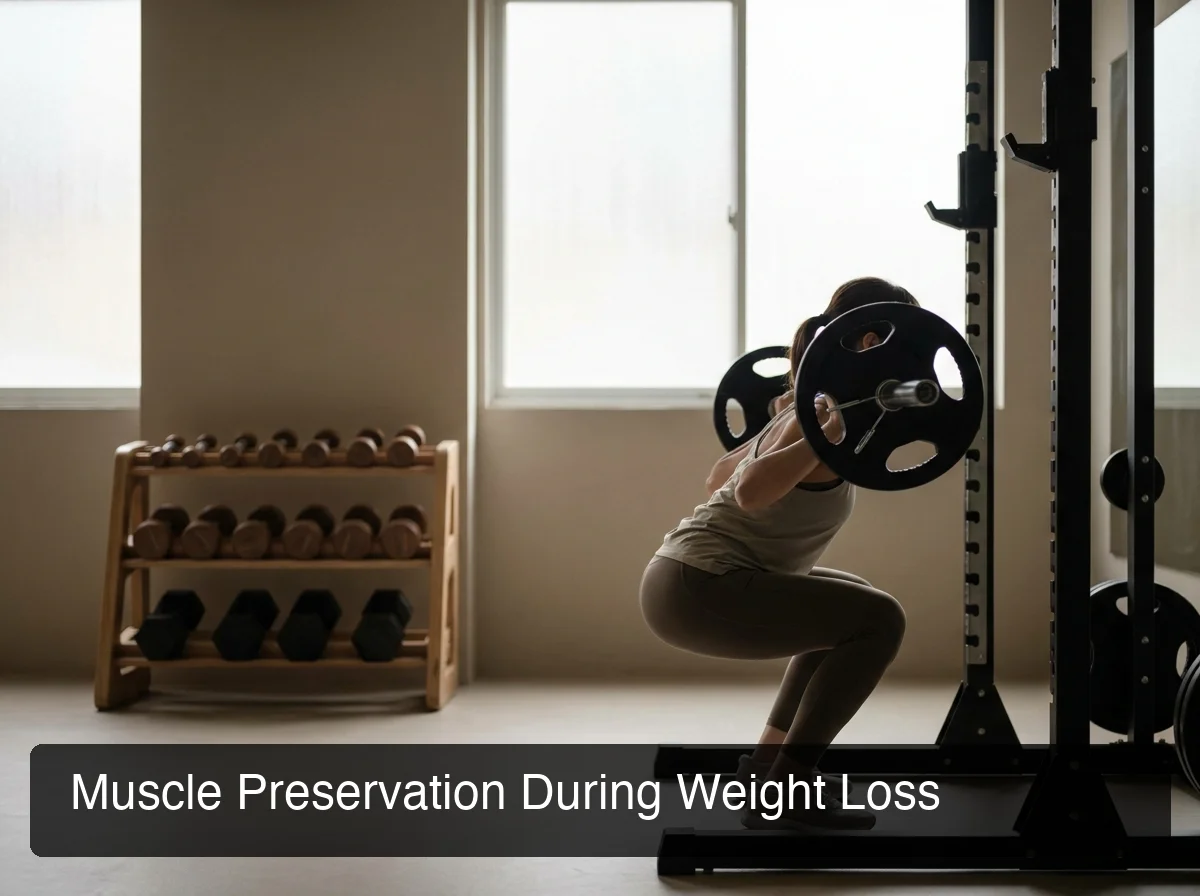 Structured resistance training 3x/week is the single highest-impact intervention for semaglutide lean mass preservation.
Protein: The Non-Negotiable Foundation
Target a minimum of 1.6g of protein per kilogram of bodyweight daily — some researchers recommend 1.8–2.2g/kg for users in active caloric deficits on GLP-1 therapy. This is harder than it sounds when appetite is suppressed.
Prioritize protein at the start of every meal. Front-loading ensures you hit your target even when semaglutide cuts the meal short, which is a consistent behavioral pattern throughout the protocol.
Resistance Training Protocol
Three sessions per week is the research-backed minimum. Compound movements — squats, deadlifts, presses, rows — engage the most muscle mass per movement and generate the strongest anabolic stimulus.
Progressive overload is key: incrementally increasing weight or reps week over week signals to your body that muscle tissue is needed for functional use, which downregulates catabolism even in a caloric deficit.
Additional Muscle-Preserving Strategies
- Sleep 7–9 hours: Growth hormone peaks during deep sleep; inadequate sleep accelerates catabolism.
- Creatine monohydrate: 3–5g/day has strong evidence for preserving lean mass during caloric restriction.
- Hydration: GLP-1 medications increase dehydration risk. Muscle cells require intracellular hydration for protein synthesis.
- Minimize alcohol: Alcohol directly inhibits muscle protein synthesis. Alcohol and body composition during GLP-1 therapy interact in ways that compound lean mass risk.
Pro tip: Front-load protein at breakfast — before appetite suppression peaks for the day. Getting 40–50g in the morning removes the evening scramble to hit your daily protein target.
Can You Build Muscle While on Semaglutide?
Building muscle on semaglutide is possible but challenging. It requires a slight caloric surplus or minimal deficit (under 300 kcal/day), protein intake of 1.8–2.2g/kg, and structured progressive resistance training. Most users in active weight-loss phases should prioritize muscle preservation, then shift to a building phase after reaching target weight.
This approach — sometimes called body recomposition — is biologically more difficult under semaglutide-induced appetite suppression, but achievable for users disciplined about protein targets and training consistency.
Who Can Realistically Build Muscle on Semaglutide?
- Resistance training beginners: New stimulus effect produces muscle growth even in a moderate deficit.
- Users early in their protocol: Before significant lean mass loss has accumulated.
- Users who dial back their dose: Reducing semaglutide allows enough caloric intake to support a slight surplus.
For experienced lifters, the realistic goal is preservation during the active weight-loss phase. Tracking lean mass weekly — not just total weight — tells you whether you're succeeding before it's too late to course-correct.
Does Semaglutide Muscle Loss Go Away After Stopping?
Muscle loss from semaglutide is partially reversible, but recovery is slower than prevention. Studies show lean mass restoration over 6–12 months post-protocol with consistent resistance training and adequate protein. However, users who lost significant lean mass often regain weight faster due to the reduced metabolic rate — turning a temporary weight loss into a net negative outcome.
This is the yo-yo rebound pattern: muscle lost during the protocol lowers resting metabolic rate, making post-cycle caloric maintenance harder. The weight that returns is typically more fat-heavy than what was originally lost.
The Recovery Timeline
Returning to previous lean mass baseline typically takes 1–2 months of consistent training. Meaningful hypertrophy gains beyond baseline take 3–6 months.
Managing the broader side effects of stopping GLP-1 therapy is covered in detail in the guide to managing Ozempic side effects — including appetite rebound and how to structure the post-cycle transition to protect lean mass.
Bottom line: Prevention is 3–4x more efficient than recovery. Every week of muscle loss during semaglutide therapy requires approximately 3–4 weeks of focused rebuilding. Protect lean mass during the cycle — not after.
Should You Use Peptides to Prevent Muscle Loss on Semaglutide?
 Specific peptides like BPC-157 and TB-500 can complement resistance training for lean mass preservation during GLP-1 therapy.
Specific peptides — particularly BPC-157 and TB-500 — have emerging evidence for supporting lean mass preservation during weight loss protocols. BPC-157 demonstrates anabolic effects on muscle tissue in preclinical models; TB-500 (thymosin beta-4) influences actin regulation and muscle fiber repair. Neither replaces training and protein, but both serve as meaningful adjuncts during the catabolic environment of GLP-1 therapy.
BPC-157 and Semaglutide
BPC-157 (Body Protection Compound) promotes tissue healing and has demonstrated anabolic effects on muscle and tendon in preclinical studies. Its oral bioavailability makes it practical to add to an existing protocol without new injection complexity.
Users who find training intensity drops during semaglutide — due to lower caloric intake — often report improved training recovery and reduced soreness when adding BPC-157 to their protocol.
TB-500 and Lean Mass Preservation
TB-500 (a synthetic analogue of thymosin beta-4) promotes cellular migration and repair, with particular affinity for muscle fiber regeneration. For users whose training capacity diminishes during GLP-1 therapy, TB-500 at standard protocols (2–2.5mg twice weekly) supports the recovery side of lean mass maintenance.
For users considering stacking CJC-1295 for weight loss alongside semaglutide, this combination can support both continued fat loss and muscle growth signaling within the same protocol window.
Tracking Is Everything
Running a peptide stack alongside semaglutide without tracking is guessing. You need to know whether lean mass metrics are actually moving in the right direction — week by week — not just what the scale shows after three months.
PeptideIQ is built for exactly this situation. The app tracks your active semaglutide cycle, logs your peptide adjuncts (BPC-157, TB-500, or CJC-1295), and surfaces AI insights specific to your cycle phase and wellness data. When your energy drops in week 4 or your progress photos stop showing definition, PeptideIQ's AI co-pilot flags it in real time — not after the damage is done.
Get Started with PeptideIQ
Managing semaglutide muscle loss requires more than knowing the science — it requires a system that tracks lean mass, monitors dose adherence and protein intake, and tells you when something is off before three months of damage accumulates. PeptideIQ is the guided AI system built for exactly this.
Download PeptideIQ on the App Store
Not sure which peptides to stack with your semaglutide protocol? PeptideIQ's AI co-pilot knows your specific cycle and can walk you through it.
Frequently Asked Questions
Can you lose muscle mass on semaglutide?
Yes. Clinical data shows that 25–45% of weight lost on semaglutide can come from lean muscle mass rather than fat, particularly without resistance training or adequate protein intake. The STEP-1 trial found approximately 45% lean mass contribution to total weight loss — nearly 7 kg of lean tissue in a 15 kg weight reduction.
How do you prevent muscle loss on semaglutide?
Resistance training at least 3x/week and protein intake above 1.6g/kg bodyweight are the two most evidence-backed prevention strategies. Creatine monohydrate (3–5g/day), adequate hydration, and consistent sleep (7–9 hours) provide additional support. Peptides like BPC-157 can serve as an anabolic adjunct when training intensity is reduced by caloric restriction.
Can you rebuild muscle after taking semaglutide?
Yes, but recovery takes 3–4x longer than prevention. Consistent resistance training and high protein intake post-cycle can restore lean mass over 6–12 months. However, the metabolic rate reduction from lost muscle makes weight regain more likely during the recovery window — which is why in-cycle preservation matters significantly.
Will semaglutide make me lose my muscle?
Semaglutide does not inevitably cause severe muscle loss, but the caloric deficit it creates — combined with appetite suppression that reduces protein intake — creates a high-risk catabolic environment. Users who follow a resistance training program and consistently hit protein targets can limit lean mass loss to under 15–20% of total weight reduction.
What is PeptideIQ and how does it help with semaglutide protocols?
PeptideIQ is an AI-powered guided system for peptide users — a mobile iOS app combining structured protocol management with a personalized AI co-pilot that knows your specific cycle, dose history, wellness data, and goals. For semaglutide users, it tracks adherence, logs peptide adjuncts, monitors weekly wellness metrics, and surfaces real-time AI insights about lean mass trends throughout the protocol.
Does semaglutide muscle loss differ from normal caloric restriction muscle loss?
Yes. Standard caloric restriction produces lean mass loss of roughly 15–25% of total weight reduction. Semaglutide's more aggressive appetite suppression creates deeper, faster deficits — driving higher lean mass proportions in weight lost compared to diet-alone protocols. The speed and depth of the deficit, amplified by reduced protein intake, explains the higher lean mass loss percentage on GLP-1 therapy.