

Ozempic Muscle Loss: Causes & Prevention | PeptideIQ
Ozempic Muscle Loss: What the Research Shows and How to Stay Lean
Ozempic muscle loss is a real and measurable problem: up to 39% of the weight you lose on GLP-1 therapy isn't fat — it's lean mass. That hidden cost undermines your metabolism, compounds rebound risk, and gets buried under headlines focused on total weight dropped.
Key Takeaways
- GLP-1 agonists like Ozempic cause muscle loss primarily by reducing appetite, leading to inadequate protein intake during weight loss.
- Research shows 25–39% of total weight lost on Ozempic is lean muscle mass — not body fat — a significant concern for long-term metabolic health.
- Adequate protein intake (1.0–1.2 grams per pound of ideal body weight) combined with resistance training can reduce muscle loss by up to 50%.
- Muscle loss slows your metabolism and increases the risk of regaining weight after stopping treatment; catching it early matters.
- Regular body composition monitoring (DEXA scan or bioimpedance analysis) helps you adjust your protocol to protect lean mass while losing fat.
Contents
- Why Does Ozempic Cause Muscle Loss?
- How Much Muscle Will You Lose on Ozempic?
- Does Ozempic Burn More Muscle Than Fat?
- What Is the Timeline for Ozempic Muscle Loss?
- Can You Prevent Muscle Loss While Taking Ozempic?
- How Can You Minimize Muscle Loss While on Ozempic?
- Should You Change Your Workout Routine on Ozempic?
- Is Ozempic Muscle Loss Permanent?
- Track Your Protocol With PeptideIQ
- Frequently Asked Questions
 Body composition analysis is the evidence-based way to measure whether you're losing fat or muscle on Ozempic.
Why Does Ozempic Cause Muscle Loss?
Ozempic (semaglutide) reduces appetite through GLP-1 receptor agonism, which creates a significant caloric deficit — often without users consciously maintaining adequate protein intake. When the body runs low on calories and protein simultaneously, it breaks down lean muscle tissue for energy alongside fat. This mechanism isn't unique to Ozempic, but its potency amplifies the effect compared to dietary restriction alone.
GLP-1 receptors are distributed throughout the gut and brain, suppressing hunger signals and slowing gastric emptying. Users often find themselves eating 500–1,000 fewer calories per day — which sounds like a win until protein intake drops proportionally.
Muscle is metabolically expensive. In a deep caloric deficit without sufficient protein, the body accelerates catabolism — breaking down lean mass for amino acids and fuel. This is the core mechanism behind ozempic muscle loss, and it's preventable with the right protocol.
This is one of several Ozempic side effects that users frequently underestimate at the start of treatment. Unlike nausea, which tends to resolve in weeks, muscle loss compounds silently over months.
Key insight: Ozempic doesn't directly attack muscle. The mechanism is caloric deficit plus insufficient protein. Fix the protocol, and you substantially reduce the loss.
How Much Muscle Will You Lose on Ozempic?
Studies show 25–39% of total weight loss on Ozempic is lean mass, not fat. A landmark Lancet Diabetes & Endocrinology analysis found fat-free mass loss consistently ranges from 25% to 39% of total weight lost over 36 weeks. Clinical trial data shows an average 13.9% loss of lean muscle mass — roughly 6–7 kg for a typical semaglutide patient losing 10% of body weight.
The range matters: at 25%, a 20-pound weight loss costs 5 pounds of muscle; at 39%, it's nearly 8 pounds — roughly the muscle mass of one arm.
Research from Baton Rouge General found semaglutide users lost an average of 60% fat and 39% lean mass, versus 20–25% lean mass loss with diet-only caloric restriction.
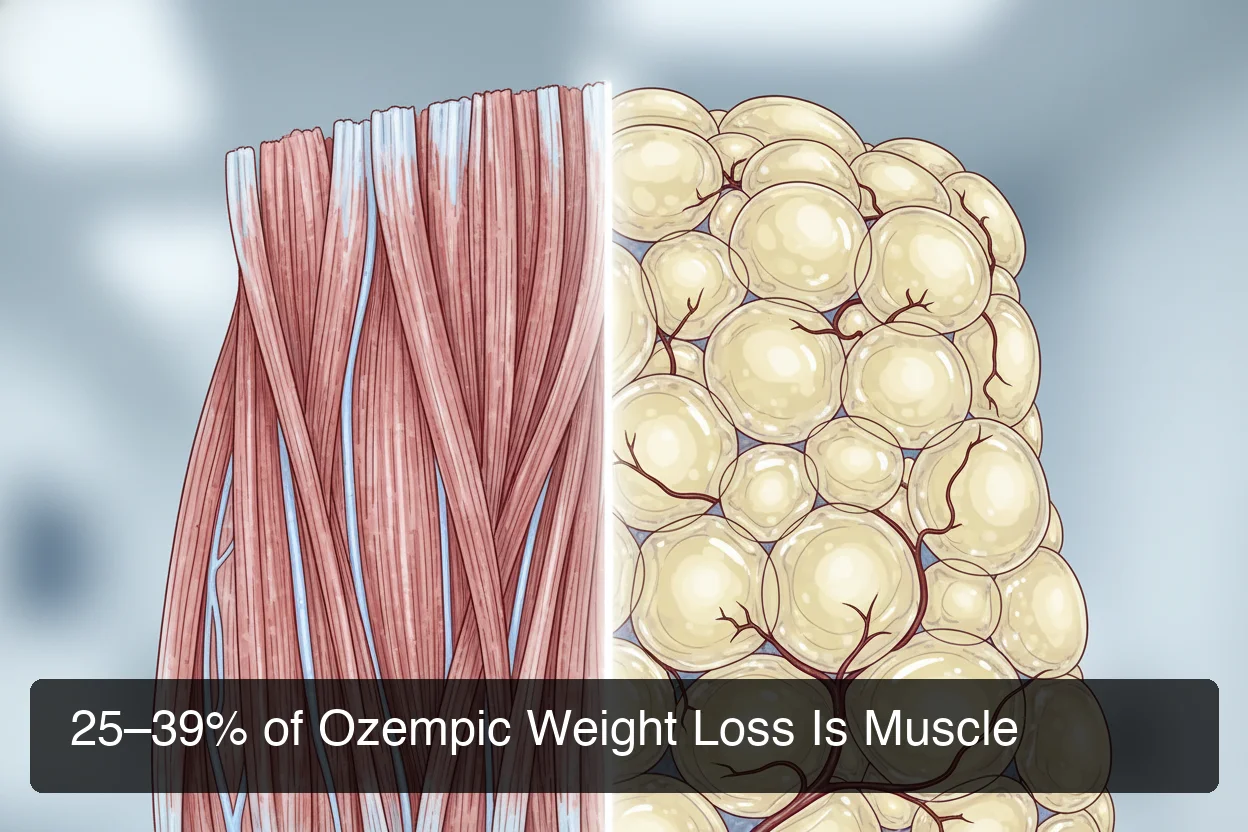 Up to 39% of Ozempic weight loss is lean mass — making protein intake and resistance training protocol essentials, not optional.
By the numbers: For every 10 lbs lost on Ozempic without intervention, 2.5–4 lbs could be muscle. Over a full treatment cycle, that's the difference between a transformed body composition and a lighter but metabolically weaker one.
Does Ozempic Burn More Muscle Than Fat?
Compared to diet-only weight loss, Ozempic appears to modestly increase the proportion of lean mass lost. Standard caloric restriction causes approximately 20–25% lean mass loss; GLP-1 agonists fall in the 25–39% range. This gap widens significantly if protein intake is low or resistance training is absent.
| Approach | Fat Loss | Lean Mass Loss |
|---|---|---|
| Diet alone (caloric restriction) | 75–80% of weight lost | 20–25% |
| Ozempic without exercise | 61–75% of weight lost | 25–39% |
| Ozempic + resistance training | ~80–85% fat | ~15–20% lean mass |
| Ozempic + training + high protein | Best composition outcome | Estimated <15% lean mass |
The third row is what you're aiming for. The data on resistance training combined with GLP-1 therapy consistently shows substantially better lean mass preservation — in some trials approaching diet-alone lean mass loss rates.
Does Ozempic Affect Heart Muscle?
GLP-1 receptors are present in cardiac tissue, and some imaging studies have noted modest cardiac muscle changes alongside significant weight loss. For overweight and obese patients, however, semaglutide's well-established cardiovascular benefits — reduced blood pressure, better lipid profiles, lower event risk — outweigh this concern in clinical guidelines.
What Is the Timeline for Ozempic Muscle Loss?
Muscle loss on Ozempic is most pronounced during the active weight-loss phase — typically weeks 4 through 20 — when caloric deficit is deepest and the rate of weight loss is fastest. The Lancet analysis tracked loss over 36 weeks, suggesting the majority of lean mass catabolism occurs in this window. After weight stabilization, the rate slows but does not stop without active protocol support.
The pattern breaks into three phases:
- Weeks 1–4: Appetite suppression kicks in, deficit deepens, protein intake drops below optimal without users noticing.
- Weeks 4–20: Active loss phase — weight drops fastest, muscle catabolism peaks without resistance training.
- Maintenance phase: Loss rate slows, but metabolic slowdown from prior lean mass loss is already compounding.
The earlier you implement the preservation protocol, the better. Waiting until you notice physical changes means weeks of unrecoverable lean mass are already gone.
Can You Prevent Muscle Loss While Taking Ozempic?
You cannot completely eliminate muscle loss on Ozempic, but research indicates you can reduce it by up to 50% with two interventions: adequate protein intake (1.0–1.2 grams per pound of ideal body weight daily) and consistent resistance training 2–3 times per week. These are not optional upgrades — they are the protocol baseline for any serious GLP-1 user concerned with long-term metabolic health.
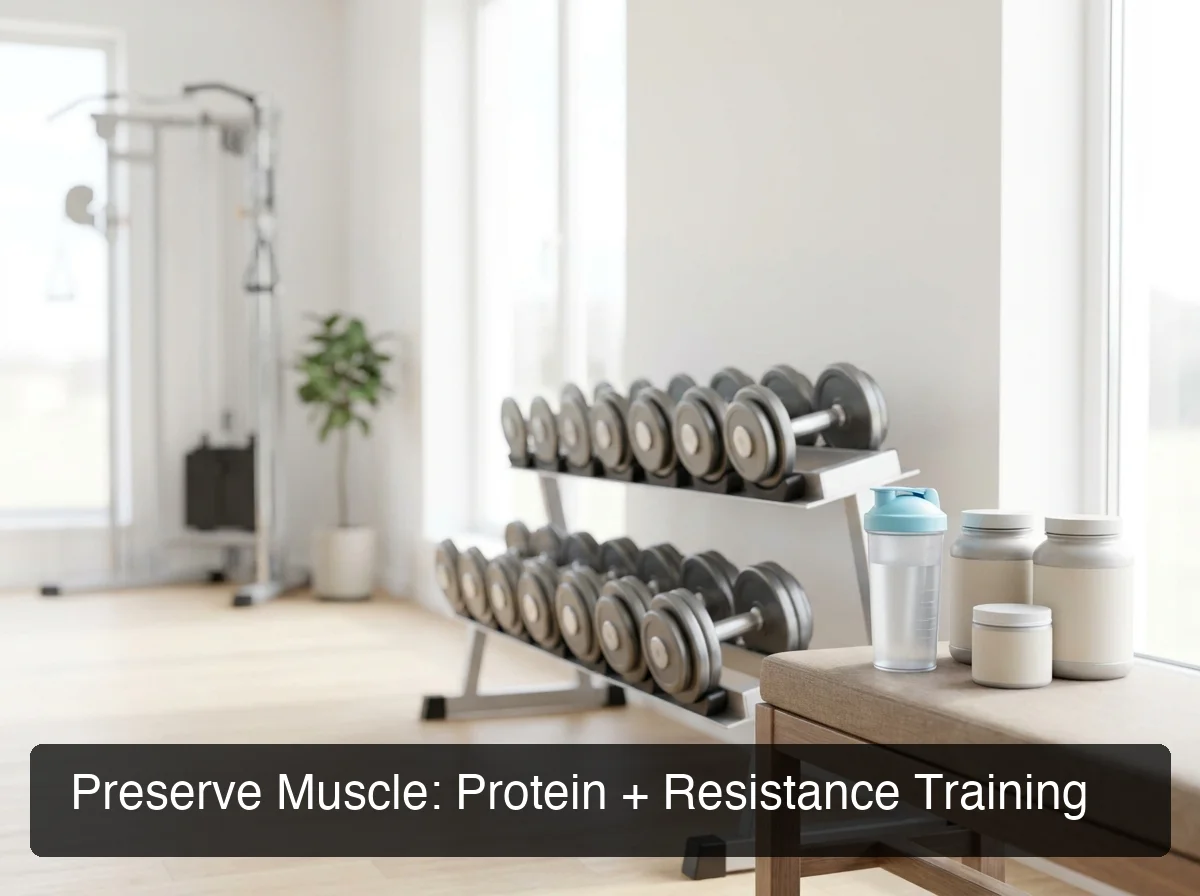 Resistance training 2–3 times per week combined with high protein intake is the evidence-based approach to preserving lean mass on GLP-1 therapy.
How Much Protein Do You Need on Ozempic?
Target 1.0–1.2 grams of protein per pound of ideal body weight daily. For a 160-pound person, that's 160–192 grams of protein — significantly more than most people naturally eat, and much harder when appetite is suppressed.
Practical strategies:
- Protein-first eating: Eat your protein portion before anything else at each meal
- Prioritize high-bioavailability sources: Eggs, meat, fish, dairy, whey isolate
- Use protein shakes: When appetite is suppressed, a 40g shake beats a full meal
- Front-load earlier in the day: Appetite typically drops in the evening on semaglutide
Note: alcohol compounds appetite suppression and displaces protein intake — users combining semaglutide with regular drinking should factor this into their daily protein targets.
What Type of Exercise Preserves Muscle on Ozempic?
Resistance training is the most effective exercise for muscle preservation during GLP-1 therapy. Compound movements — squats, deadlifts, rows, presses — recruit the most muscle mass and generate the strongest muscle retention signal.
Minimum effective dose: two resistance sessions per week. Three is meaningfully better. Cardio is not a replacement — in fact, excessive cardio deepens your caloric deficit further and accelerates the muscle catabolism you're trying to prevent.
Bottom line: Protein plus resistance training is non-negotiable on Ozempic. Users who do both retain significantly more lean mass than those relying on the drug alone.
How Can You Minimize Muscle Loss While on Ozempic?
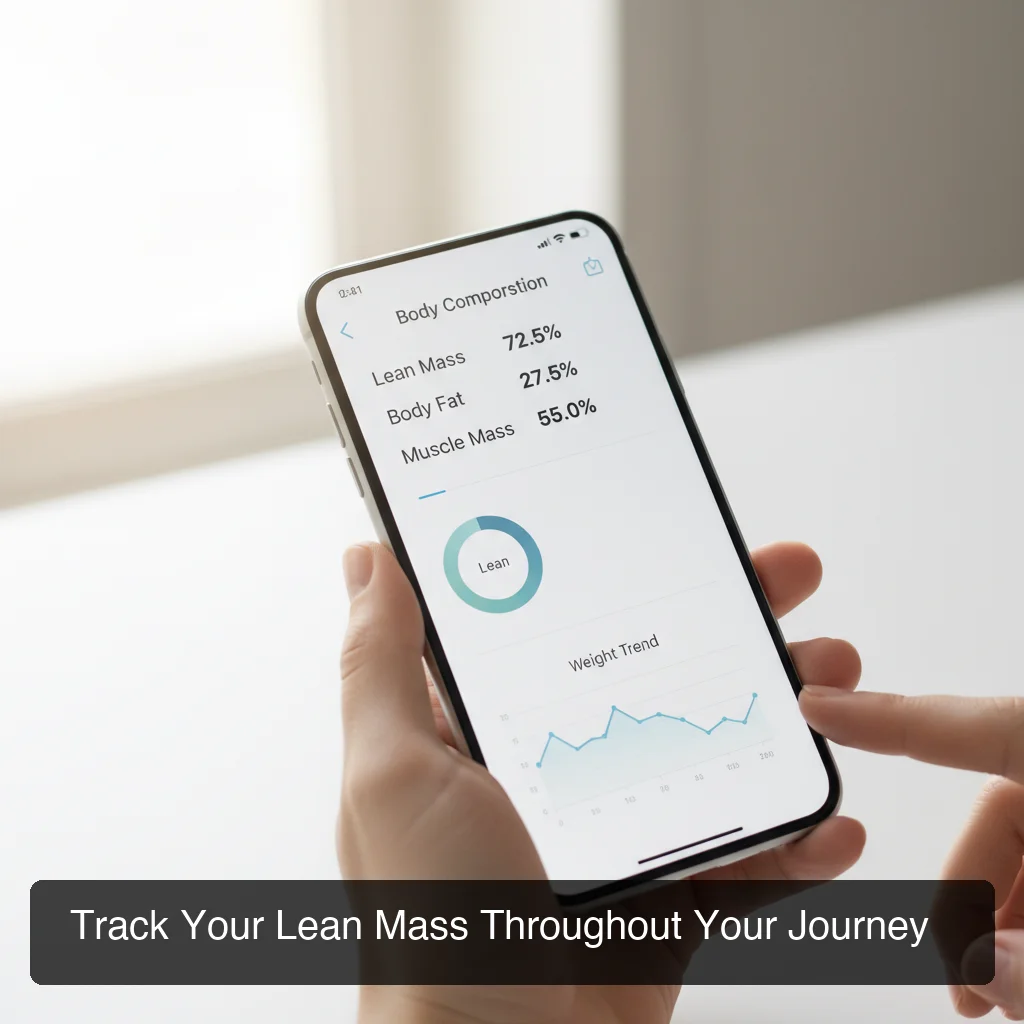 Tracking lean mass alongside weight gives you the data to course-correct before muscle loss compounds — not after.
Minimizing GLP-1 muscle loss requires a proactive protocol: 1.0–1.2 g/lb protein daily, resistance training 2–3 times per week, and regular body composition monitoring. The goal is fat loss — not just weight loss. Without tracking lean mass specifically, you cannot know whether the weight you're losing is fat or muscle.
Here's the complete protocol:
- Hit your protein target daily — non-negotiable, even on low-appetite days
- Resistance train 2–3x per week — compound movements, minimum two sessions
- Monitor body composition, not just scale weight — DEXA, bioimpedance, or circumference measurements
- Track weekly trends — catch lean mass decline early, before it compounds
- Hydrate adequately — GLP-1s are dehydrating; low hydration impairs protein synthesis
- Dose consistently — stable levels via consistent injection timing reduce appetite swings that derail protein targets
Apps like PeptideIQ — built for GLP-1 users — let you track lean mass trends, log protein intake, and monitor your protocol week by week, so you catch muscle loss before it compounds.
How Do You Monitor Body Composition on Ozempic?
- DEXA scan: Gold standard. Measures lean mass, fat mass, and bone density precisely. Expensive ($50–$150 per scan) but accurate.
- Bioimpedance scales: Consumer-grade body fat scales. Less accurate than DEXA but useful for tracking trends over time.
- Body circumference measurements: Waist, hip, thigh, arm. Low-tech, free, and surprisingly useful for tracking lean mass trends when done consistently.
- Progress photos: Side-by-side comparisons over 4-week intervals — muscle loss shows up visually before it shows up on a scale.
The best ozempic tracking apps let you log all of these data points in one place, so you can see lean mass and weight trends on the same timeline as your dose history.
Should You Change Your Workout Routine on Ozempic?
Yes — Ozempic users should shift their workout approach toward resistance training and reduce total volume during the early phase when fatigue is common. The key change is deprioritizing calorie-burning cardio in favor of muscle-preserving resistance work. Maintaining at least two resistance training sessions per week is the minimum effective dose for lean mass retention.
In the first 4–6 weeks, appetite suppression often causes energy dips. Scale back total training volume if needed — but cut cardio before cutting weights.
After stabilizing (typically week 8–12), gradually rebuild to your pre-Ozempic volume. Consistent dosing via proper injection technique also smooths the appetite suppression curve, making it easier to maintain training adherence.
Key insight: The worst trade on Ozempic is cutting resistance training to add more cardio. Cardio burns calories; resistance training sends the signal to keep muscle.
Is Ozempic Muscle Loss Permanent?
Ozempic-related muscle loss is largely reversible if addressed early. With adequate protein and resistance training during treatment, most lean mass can be preserved in the first place. After stopping semaglutide, muscle can be rebuilt — but each pound of muscle lost on treatment represents a metabolic setback that requires deliberate work to reverse.
Muscle tissue burns roughly 6–10 calories per pound per day at rest. Lose 7 pounds of lean mass and your resting metabolic rate drops 50–70 calories per day — enough to drive gradual weight regain over months at normal eating.
This is why ozempic muscle loss isn't a cosmetic footnote. Reviewing peptide safety research provides broader context on managing GLP-1 protocols responsibly for long-term outcomes.
Key insight: Every pound of muscle lost on Ozempic lowers your resting metabolic rate — making the weight harder to keep off after stopping. Muscle preservation isn't just aesthetic; it's metabolic insurance.
Track Your Protocol With PeptideIQ
Ozempic works — but unmanaged muscle loss can undo your long-term results. PeptideIQ is the guided AI system built for GLP-1 and peptide users: track lean mass trends, log protein intake, monitor your dose schedule, and get AI insights grounded in your actual data and cycle phase.
Download PeptideIQ on the App Store
Not ready to try it yet? See how the best Ozempic tracking apps compare and what features matter most for GLP-1 users managing muscle loss.
Frequently Asked Questions
How do I stop losing muscle on Ozempic?
You cannot completely stop muscle loss on Ozempic, but you can reduce it significantly. The two most effective interventions are hitting 1.0–1.2 grams of protein per pound of ideal body weight daily and completing resistance training 2–3 times per week. Together, research suggests these can cut lean mass loss by up to 50% compared to doing nothing.
Is Ozempic muscle loss permanent?
Ozempic muscle loss is not permanent if addressed proactively. Muscle lost during treatment can be rebuilt through resistance training and adequate protein after stopping. However, each pound of muscle lost slows your resting metabolic rate — creating a recovery deficit. The earlier you begin the preservation protocol during treatment, the less you'll need to reverse afterward.
Can you still build muscle on Ozempic?
Building muscle while on Ozempic is possible but difficult, because muscle hypertrophy requires a caloric surplus or at minimum caloric maintenance — conditions that conflict with Ozempic's appetite-suppressing deficit. The realistic goal for most users is muscle preservation, not growth. Elite athletes or experienced lifters with very high protein intakes may achieve modest hypertrophy, but preservation is the practical target.
How much protein should I eat on Ozempic to protect muscle?
Aim for 1.0–1.2 grams of protein per pound of ideal body weight daily. For a 160-pound person, that's 160–192 grams of protein. Given suppressed appetite, protein-first eating and protein supplementation (whey isolate, Greek yogurt, eggs) make hitting this target more practical. Protein intake is the single highest-impact dietary variable for GLP-1 muscle loss prevention.
What supplement can prevent muscle loss on Ozempic?
Research from the University of Alberta (2025) identified creatine monohydrate as a supplement that may significantly reduce skeletal muscle loss during GLP-1 therapy. Creatine supports muscle cell hydration and energy, counteracting some of the catabolic effects of the caloric deficit. It is inexpensive, well-studied for safety, and easy to supplement at 3–5 grams per day alongside your resistance training protocol.
How do I know if I'm losing muscle on Ozempic?
Scale weight alone does not distinguish fat from muscle loss. Reliable indicators include: progressive weakness in resistance training movements (lifting less than before), body composition measurements via bioimpedance or DEXA scan, visible changes in muscle definition despite weight dropping, and tracking lean mass percentage over time. Logging these metrics in a structured tracking app gives you the trend data to act before the loss compounds.