
CJC-1295 Ipamorelin Oral: Does It Work? | PeptideIQ
CJC-1295 Ipamorelin Oral: What the Bioavailability Data Shows
Peptide bonds break down in stomach acid within minutes. That single fact explains almost everything about why CJC-1295 Ipamorelin oral products underperform their injectable counterparts — and why a growing market of sublingual strips and oral sprays keeps selling anyway.
 Two administration routes, two very different absorption outcomes — the gut has no mechanism to protect an intact peptide chain.
Key Takeaways
- CJC-1295 and Ipamorelin are peptide hormones, not small-molecule drugs — stomach acid and digestive enzymes destroy the vast majority of an oral dose before it reaches the bloodstream.
- Injected CJC-1295 reaches peak bioavailability within 24–48 hours; oral and sublingual forms deliver an estimated 5–10% of that effect, based on peptide absorption research, if any measurable amount survives at all.
- No third-party clinical studies support oral or sublingual CJC-1295/Ipamorelin absorption claims — the evidence base for this peptide pair is built entirely on injectable protocols.
- Fasted administration timing matters more than the product claims on the label — both peptides require an empty stomach to work as intended, regardless of route.
- Tracking injection timing and fasting windows consistently is what separates a working protocol from a wasted vial.
Is CJC-1295 Ipamorelin Oral Effective?
CJC-1295 Ipamorelin oral products are not effective at replicating injectable results. Both compounds are peptide hormones built from chains of amino acids, and the digestive tract is specifically designed to break peptide bonds during digestion. Sublingual and oral spray formats reduce this loss somewhat by attempting absorption through mouth tissue, but independent bioavailability data for this specific route does not exist.
Compare that to subcutaneous injection, which places the peptide directly into tissue and bypasses the digestive system entirely. The difference isn't marginal — it's the difference between a therapeutic dose and a rounding error.
| Route | Estimated Bioavailability | Clinical Evidence | Typical Cost per Cycle |
|---|---|---|---|
| Subcutaneous injection | 100% (reference standard) | Extensive — GHRH/GHRP research base | $80–150/month |
| Sublingual strip/spray | ~10–15% (manufacturer claims, unverified) | None independently published | $100–180/month |
| Oral capsule | ~1–5% (theoretical, based on peptide degradation research) | None | $60–120/month |
Manufacturers selling sublingual strips rarely publish the absorption studies behind their percentage claims. The 10–15% figure that shows up in product marketing traces back to general oral peptide bioavailability research — not testing on CJC-1295 or Ipamorelin specifically.
What's the Difference Between CJC-1295 Ipamorelin Oral and Injectable Forms?
The core difference is the digestive barrier. Injectable CJC-1295 and Ipamorelin enter subcutaneous tissue and diffuse into the bloodstream within minutes, hitting therapeutic concentration reliably. Oral and sublingual forms must survive stomach acid, pepsin, and pancreatic enzymes — a gauntlet built specifically to break down protein and peptide structures into individual amino acids.
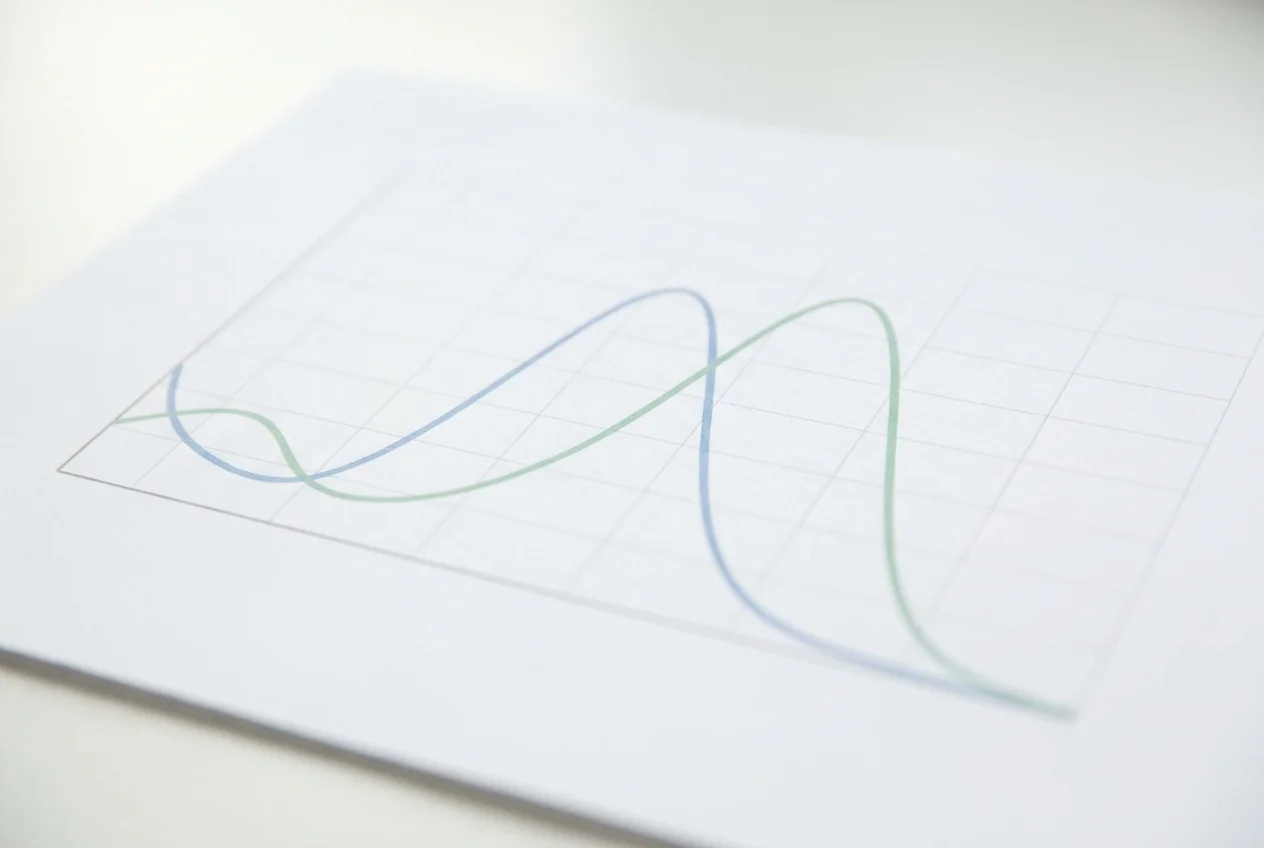 Injectable absorption climbs fast and holds; oral absorption barely registers on the same scale.
CJC-1295 is a 29-amino acid peptide. Ipamorelin is a pentapeptide — five amino acids. Size doesn't protect either one; digestive enzymes cleave peptide bonds regardless of chain length once the molecule reaches the stomach.
Our CJC-1295 peptide therapy guide breaks down clinical protocol data for the injectable route, including dose escalation and expected timelines — all built on the only administration method with a real evidence base.
Three structural facts drive the gap:
- Peptide bonds are chemically identical to the bonds enzymes like pepsin and trypsin are built to cut
- Stomach pH (1.5–3.5) denatures peptide secondary structure almost immediately on contact
- First-pass liver metabolism destroys most of whatever survives the stomach before it reaches systemic circulation
Why Does Oral CJC-1295 Lose Potency Before It Reaches Your Bloodstream?
Ipamorelin and CJC-1295 were both developed and tested as injectable compounds. Every dosing study, every half-life measurement, every mechanism paper assumes subcutaneous delivery — because that's the only route these molecules were designed around.
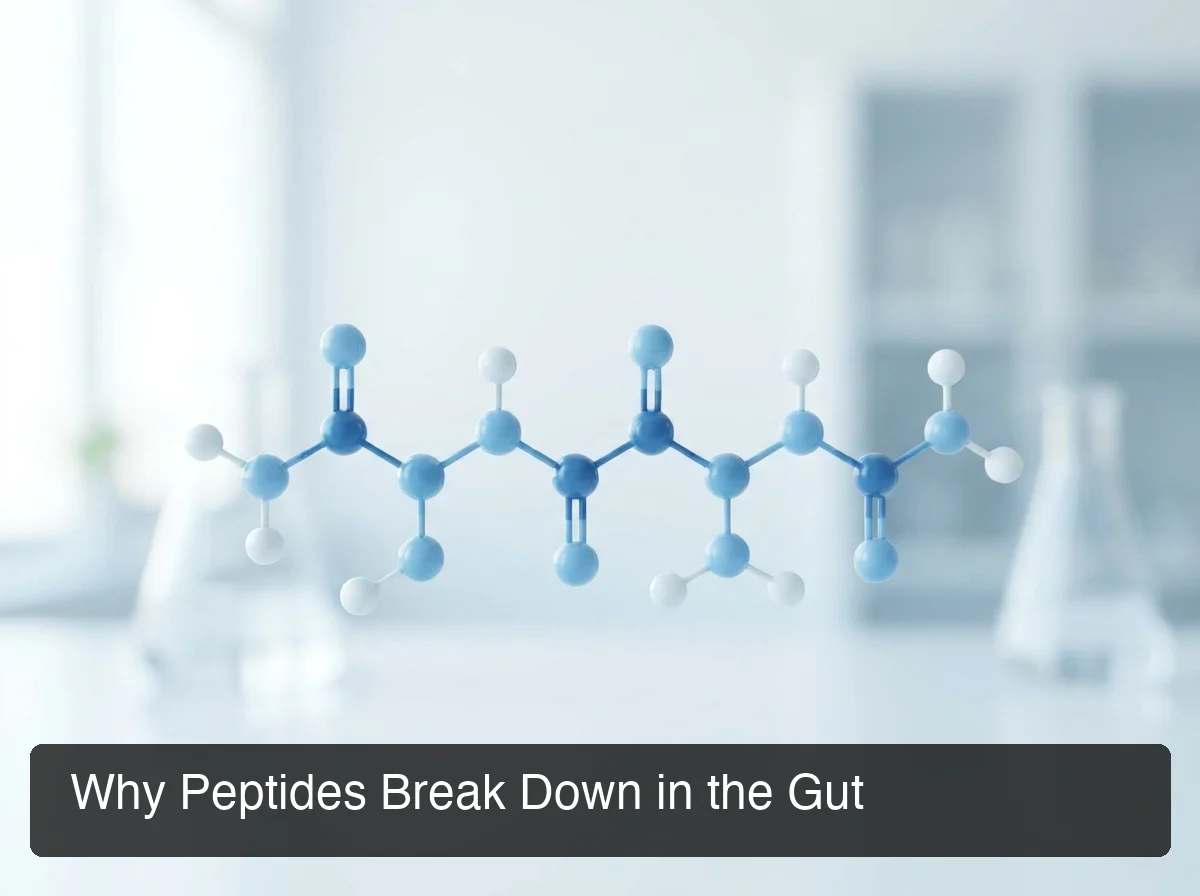 A 29-amino acid chain has no natural resistance to gut enzymes — length doesn't buy protection.
By the numbers: Peptide oral bioavailability research across dozens of therapeutic peptides puts unprotected oral absorption at under 2% in most cases. Even engineered oral peptide drugs (like oral semaglutide) require specialized absorption enhancers and still only achieve roughly 1% bioavailability compared to their injectable form.
That last data point matters. Oral semaglutide (Rybelsus) is one of the only oral peptide drugs with FDA approval — and it required a dedicated absorption-enhancer technology plus a much higher dose just to hit single-digit bioavailability. No CJC-1295 or Ipamorelin product on the market uses comparable technology.
Why Do Most Users Choose Injectable CJC-1295 Over Oral?
Most users choose injectable CJC-1295 and Ipamorelin because it's the only route with a predictable, repeatable effect. Injection guarantees the dose you draw is the dose your body receives, minus normal subcutaneous absorption variance — typically 90%+ delivered. Oral routes carry absorption variance so wide that users cannot reliably tell whether a "non-response" is a bad batch or an ineffective route.
The men's protocol side of this peptide pair backs this up directly. Our guide to CJC-1295 Ipamorelin for men covers the standard injectable stacking protocol that the overwhelming majority of users on this compound pair actually run — fasted subcutaneous dosing, once daily, before sleep.
There's also a practical logistics reason injection wins once someone commits to a real protocol. Runners who are already stacking CJC-1295 with other growth hormone peptides need predictable per-peptide absorption to interpret their results — an unreliable oral route makes multi-peptide troubleshooting nearly impossible.
How Much CJC-1295 Would You Need to Take Orally to Match an Injected Dose?
Based on available bioavailability estimates, matching a standard 100mcg injected CJC-1295 dose orally would theoretically require 2,000–10,000mcg taken by mouth — a dose no commercial oral product on the market provides, and one with unknown safety implications at that scale.
No manufacturer sells oral CJC-1295 at doses anywhere near that range, because nobody has run the safety studies to support it. The products on shelves today dose at levels roughly equivalent to a standard injectable dose — which, given the bioavailability math, likely delivers a small fraction of an already-modest amount.
This is the quiet problem with the entire oral CJC-1295 category: the dose on the label was set to match injectable protocols, not to compensate for the absorption loss oral delivery actually causes.
Does Oral CJC-1295 Ipamorelin Work for Muscle Growth?
There is no published evidence that oral or sublingual CJC-1295/Ipamorelin produces measurable muscle growth, recovery improvement, or GH elevation. Every study demonstrating GH pulse amplification, IGF-1 increases, or body composition change for this peptide pair used subcutaneous injection as the delivery method.
Our broader review of peptides for muscle growth covers which compounds have real evidence behind their muscle and recovery claims — CJC-1295 and Ipamorelin included, but only in their injectable form.
Anecdotal reports of oral CJC-1295 "working" are difficult to separate from three confounders:
- Concurrent training and diet changes made when starting any new protocol
- Placebo response, which is well-documented in supplement and peptide self-experimentation
- Products that are mislabeled or under-dosed relative to what the packaging claims
None of these explain a genuine GH-axis effect from an oral route.
How PeptideIQ Helps You Track CJC-1295 Protocols
 Fasting window guidance and dose history in one view — regardless of which administration route you're comparing.
Whichever route someone decides to run, timing execution is where most CJC-1295 and Ipamorelin protocols actually fall apart. Both peptides require a fasted state to work — a detail that gets buried in most product listings, whether the format is injectable, sublingual, or oral.
PeptideIQ's Cycle Planner activates a fasting window timer automatically the moment CJC-1295 or Ipamorelin is added to a protocol. At the scheduled dose time, a notification fires 30 minutes early, followed by a second alert once the fasted window is actually open — so the timing decision isn't left to memory. The Peptide Library entry for each compound also lists administration method as part of its typical-protocol reference, so anyone comparing injectable and oral listings sees the documented route clearly labeled before deciding.
If someone is trying an oral product anyway, the app's dose log still records exactly what was taken, when, and how the user felt afterward via the wellness sliders — turning an otherwise unverifiable anecdote into data they can actually look back on.
Get Started with PeptideIQ
Deciding between CJC-1295 Ipamorelin oral and injectable forms comes down to one question: do you want a documented, repeatable protocol, or a guess? PeptideIQ's fasting window automation and dose logging work with whichever route you choose, giving you a real record instead of a hope.
Download PeptideIQ on the App Store
FAQ
Can you take CJC-1295 orally instead of injecting it?
You can purchase oral and sublingual CJC-1295 products, but no independent research confirms meaningful absorption through this route. Peptide bonds break down rapidly in stomach acid, and sublingual absorption for a 29-amino acid peptide lacks published bioavailability data specific to CJC-1295.
What is CJC-1295 Ipamorelin in pill or capsule form?
Oral CJC-1295/Ipamorelin capsules are compressed or encapsulated versions of the same peptides sold for injection, marketed as a needle-free alternative. They typically dose at levels similar to injectable protocols, without adjusting for the substantial bioavailability loss that occurs when peptides pass through the digestive tract.
Is Ipamorelin available in an orally active form?
Ipamorelin is sold in sublingual and oral spray formats, but as a five-amino-acid peptide it remains vulnerable to the same enzymatic breakdown that affects larger peptides. No published clinical data confirms that oral Ipamorelin reaches the pituitary gland in concentrations sufficient to trigger GH release.
Do CJC-1295 and Ipamorelin need to be taken together?
No — each works through a separate mechanism and can be used alone. CJC-1295 extends GH pulse duration via GHRH receptors, while Ipamorelin increases pulse frequency via ghrelin receptors. Most protocols combine them because the effects are complementary, not because either depends on the other to function.