

GHK-Cu Side Effects: What's Normal & How to Manage
GHK Cu Side Effects: What's Normal, What's Rare, and How to Manage Them
GHK Cu side effects are commonly misunderstood — and often exaggerated by content written for topical skincare users rather than injection-based longevity protocols. If you're starting a protocol or researching what to expect, here's a clear, evidence-based breakdown.
Key Takeaways
- GHK-Cu is a bioregulatory peptide known for collagen synthesis and skin repair, with a relatively mild side effect profile in clinical use.
- The most common side effects are localized injection site reactions — redness, mild swelling, itching — which typically resolve within 24–72 hours.
- Systemic effects like headaches or mild nausea are rare and dose-dependent; starting at lower doses (1–2 mg/injection) significantly reduces risk.
- "Copper uglies" — a skin purging effect — is a topical phenomenon, not seen with injectable GHK-Cu when used correctly.
- Side effect patterns are trackable: logging injection sites, dose timing, and reactions helps identify personal dose-response thresholds.
Contents
- What Is GHK-Cu and How Does It Work?
- What Are the Most Common GHK Cu Side Effects?
- Can GHK-Cu Cause Hair Loss or Skin Issues?
- How Severe Are GHK Cu Side Effects Compared to Other Peptides?
- Is GHK-Cu Safe for Long-Term Daily Use?
- What Should You Do If You Experience GHK-Cu Injection Site Reactions?
- How Does GHK-Cu Compare to Other Longevity Peptides?
- Does Proper Injection Technique Reduce GHK-Cu Side Effects?
- Get Started with PeptideIQ
- Frequently Asked Questions
What Is GHK-Cu and How Does It Work?
GHK-Cu (glycine-histidine-lysine-copper) is a naturally occurring tripeptide-copper complex found in human plasma, saliva, and urine. It activates collagen synthesis, promotes wound repair, and modulates inflammatory gene expression. Plasma GHK-Cu levels decline sharply after age 60 — from ~200 ng/mL in young adults to under 80 ng/mL — which is why supplementation has attracted significant longevity research.
The "Cu" refers to copper(II) ions bound to the peptide. This copper binding activates GHK's biological effects — without it, the peptide's regenerative activity is minimal. It operates through multiple pathways: stimulating fibroblast activity for collagen production, regulating matrix metalloproteinases (MMPs) that break down damaged tissue, and triggering antioxidant gene expression.
GHK-Cu is used both topically (in skincare serums) and by injection (subcutaneous or intradermal). The side effect profiles for each route differ substantially. Most alarming content online is about topical use — not the injectable form that longevity users typically run.
What Are the Most Common GHK Cu Side Effects?
The most common GHK-Cu side effects are mild and localized. Injection site reactions — redness, minor swelling, and mild itching — account for the overwhelming majority of reported effects. These resolve within 24–72 hours in most users and are not a sign of toxicity. Systemic reactions are uncommon at standard protocol doses.
 GHK-Cu's side effect profile is mild compared to most pharmaceutical alternatives for collagen and longevity support.
Here's what users typically report, broken down by frequency:
Common (5–20% of users):
- Injection site redness lasting 1–12 hours
- Mild itching at the injection site
- Minor bruising from the injection itself (technique-related, not compound-related)
Uncommon (1–5% of users):
- Mild transient headache, usually on first injection days
- Slight water retention in the first week
- Temporary skin flushing (warmth or redness away from the injection site)
Rare (<1% of users):
- Nausea, most often at high doses (5+ mg/injection)
- Fatigue on injection days
- "Copper uglies" — primarily a topical phenomenon, rarely seen with SubQ injection
By the numbers: In human wound-healing studies using GHK-Cu, no serious adverse events were recorded. The peptide has a published LD50 in rodents exceeding 1,000 mg/kg — an extraordinarily wide safety margin compared to its therapeutic dose range of 1–3 mg/injection.
Can GHK-Cu Cause Hair Loss or Skin Issues?
GHK-Cu does not cause hair loss. Clinical and anecdotal evidence consistently shows the opposite: GHK-Cu stimulates hair follicle growth factors and may reverse some forms of miniaturization. Hair loss concerns likely stem from confusion with copper toxicity — which requires exposure levels far beyond any peptide protocol dose.
What Are "Copper Uglies"?
"Copper uglies" is a term for temporary skin purging some users experience during the first weeks of topical GHK-Cu serum use. It presents as increased breakouts or congestion, believed to be caused by accelerated cellular turnover. This phenomenon is specific to topical application, where peptide concentrations at the skin surface are high.
Injectable GHK-Cu does not typically cause copper uglies. Administered subcutaneously, the peptide distributes systemically at much lower tissue concentrations than topical serum. Users attributing "copper uglies" to injectable GHK-Cu are likely describing an injection site reaction, a dietary change, or coincidence.
Skin Benefits Are More Common Than Skin Problems
More commonly, injection-based users report skin improvements after 4–8 weeks: improved texture, reduced fine lines, and faster healing of minor wounds. These are consistent with GHK-Cu's established mechanism of upregulating collagen and elastin synthesis.
How Severe Are GHK Cu Side Effects Compared to Other Peptides?
GHK-Cu has one of the mildest side effect profiles in the longevity peptide category. It does not stimulate growth hormone directly (unlike CJC-1295 or Ipamorelin), does not activate GLP-1 receptors (no nausea cascade as with semaglutide), and operates through tissue regeneration pathways that avoid the systemic responses common in growth hormone peptides.
| Peptide | Route | Most Common Side Effect | Severity |
|---|---|---|---|
| GHK-Cu | SubQ injection | Injection site redness | Mild |
| CJC-1295 | SubQ injection | Water retention, fatigue | Mild–Moderate |
| BPC-157 | SubQ injection | Injection site irritation | Mild |
| Semaglutide | SubQ injection | Nausea, GI upset | Moderate |
| Thymosin Alpha-1 | SubQ injection | Injection site reaction | Mild |
GHK-Cu and Thymosin Alpha-1 sit at the low end of the severity spectrum. For users who have already dealt with CJC-1295 side effects or the GI cascade that GLP-1 protocols bring, GHK-Cu's profile will feel minimal by comparison.
Key insight: GHK-Cu's mild profile isn't a sign of weak efficacy — it reflects a mechanism that works with endogenous biological pathways rather than forcing hormonal responses.
Is GHK-Cu Safe for Long-Term Daily Use?
GHK-Cu is generally considered safe for extended protocols. It is endogenous — the body produces it naturally — which lowers immune and autoimmune reaction risk. Human studies up to 12 weeks show no liver enzyme elevation, no hormonal disruption, and no abnormal bloodwork patterns. Long-term data beyond 12 weeks is limited; most practitioners run 8–12 week cycles with rest periods.
What the Evidence Actually Shows
No human clinical trial has documented serious adverse events at typical protocol doses (1–3 mg per injection, 2–3x per week). Published wound-healing and skin repair trials consistently note excellent tolerability across all populations studied.
The main theoretical caution for long-term use is excess copper accumulation. GHK-Cu delivers copper in a stable bound complex, but users running extremely high-dose, long-duration protocols (daily injections at 5+ mg for 6+ months) should periodically check serum copper and ceruloplasmin levels as a precaution.
Who Should Exercise More Caution?
- People with Wilson's disease (copper metabolism disorder) — GHK-Cu is contraindicated
- Anyone with known copper hypersensitivity
- Pregnant or breastfeeding women (insufficient safety data)
- Users on medications that interact with copper metabolism
Bottom line: For healthy adults running standard 8–12 week protocols at 2–3 mg/injection, long-term safety risks are low. The evidence base is narrower than for pharmaceutical compounds, but the existing human clinical record shows no pattern of serious harm.
What Should You Do If You Experience GHK-Cu Injection Site Reactions?
Most GHK-Cu injection site reactions resolve on their own within 24–72 hours. The response depends on severity: mild redness or itching needs no intervention; moderate reactions (swelling >2cm, significant warmth) warrant a protocol adjustment; spreading redness with fever requires medical evaluation to rule out infection.
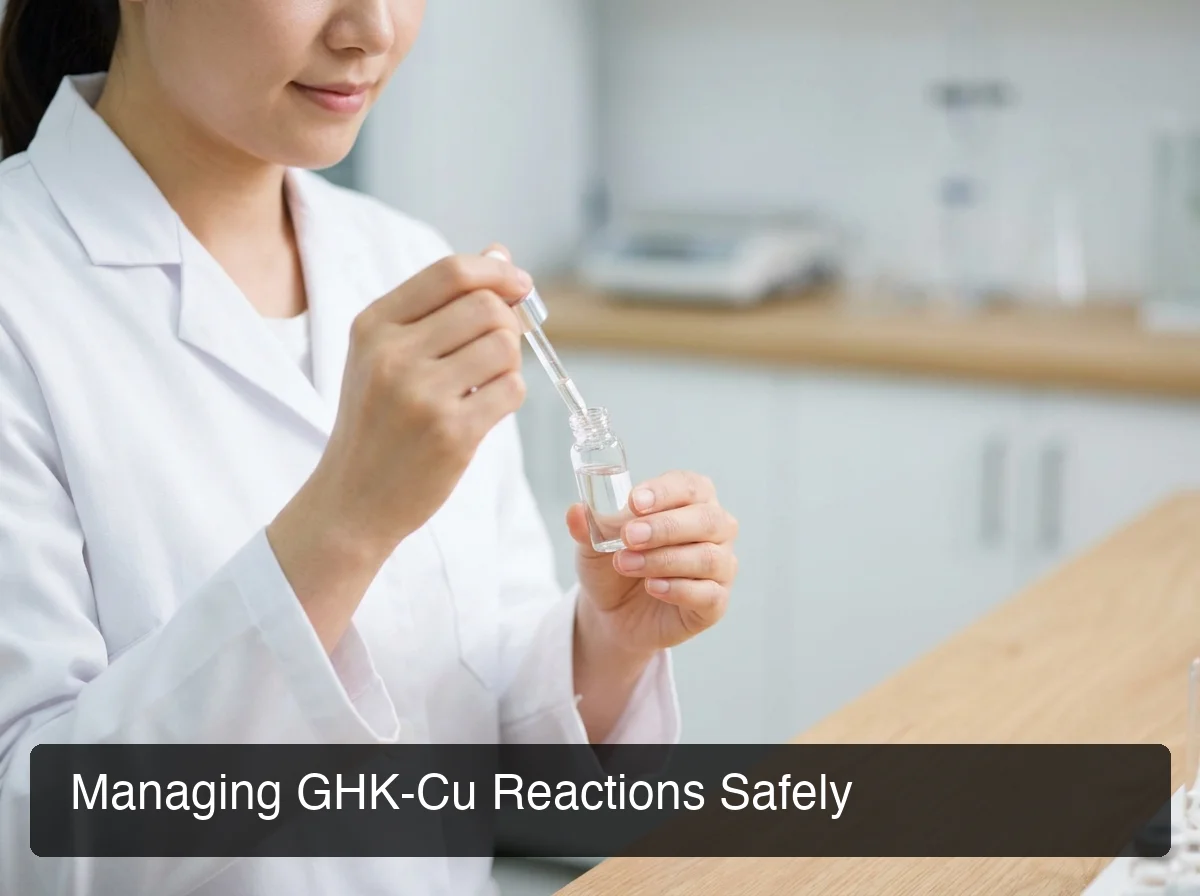 Proper injection technique and aseptic hygiene eliminate the majority of GHK-Cu site reactions.
Step-by-Step Response Protocol
-
Mild redness or itching (most common): Monitor for 24 hours. Apply a cool compress if itching is bothersome. No dose adjustment needed.
-
Moderate swelling or firmness: Rotate to a different injection site. Consider lowering concentration by adding more BAC water — a more dilute solution at the same total dose causes less local irritation.
-
Persistent reaction beyond 72 hours: Review injection depth, needle size, and site selection. Subcutaneous fat errors (too shallow or accidentally hitting muscle) are a common cause of prolonged reactions.
-
Signs of infection (spreading redness, warmth, fever): Stop injecting at that site and consult a healthcare provider. True infections are rare with aseptic technique but they do occur.
-
Systemic symptoms (hives, difficulty breathing): Seek emergency care. Anaphylaxis is extremely rare with GHK-Cu, but possible with any injectable compound.
Logging reactions precisely — site, dose volume, timing, severity — is the most effective way to identify patterns. Users who track this data can pinpoint whether reactions correlate with dose concentration, site fatigue, or specific product batches. This is where structured tracking goes from convenient to genuinely valuable.
If you're navigating multiple peptide protocols, understanding the broader landscape of peptide risks gives useful context for what's compound-specific versus technique-related.
How Does GHK-Cu Compare to Other Longevity Peptides?
 Tracking GHK-Cu dose history alongside wellness metrics helps users identify personal tolerance thresholds.
GHK-Cu occupies a unique position in the longevity peptide category: it works through tissue regeneration and gene expression modulation — not growth hormone stimulation or receptor agonism. This makes it stackable with most other longevity peptides without compounding side effect risks, and it has more human clinical data than most alternatives in this category.
GHK-Cu vs. Thymosin Alpha-1
Thymosin Alpha-1 targets immune modulation — used for viral and bacterial resistance, autoimmune conditions, and chronic fatigue. Its side effect profile is similarly mild (injection site reactions, occasional transient fatigue). The two peptides operate through entirely different pathways, making them commonly stacked for users pursuing broad longevity protocols.
GHK-Cu vs. Epithalon
Epithalon works on telomere lengthening and pineal gland function. Its side effect profile is very low as well. GHK-Cu and Epithalon are frequently combined by longevity-focused users — neither produces growth hormone fluctuations or GI disruption, key advantages for users sensitive to systemic effects.
Selecting Based on Side Effect Tolerance
| Concern | Better Option |
|---|---|
| Avoiding GI issues | GHK-Cu or Epithalon (not GLP-1s) |
| Avoiding water retention | GHK-Cu (not CJC-1295) |
| Skin, hair, and collagen | GHK-Cu > most alternatives |
| Immune system focus | Thymosin Alpha-1 > GHK-Cu |
| Minimal injection reactions | Both GHK-Cu and TA-1 are mild |
PeptideIQ includes GHK-Cu, Thymosin Alpha-1, Epithalon, and 20+ other longevity peptides in its library — each with specific side effect tracking built in. When you log a reaction, the AI co-pilot interprets it against your specific cycle phase and dose history, not a generic template.
Does Proper Injection Technique Reduce GHK-Cu Side Effects?
Yes — significantly. The majority of GHK-Cu injection site reactions are technique-related, not compound-related. Injection depth errors, repeated use of the same site, high reconstitution concentration, and inadequate site prep account for most avoidable reactions. A structured protocol eliminates a significant fraction of reported side effects.
Four Technique Variables That Matter
Injection Depth
GHK-Cu is subcutaneous — into the fat layer, not the muscle. Injecting too shallow (intradermal) causes concentrated local peptide exposure and inflammatory responses. Injecting too deep (intramuscular) drives faster absorption and potential systemic reactions.
Target: 45-degree angle into pinched subcutaneous fat. Common sites: abdomen (2+ inches from navel), outer thigh, upper outer glutes.
Reconstitution Concentration
Lower solution concentrations reduce local irritation. If you're experiencing consistent site redness, add more BAC water to lower the mg/mL — you'll inject a slightly larger volume but with less concentrated peptide per cubic centimeter of tissue.
Site Rotation
Repeated injection into the same site causes cumulative tissue trauma. Rotate across at least 3–4 sites. With 3x/week injections, each site gets used at most once per week — enough recovery time to minimize buildup.
Injection Hygiene
Wipe the injection site with an alcohol swab and let it dry fully before injecting. Injecting through wet alcohol causes a stinging reaction. Use a fresh needle every injection — reused needles increase resistance and cause more tissue trauma.
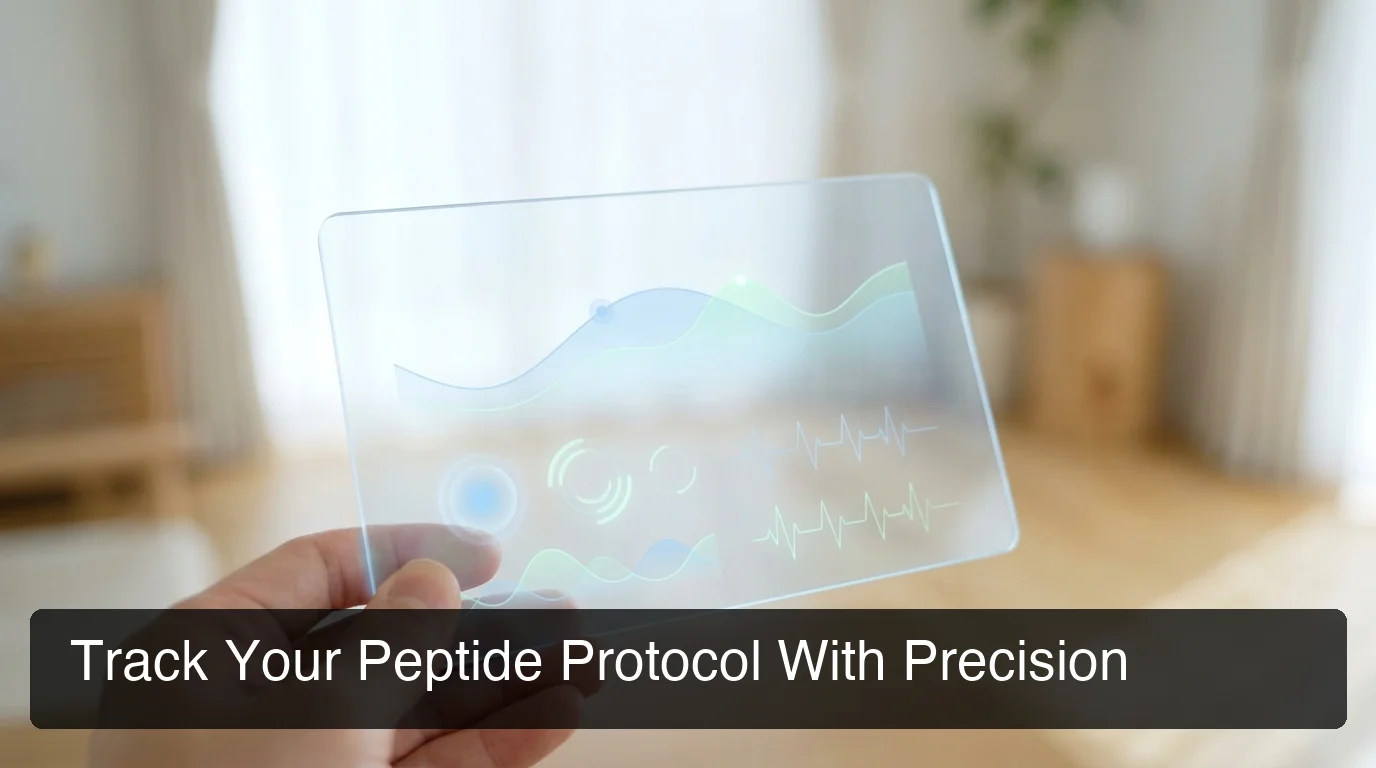 Logging injection sites and reactions builds a personal dataset that shows what's working — and what to adjust.
For users managing multiple peptides, the injection technique principles that reduce Ozempic side effects translate directly to GHK-Cu — consistent rotation and concentration management are universal.
Get Started with PeptideIQ
Managing GHK-Cu effectively means tracking dose history, injection site rotation, and reaction patterns in one place — not a Notes app or a spreadsheet. PeptideIQ logs your full protocol and gives you an AI co-pilot that interprets your data in the context of your specific cycle, not generic peptide information.
Download PeptideIQ on the App Store
Frequently Asked Questions
Who shouldn't take GHK-Cu?
People with Wilson's disease — a copper metabolism disorder — should avoid GHK-Cu entirely. Those with known copper hypersensitivity, pregnant or breastfeeding women, and individuals on copper-interacting medications should consult a healthcare provider before starting. For healthy adults, contraindications are rare.
Does GHK-Cu cause liver damage?
No liver damage has been documented in human studies at standard doses. Wound-healing and skin repair trials consistently report no elevation of liver enzymes (ALT, AST). The theoretical copper accumulation concern applies only to extreme high-dose, long-duration protocols — not standard 8–12 week cycles at 1–3 mg/injection.
How long should you take GHK-Cu?
Most practitioners run GHK-Cu in 8–12 week cycles with a 4–6 week rest period. This cycling approach is precautionary — the peptide has no documented issues with continuous use at standard doses, but cycling maintains receptor sensitivity and allows monitoring for any cumulative copper effects.
Can GHK-Cu help with hair loss?
GHK-Cu does not cause hair loss and may support androgenic hair thinning by stimulating follicle growth factors and increasing hair shaft thickness. It is not a replacement for minoxidil or finasteride in clinical hair loss treatment, but it is used as a complementary element in longevity and anti-aging protocols.
What dosage is standard for GHK-Cu and how does it affect side effects?
Standard protocols use 1–3 mg per injection, 2–3 times per week. Side effect frequency increases above 5 mg per injection. Starting at 1 mg and titrating upward over 2–4 weeks is standard practice for minimizing initial reactions while establishing personal tolerance.
Is GHK-Cu safe to stack with other longevity peptides?
GHK-Cu stacks well with most longevity peptides because it operates through tissue regeneration pathways rather than growth hormone or receptor agonism. Common stacks include GHK-Cu + Thymosin Alpha-1, GHK-Cu + Epithalon, and GHK-Cu + BPC-157 for injury healing. No major interaction concerns are documented for these combinations.
How do GHK-Cu side effects compare to BPC-157?
Both have similarly mild side effect profiles dominated by localized injection site reactions. BPC-157 is more studied for musculoskeletal repair; GHK-Cu is more studied for collagen synthesis and anti-aging. Neither has documented systemic toxicity at standard protocol doses.