
Ozempic Hair Loss: Timeline, Data & Recovery | PeptideIQ
Ozempic Hair Loss: What the Data Shows on Timeline and Recovery
5–15%. That's roughly how many Ozempic users deal with real ozempic hair loss — shedding significant enough to notice — according to dermatology reporting on GLP-1-linked telogen effluvium. For most, it starts in month two or three, not week one.
Key Takeaways
- Hair loss affects an estimated 5–15% of Ozempic users, most commonly starting between weeks 8–16 of the protocol.
- It's typically reversible but can persist for months after stopping Ozempic — thyroid health directly influences how fast it resolves.
- Telogen effluvium, the shedding pattern behind most cases, is driven by rapid weight loss, nutrient depletion, and shifting thyroid markers — all things you can log and watch over time.
- Protein intake and targeted micronutrients (zinc, iron, biotin, thyroid-support nutrients) measurably reduce severity and speed up recovery.
- Tracking side effects alongside bloodwork shows your own pattern: shedding may line up with thyroid markers, missed doses, or a stretch of low protein intake — data beats guessing.
What Is Ozempic Hair Loss and Why Does It Happen?
Ozempic (semaglutide) hasn't been shown in clinical trials to trigger hair loss directly. What triggers it is the rapid weight loss, calorie restriction, and metabolic shifts the drug produces — a stress response called telogen effluvium that affects roughly 5–15% of users, according to dermatology case reporting.
Telogen effluvium pushes hair follicles out of their normal growth phase and into a resting-then-shedding phase, all at once. It's the same mechanism seen after crash diets, major surgery, or a high fever — Ozempic just adds a new, common trigger to that list.
Reality check: The drug itself isn't the villain here. The speed of the weight loss it produces is. Slower, better-fueled weight loss tends to shed less hair, even at the same total loss.
What Does the Research Say About Ozempic and Hair Loss?
Case series and dermatology reviews link semaglutide-associated hair loss to three overlapping mechanisms: caloric restriction, nutrient depletion from reduced intake, and thyroid hormone shifts — not a direct drug-to-follicle effect. One mechanism gets skipped in most coverage: sustained calorie deficits reduce the body's conversion of T4 into active T3, and T3 is a hormone hair follicles depend on to stay in their growth phase.
| Factor | Role in Ozempic Hair Loss | What Tracking Reveals |
|---|---|---|
| Rapid weight loss (>1% body weight/week) | Primary trigger for telogen effluvium | Weight trend vs. shedding onset date |
| Reduced calorie/protein intake | Starves follicles of the building blocks for new hair | Protein logs vs. shedding severity |
| Thyroid marker shifts (TSH, T3, T4) | Caloric restriction lowers T4-to-T3 conversion; T3 regulates the hair growth cycle | Bloodwork trend vs. shedding pattern |
| Nutrient depletion (iron, zinc, biotin) | GI side effects reduce appetite and absorption | Supplement log vs. recovery speed |
| Stress and sleep disruption | Compounds the shedding trigger | Wellness sliders vs. shedding spikes |
Nobody's telling patients to watch their TSH and T3 numbers when hair starts thinning on a GLP-1 — but the mechanism points there directly.
When Does Ozempic Hair Loss Typically Start?
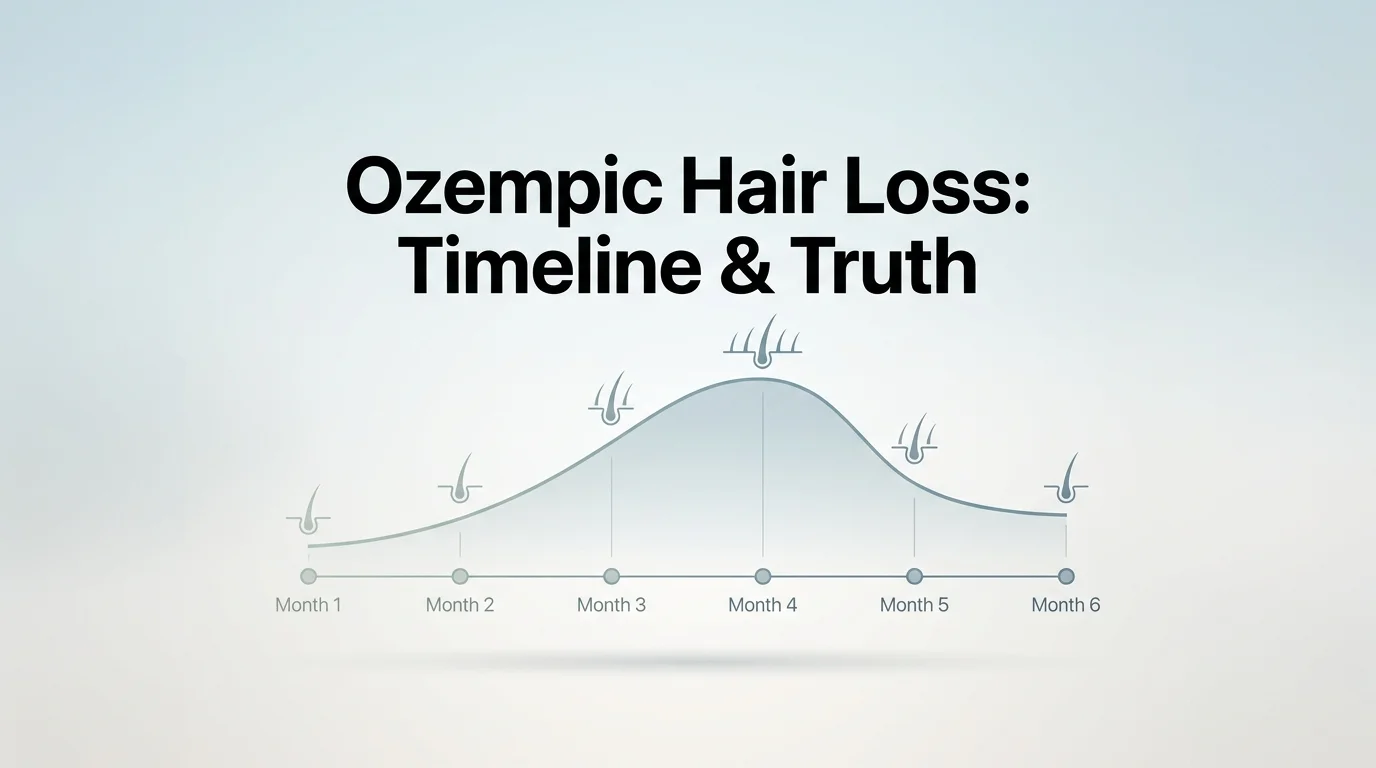
Hair shedding on Ozempic typically begins between weeks 8 and 16, matching the delay built into the hair growth cycle itself — a follicle pushed into its resting phase doesn't shed for roughly two to four months. That lag is why so many users don't connect the dots; by the time hair is visibly thinning, the trigger event (a fast weight-loss stretch, a rough GI week, a dose increase) already happened months earlier.
- Weeks 1–7: Rarely any noticeable change
- Weeks 8–16: Most common onset window for visible shedding
- Months 4–6: Peak shedding for many users, then gradual tapering
- Beyond month 6: New, active weight loss unrelated to Ozempic itself becomes the more likely cause if shedding is still increasing
How Can You Prevent or Reduce Hair Loss on Ozempic?
Slowing the rate of weight loss, hitting a protein floor of roughly 0.7–1.0g per pound of goal body weight, and correcting common deficiencies (iron, zinc, vitamin D) are the three interventions with the most consistent effect on telogen effluvium severity. None of these stop Ozempic from working — they just remove the extra stress that pushes follicles into shedding mode.
Practical steps that make the biggest difference:
- Ask your prescriber about a slower titration if weight loss is exceeding roughly 1% of body weight per week
- Prioritize protein at every meal, not just as an afterthought
- Get ferritin, zinc, and vitamin D checked if shedding starts — deficiencies are common and correctable
- Reduce heat styling and tight hairstyles temporarily; they add mechanical stress on top of the biological one
 Nutrition and stress management are the two levers with the most evidence behind them.
Some of this overlaps almost exactly with what protects muscle mass on Ozempic — protein intake and pacing the weight loss are the same two variables that show up in both problems, which isn't a coincidence.
Which Nutrients and Supplements Help Prevent Hair Loss on GLP-1s?
Protein, iron, zinc, and biotin have the most consistent evidence for supporting hair regrowth during a nutrient-depletion-driven shedding phase — thyroid-support nutrients like selenium and iodine matter specifically because of the T3 connection covered above. Supplementing blindly isn't the goal; testing first and correcting real deficiencies is what actually moves the needle.
- Protein: 0.7–1.0g per pound of goal body weight daily
- Iron/ferritin: Especially relevant for women; low ferritin is one of the most common correctable causes of chronic shedding
- Zinc: 15–30mg daily is a typical supportive range; check with a provider before combining with other minerals
- Biotin: Widely used, though evidence is strongest for people with an actual deficiency rather than everyone
- Selenium and iodine: Support T4-to-T3 conversion, tying directly back to the thyroid mechanism
This is also where Ozempic side effects tend to cluster — GI symptoms that reduce food intake are often the upstream cause of the nutrient gaps showing up in hair.
Is Hair Loss from Ozempic Permanent?
No — telogen effluvium from Ozempic is reversible in the large majority of cases once the trigger (rapid weight loss, nutrient gap, or thyroid shift) resolves or stabilizes. Regrowth typically becomes visible within 3–6 months of the shedding trigger easing, with fuller recovery by 9–12 months. Recovery speed tracks closely with how quickly thyroid markers and nutrient status normalize.
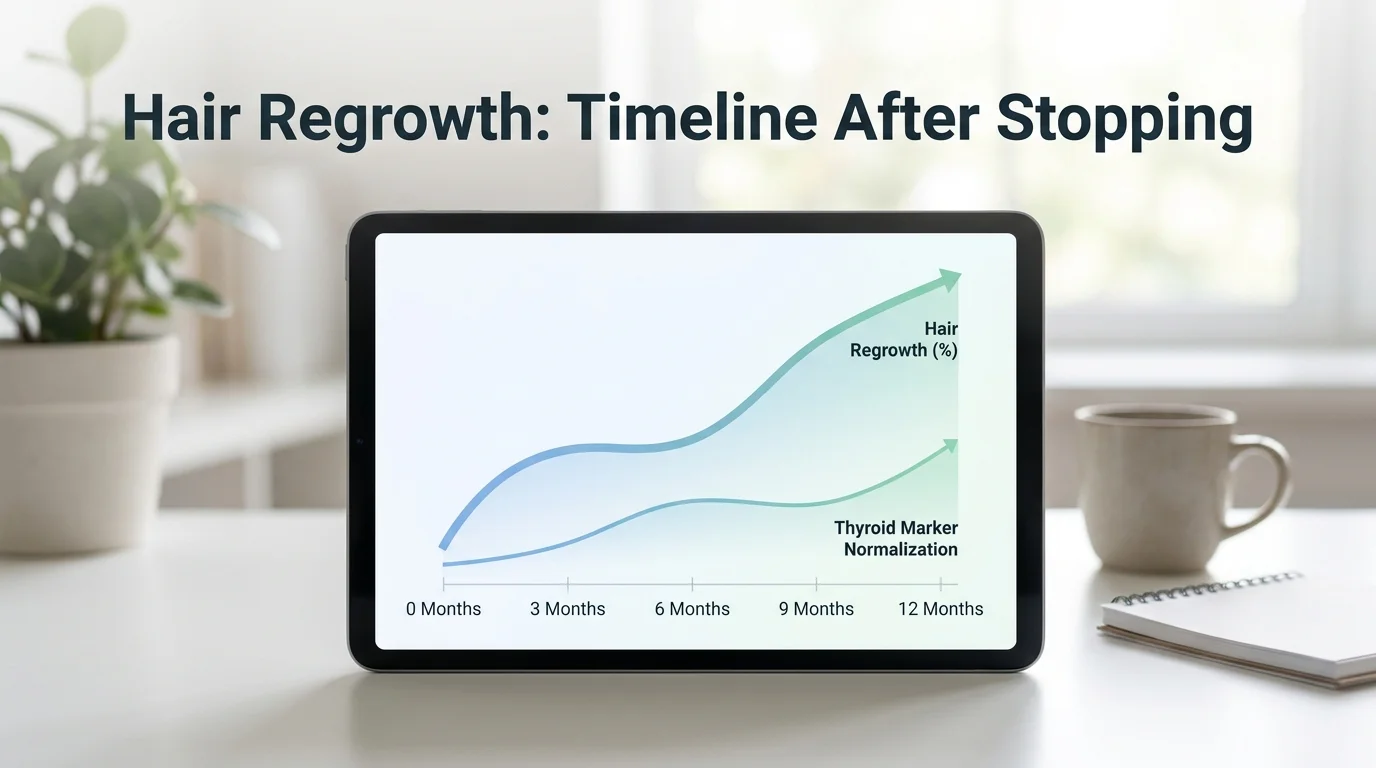 Hair regrowth and thyroid marker normalization tend to move on parallel timelines.
Semaglutide users report a very similar pattern to what's seen with Ozempic, since it's the same active compound at a different brand and titration — the shedding mechanism doesn't change based on the label on the pen.
Should You Stop Ozempic Because of Hair Loss?
For most users, no — hair loss alone isn't a reason to stop a working weight loss protocol, since it's typically temporary and manageable with nutrition and pacing adjustments. The exception is when shedding is severe, still accelerating past month six, or paired with other symptoms (fatigue, cold intolerance, weight plateau) that suggest a genuine thyroid issue worth a doctor's attention rather than a side effect to ride out.
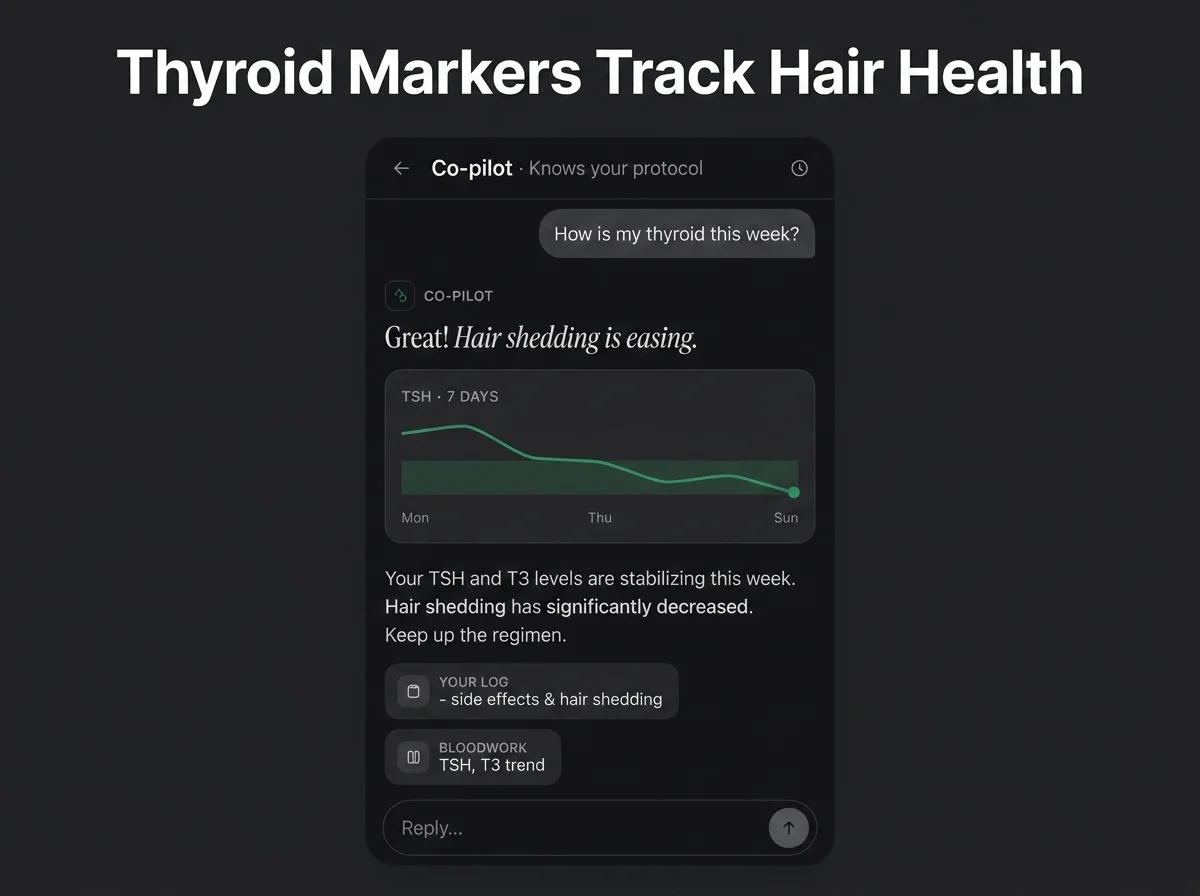 Logging thyroid markers alongside hair shedding turns a guess into a pattern you can actually see.
This is exactly the kind of decision that benefits from data instead of anxiety. PeptideIQ's bloodwork tracking module lets you log TSH, T3, T4, and other thyroid markers directly alongside your side-effects log, so if shedding starts in week 10, you can look back and see whether your thyroid numbers moved in the same window — or whether the timing points somewhere else entirely, like a rough stretch of missed meals.
How Does Tracking Hair Loss in an App Help Your Protocol?
Tracking turns "is this normal?" into an answerable question by putting your weight trend, side-effect log, and bloodwork on the same timeline — so a shedding spike can be checked against what was actually happening in your protocol that week. Most people notice hair loss weeks after the trigger, by which point memory alone can't reconstruct what changed.
A structured ozempic tracking app closes that gap by keeping dose history, wellness sliders, and lab results in one place instead of scattered across a notes app and a folder of old lab PDFs. That's the difference between "my hair is falling out and I don't know why" and "my hair loss started two weeks after my TSH came back elevated — worth a conversation with my doctor."
Get Started with PeptideIQ
Guessing whether your hair loss is normal, thyroid-related, or something else wastes the exact weeks when a pattern would still be visible. PeptideIQ logs your side effects, wellness metrics, and bloodwork together so the AI co-pilot can flag correlations you'd otherwise miss.
Not ready to try it yet? See what to look for in an ozempic tracking app before you commit to logging your protocol somewhere.
Frequently Asked Questions
Will hair grow back after Ozempic?
Yes, in the large majority of cases. Once the trigger — rapid weight loss, a nutrient gap, or a thyroid shift — resolves or stabilizes, follicles re-enter their growth phase. Visible regrowth usually starts within 3–6 months, with fuller recovery by 9–12 months depending on how quickly the underlying cause is addressed.
How long does Ozempic hair loss last?
Active shedding typically lasts 2–4 months once it starts, often peaking around month 4–5 of treatment before tapering. Total time from trigger to full regrowth commonly runs 6–12 months. Continued weight loss or unresolved nutrient deficiencies can extend the timeline.
What vitamins should I take for Ozempic hair loss?
Iron, zinc, biotin, and thyroid-support nutrients like selenium and iodine have the most consistent evidence, but testing first matters more than supplementing broadly. A basic panel checking ferritin, zinc, and thyroid markers (TSH, T3, T4) identifies which deficiency, if any, is actually driving the shedding.
Does everyone on Ozempic experience hair loss?
No. Dermatology reporting puts the rate at roughly 5–15% of users, meaning the majority never notice significant shedding. Risk rises with faster weight loss, lower protein intake, and pre-existing nutrient marginal status — factors that are largely modifiable during treatment.