
TB-500 Protocol: Dosage, Cycle Length & Timeline
TB-500 Protocol: Dosage, Cycle Length & Recovery Data
TB-500 protocols cluster around three numbers that barely move between sources: 2-4mg per week, 8-12 weeks of injections, and a 4-12 week wait before the tissue-repair effect shows up in daily life. Get any one of those three wrong and the other two stop mattering.
Key Takeaways
- TB-500 is a synthetic peptide that triggers tissue repair across the body — ligaments, tendons, muscle, and even organs — by signaling the body's healing mechanisms to accelerate recovery.
- Standard TB-500 dosing runs 2-4mg per week for 8-12 weeks, injected subcutaneously, with response timelines ranging from 2-4 weeks for minor injuries to 12+ weeks for chronic damage.
- TB-500 is systemic — it works throughout the body — while BPC-157 concentrates its effect at a specific injury site; the two are frequently stacked for complex recovery cases.
- The PeptideIQ app manages TB-500 protocol logistics automatically: injection site rotation, recovery metric logging, and weekly progress insights.
- TB-500 is not a magic pill. Results depend on consistent dosing, correct injection technique, adequate rest, and realistic timelines matched to the injury type.
What Is a TB-500 Protocol and How Does It Work in the Body?
TB-500 is a synthetic version of thymosin beta-4, a peptide the body already produces to regulate cell growth and movement during tissue repair. Instead of healing one location the way a topical treatment would, it signals cells throughout the body to migrate toward damaged tissue and accelerate the repair cascade — which is why it's classified as a systemic healing peptide rather than a localized one.
That systemic reach is what separates it from most injury-recovery compounds. Users typically report effects across several tissue types at once:
- Ligament and tendon repair, including chronic overuse injuries
- Muscle tissue recovery after strain or tears
- Reduced inflammation at multiple injury sites simultaneously
- Support for wound healing and, anecdotally, organ-adjacent recovery
Evidence level matters here — most human data on TB-500 comes from anecdotal protocol reports and animal studies rather than large clinical trials, so treat dosing figures as community-standard rather than FDA-reviewed.
How Much TB-500 Should You Take Per Week?
Standard TB-500 dosing runs 2-4mg per week, split across a loading phase and a maintenance phase — most protocols start higher and taper down once initial healing signals appear. The loading phase typically runs 2-2.5mg per injection, twice weekly, for the first four to six weeks; maintenance drops to a single weekly injection at the same per-dose amount.
| Phase | Dose per Injection | Frequency | Duration |
|---|---|---|---|
| Loading | 2-2.5mg | Twice weekly | Weeks 1-6 |
| Maintenance | 2-2.5mg | Once weekly | Weeks 7-12 |
| Total cycle | 2-4mg/week average | — | 8-12 weeks |
A 10mg vial covers roughly one loading cycle at the higher end of that range, which is why most reconstitution questions come up in week one — get the concentration math wrong at the start and every dose afterward is off. PeptideIQ's peptide dosing calculator solves that from vial size and target dose in one step, including the reverse calculator for figuring out BAC water volume from a target syringe reading.
By the numbers: A 2mg vial reconstituted with 2ml of BAC water yields a 1mg/ml concentration — meaning a 2mg dose is a full 2ml draw on a standard syringe. Miscalculating that single step is the most common TB-500 dosing error reported in community protocol threads.
How Long Does TB-500 Take to Show Results?
TB-500 recovery timelines split by injury severity: minor strains show measurable improvement in 2-4 weeks, moderate soft-tissue injuries take 4-8 weeks, and chronic or severe damage often needs the full 8-12+ week cycle before results plateau. That range is wide because it's tracking a systemic repair process, not a single localized fix.
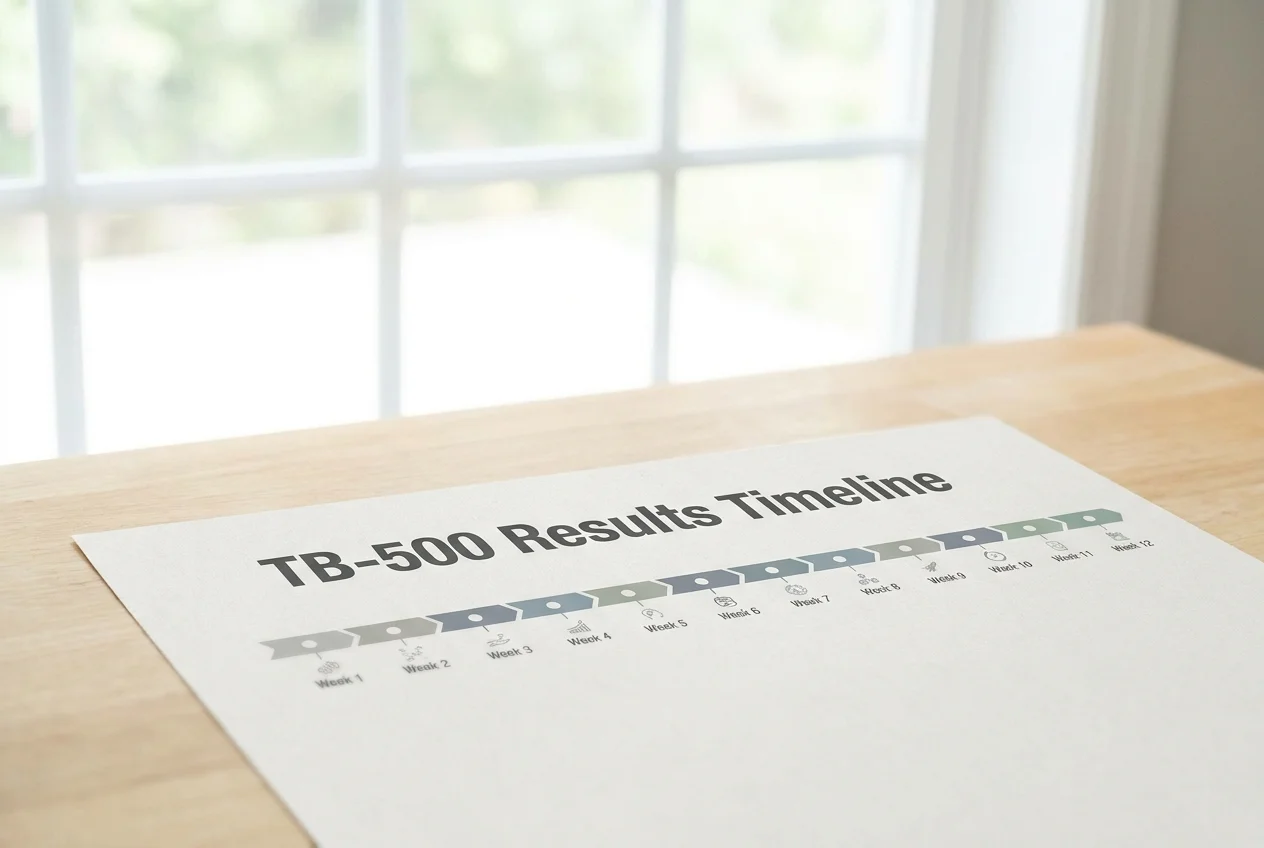 Recovery milestones typically reported across a 12-week TB-500 cycle, from early inflammation reduction to full mobility.
Milestones tend to cluster in a fairly consistent order:
- Weeks 1-2: reduced inflammation, mild soreness at injection sites
- Weeks 3-4: early mobility improvement, less pain during movement
- Weeks 5-8: measurable strength or range-of-motion gains
- Weeks 8-12: full recovery plateau for most soft-tissue injuries
Chronic injuries — the kind that have lingered for months before a user starts TB-500 — routinely run past week 12 before hitting a plateau. That's the point where most protocols reassess rather than blindly extend the cycle.
Worth knowing: The 4-12 week spread isn't inconsistency in the research — it's tracking two different processes. Minor injuries need less systemic signaling to resolve; chronic damage requires TB-500's full-body repair cascade to work through accumulated tissue changes, which simply takes longer.
Is TB-500 Better Than BPC-157 for Injury Recovery?
Neither peptide is categorically "better" — TB-500 works systemically across the whole body while BPC-157 concentrates its healing signal at a specific injury site, so the right choice depends on whether the injury is diffuse or localized. TB-500's broader reach also means a slower onset; BPC-157's localized concentration tends to show results faster.
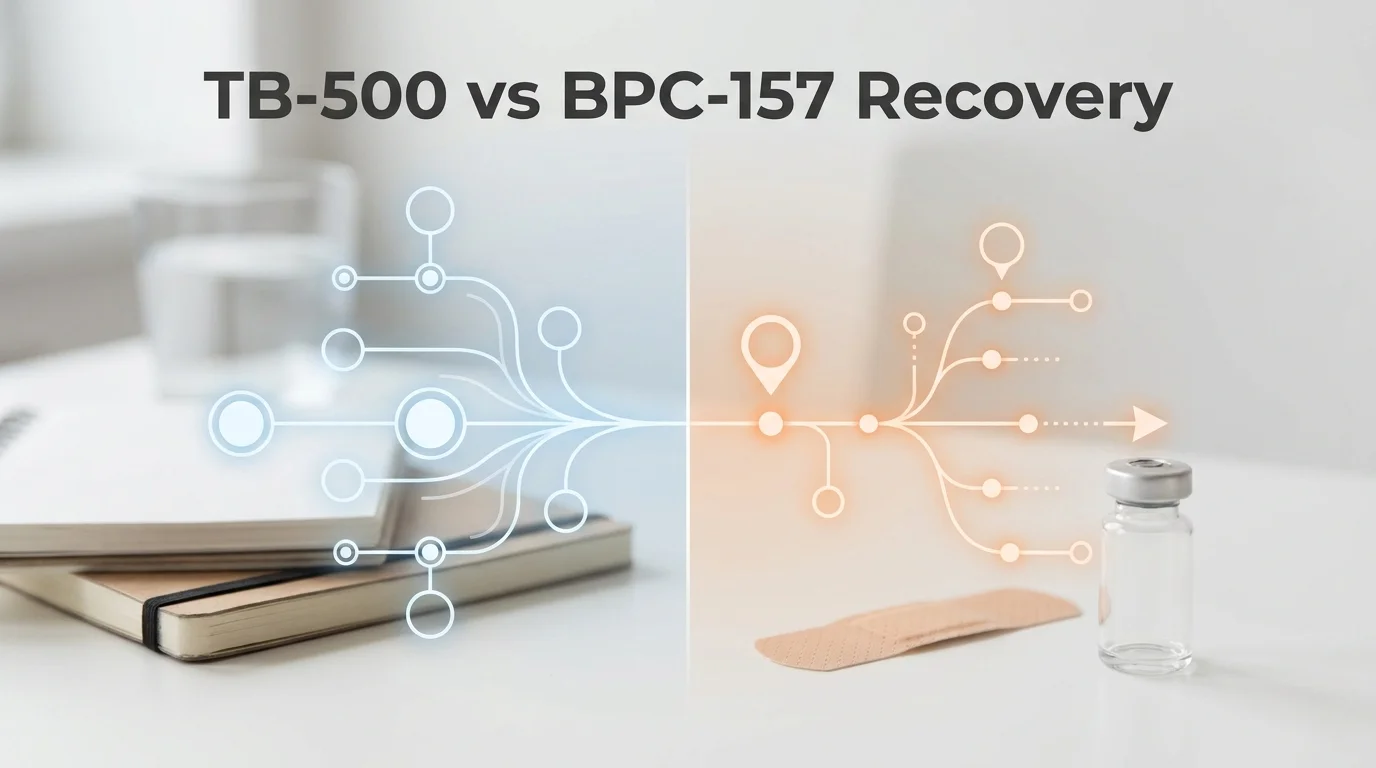 TB-500's systemic pathway (left) builds gradually across the body, while BPC-157's localized pathway (right) concentrates at the injury site.
| Factor | TB-500 | BPC-157 |
|---|---|---|
| Healing scope | Systemic — full-body signaling | Localized — concentrated at injury site |
| Typical onset | 4-12 weeks | 2-4 weeks |
| Standard dose | 2-4mg per week | 250-500mcg per day |
| Best fit | Multiple or diffuse injuries | Single, specific injury site |
This contrast is exactly why the two get stacked so often — a combined protocol pairs BPC-157's faster localized relief with TB-500's slower, broader repair signal. Our BPC-157 and TB-500 stack guide walks through timing both peptides in the same cycle, and the BPC-157 TB-500 peptide science breakdown covers the mechanism differences in more depth.
How Do You Follow a TB-500 Protocol for Mixing and Injecting?
TB-500 arrives as a freeze-dried powder that must be reconstituted with bacteriostatic (BAC) water before injecting subcutaneously — typically into the abdomen, rotating sites to avoid tissue irritation. Getting the reconstitution ratio right determines every dose that follows, since it sets the concentration you're drawing from for the entire vial.
The basic sequence:
- Add BAC water to the vial slowly, down the side glass, without shaking
- Let the powder fully dissolve before drawing any dose
- Draw to the calculated syringe mark for that day's dose
- Inject subcutaneously and rotate the site from the last injection
First-timers tend to freeze at the reconstitution step specifically — it's the same math anxiety that shows up across the entire peptide-beginner cluster. If TB-500 is your first peptide, our beginner's guide to peptide basics covers reconstitution, injection technique, and storage from zero before you touch a syringe.
What Are the Side Effects of TB-500?
Most TB-500 side effects are mild and localized: injection-site soreness, temporary fatigue, and occasional headache in the first days of a new dose. Systemic peptides tend to produce systemic side effects, though they're usually minor compared to the healing benefit users report.
Commonly logged side effects, from most to least frequent:
- Injection site soreness or mild redness
- Fatigue in the first 24-48 hours after a dose
- Headache, typically resolving within a day
- Water retention or mild bloating
- Rarely, flushing or dizziness shortly after injection
Evidence on TB-500's long-term safety profile is thin — most of what's known comes from user reports rather than controlled trials. That gap is exactly why evidence-honest sourcing matters before starting any protocol; our peptide therapy safety guide breaks down what the research actually supports versus what's anecdotal.
Should You Stack TB-500 With Other Peptides?
TB-500 is most commonly stacked with BPC-157 — nicknamed the "Wolverine stack" — pairing systemic repair with localized injury-site healing in a single protocol. For users focused on muscle recovery rather than injury repair specifically, TB-500 also gets paired with growth-hormone-stimulating peptides.
Common combinations reported in protocol communities:
- TB-500 + BPC-157: full-body plus localized recovery, the most-cited combination
- TB-500 + CJC-1295/Ipamorelin: recovery support layered with growth-hormone stimulation for muscle repair
- TB-500 alone: preferred when the injury is diffuse or the user is avoiding stacking complexity early on
Curious how growth-hormone peptides compare to each other before adding one to a TB-500 stack? Our breakdown of GHRP-2 vs Ipamorelin covers the practical differences.
Why PeptideIQ Matters for TB-500 Users
Running a TB-500 protocol by memory means guessing whether last week's dose actually moved the needle on recovery.
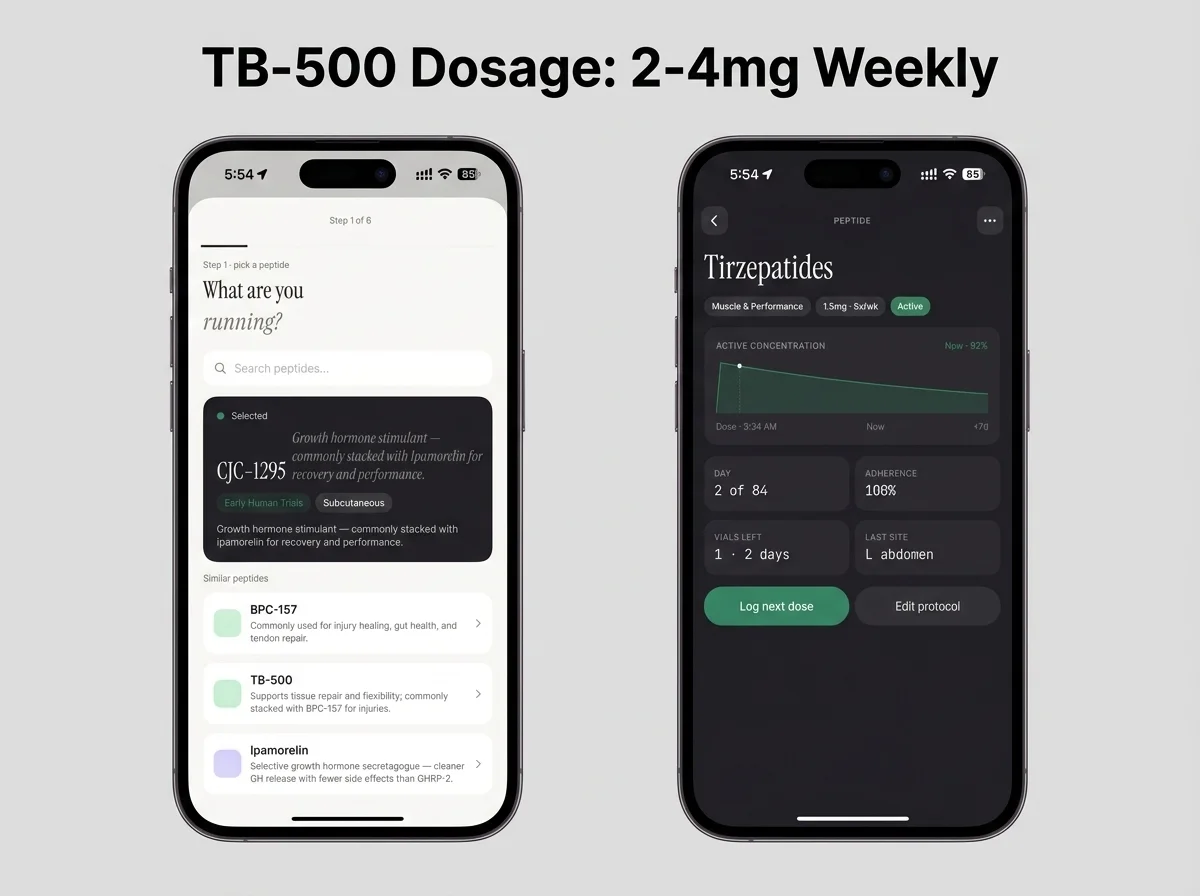 Selecting TB-500 in the protocol builder, next to the active concentration view that tracks dose timing and adherence.
PeptideIQ's protocol builder lists TB-500 with its standard dosing range pre-loaded, then tracks every injection against it — logging site rotation, adherence percentage, and days remaining in the current vial. The active concentration view shows how much of the last dose is still circulating, so a Week 4 dose isn't stacking on top of an unknown baseline. Weekly AI insight cards translate that raw log into a plain-language read on whether recovery is tracking ahead of or behind the typical timeline for the injury type.
Get Started with PeptideIQ
TB-500 protocols run 8-12 weeks with dosing that shifts between phases — exactly the kind of multi-week tracking a notes app or spreadsheet struggles to hold. PeptideIQ logs every injection, rotates sites automatically, and flags when recovery metrics stall against the expected timeline.
Download PeptideIQ on the App Store
Frequently Asked Questions
What is the standard protocol for TB-500 dosing?
Most protocols run a loading phase of 2-2.5mg twice weekly for four to six weeks, then taper to 2-2.5mg once weekly for maintenance. Total weekly dosing lands in the 2-4mg range across an 8-12 week cycle.
How often should TB-500 be injected each week?
During loading, twice weekly is standard; maintenance drops to once weekly. Daily dosing isn't part of typical TB-500 protocols — the peptide's effect builds over days, not hours, so frequent small doses don't add benefit over the twice-weekly schedule.
Does TB-500 affect testosterone or hormone levels?
TB-500 doesn't target hormone pathways directly — it's a tissue-repair peptide, not a hormone or growth-hormone secretagogue. Most reports describe no meaningful impact on testosterone, though anyone on a hormone-sensitive protocol should track bloodwork alongside any new peptide.
Can TB-500 be dosed daily instead of weekly?
Some aggressive loading protocols for severe injuries use smaller daily doses instead of two larger weekly ones, but total weekly volume stays in the same 2-4mg range. Daily dosing doesn't accelerate the underlying repair process — it just changes how the same total dose is split.