
Best Peptides for Muscle Growth & Fat Loss | PeptideIQ
Best Peptides for Muscle Growth and Fat Loss: The Data-Backed Rankings
Two peptide classes dominate every "best peptides for muscle growth and fat loss" search: growth hormone secretagogues and GLP-1 agonists. Only one of them does both jobs at once — the other requires you to protect muscle yourself, usually through protein and resistance training most people skip.
 The two peptide categories that show up in this search solve genuinely different problems.
Key Takeaways
- CJC-1295 combined with ipamorelin is the most research-backed pairing for building muscle and losing fat at the same time in lean, active users.
- Semaglutide and tirzepatide are excellent at fat loss but need deliberate protein intake and resistance training to avoid losing muscle along the way — they aren't a standalone "both" solution.
- The strongest protocols layer three peptide types: growth peptides for muscle, GLP-1s for fat loss, and BPC-157 or TB-500 for recovery so training can keep up with the changes.
- You cannot tell which peptide in a multi-peptide stack is actually driving results without logging doses, side effects, and body composition metrics separately.
- Dual-goal stacking is an experienced-user move — beginners get more reliable data starting with a single peptide first.
What Are the Best Peptides for Muscle Growth and Fat Loss?
The best peptides for muscle growth and fat loss are CJC-1295 and ipamorelin for simultaneous body recomposition, semaglutide or tirzepatide for fat-loss-dominant results, and tesamorelin specifically for visceral fat reduction. Each works through a different pathway — growth hormone release versus GLP-1 receptor activation — so the right pick depends on which goal matters more to you right now.
Understanding what a peptide actually is — a short chain of amino acids that signals a specific biological process rather than replacing a hormone outright — explains why these compounds behave so differently from one another. See what is a peptide for the mechanics of half-life and receptor binding referenced throughout this comparison.
| Peptide | Primary Goal | Typical Dose | Evidence Level | Best For |
|---|---|---|---|---|
| CJC-1295 + Ipamorelin | Muscle + fat loss (dual) | 100mcg CJC-1295 / 200-300mcg ipamorelin nightly | Early human trials | Lean, active users wanting both |
| Semaglutide | Fat loss (primary) | 0.25-2.4mg weekly | FDA-approved | Fat-loss-first users |
| Tirzepatide | Fat loss, partial muscle preservation | 2.5-15mg weekly | FDA-approved | Aggressive fat loss |
| Tesamorelin | Visceral fat + GH support | 1-2mg daily | FDA-approved (lipodystrophy) | Targeted abdominal fat |
| BPC-157 + TB-500 | Recovery add-on | 250-500mcg BPC-157 / 2-4mg TB-500 weekly | Strong animal evidence | Supporting a growth/fat-loss stack |
Which Peptides Build Muscle and Burn Fat at the Same Time?
CJC-1295 and ipamorelin, dosed together, are the pairing most consistently reported to build lean mass and reduce fat simultaneously — because both raise growth hormone and IGF-1 output, which drives protein synthesis while also increasing lipolysis. CJC-1295 extends the pulse of growth hormone release; ipamorelin triggers it without meaningfully raising cortisol or appetite, which is the complaint tied to older secretagogues like GHRP-6.
The catch is timing. Both peptides work best fasted, since food — particularly carbohydrates and fat — blunts the growth hormone pulse they're designed to trigger.
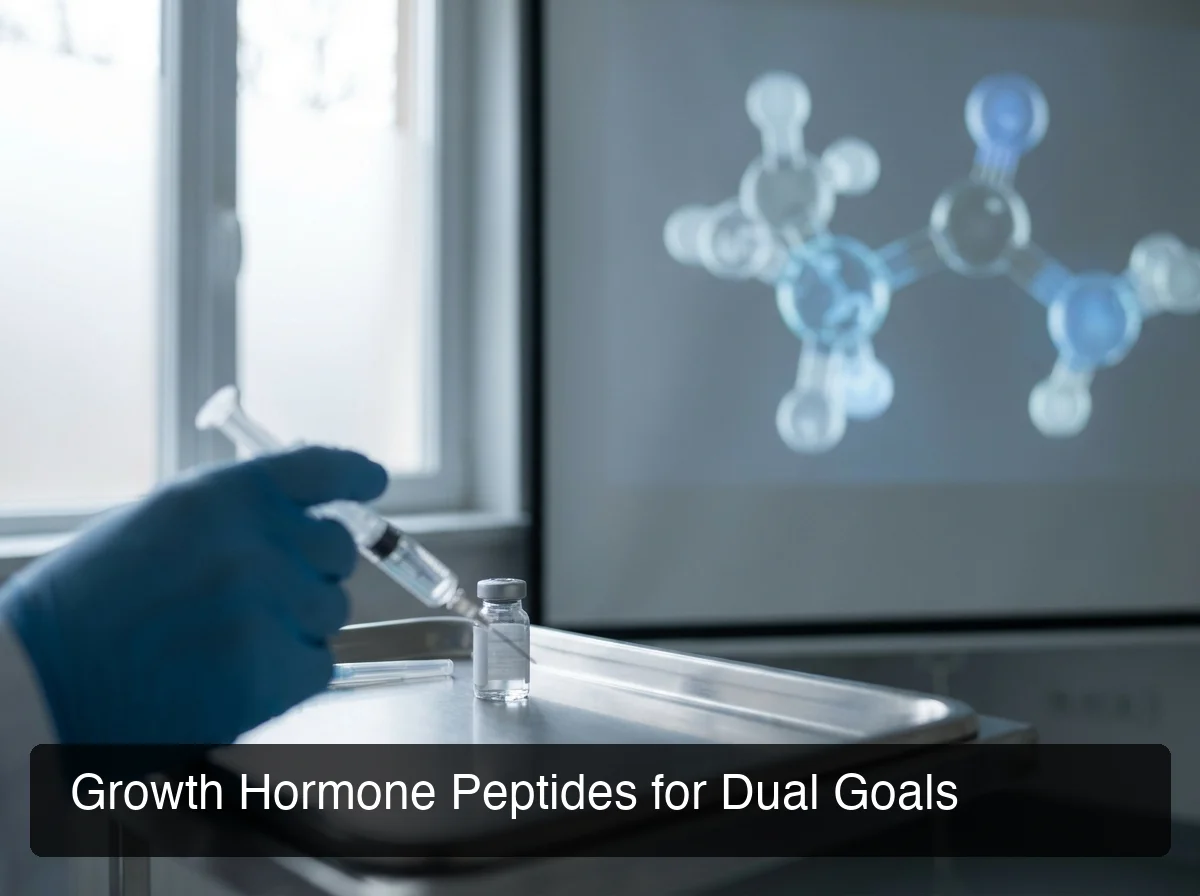 Two growth hormone secretagogues, one nightly injection window — precision here comes down to fasting discipline, not the compounds themselves.
Key insight: A missed fasting window doesn't waste the dose entirely, but it does blunt the pulse enough that most users notice slower recovery within a week of inconsistent timing.
For a deeper look at how growth hormone secretagogues perform in isolation, our data on peptides for muscle growth breaks down dose-response patterns across a longer cycle. The broader category of muscle building peptides covers where CJC-1295 and ipamorelin sit relative to less-studied alternatives like GHRP-2 and MK-677.
What's the Difference Between Peptides for Muscle vs. Peptides for Fat Loss?
Growth hormone peptides like CJC-1295 build muscle by raising IGF-1 and protein synthesis, while GLP-1 peptides like semaglutide and tirzepatide burn fat by suppressing appetite and slowing gastric emptying — and only one of those two mechanisms protects muscle by default. GLP-1s create a calorie deficit large enough that the body will pull from muscle tissue unless protein intake and resistance training actively counteract it.
This is why our weight loss peptides guide spends as much time on protein targets as it does on titration schedules. Semaglutide users chasing a wedding-date deadline or a number on the scale often skip that part — and it shows up as strength loss around week 6-8, not just on the scale.
Pairing GLP-1 peptides with growth hormone peptides is one way experienced users address this, using the GH stack specifically to preserve lean mass while the GLP-1 does the fat-loss work.
Can You Stack Peptides for Both Muscle and Fat Loss?
Yes — the most complete protocols combine a growth hormone pair (CJC-1295 + ipamorelin) for muscle, a GLP-1 for fat loss when body fat is the bigger constraint, and a recovery peptide to keep joints and connective tissue up to the increased training load. Stacking three mechanisms at once multiplies both the potential benefit and the number of variables you're tracking.
Recovery is usually the piece people forget until something starts hurting. Combining healing and performance peptides — typically BPC-157 or TB-500 layered under a growth/fat-loss stack — is how most experienced users keep training volume up while running a dual-goal protocol.
Reality check: Every peptide added to a stack is another variable in your results. Three peptides at once means three dosing schedules, three side-effect profiles, and no way to isolate which one is responsible for a given change unless you're logging each separately.
A complete muscle + performance stack walks through sequencing — which peptide to introduce first, and how long to run it alone before adding the next.
Which of the Best Peptides for Muscle Growth and Fat Loss Work Fastest?
GLP-1 peptides typically show visible fat loss within 4-6 weeks, while growth hormone peptides like CJC-1295 and ipamorelin take 8-12 weeks to produce noticeable lean mass changes because muscle protein synthesis compounds more slowly than appetite suppression. Combining both doesn't speed up the muscle timeline — it just means fat loss becomes visible first while the muscle-building effect is still building underneath it.
 Fat loss and muscle gain rarely become visible on the same week — tracking both separately prevents one from masking the other.
That mismatch is exactly why so many users quit a growth hormone protocol at week 4 or 5, convinced it isn't working, right before the visible payoff would have started.
How to Track Your Results With Peptides
You cannot reliably tell whether a peptide stack is working without a system that separates each compound's dosing history from its effects — running three peptides on memory alone makes it impossible to know which one caused a given change. This is the exact problem PeptideIQ's protocol tracking was built to solve.
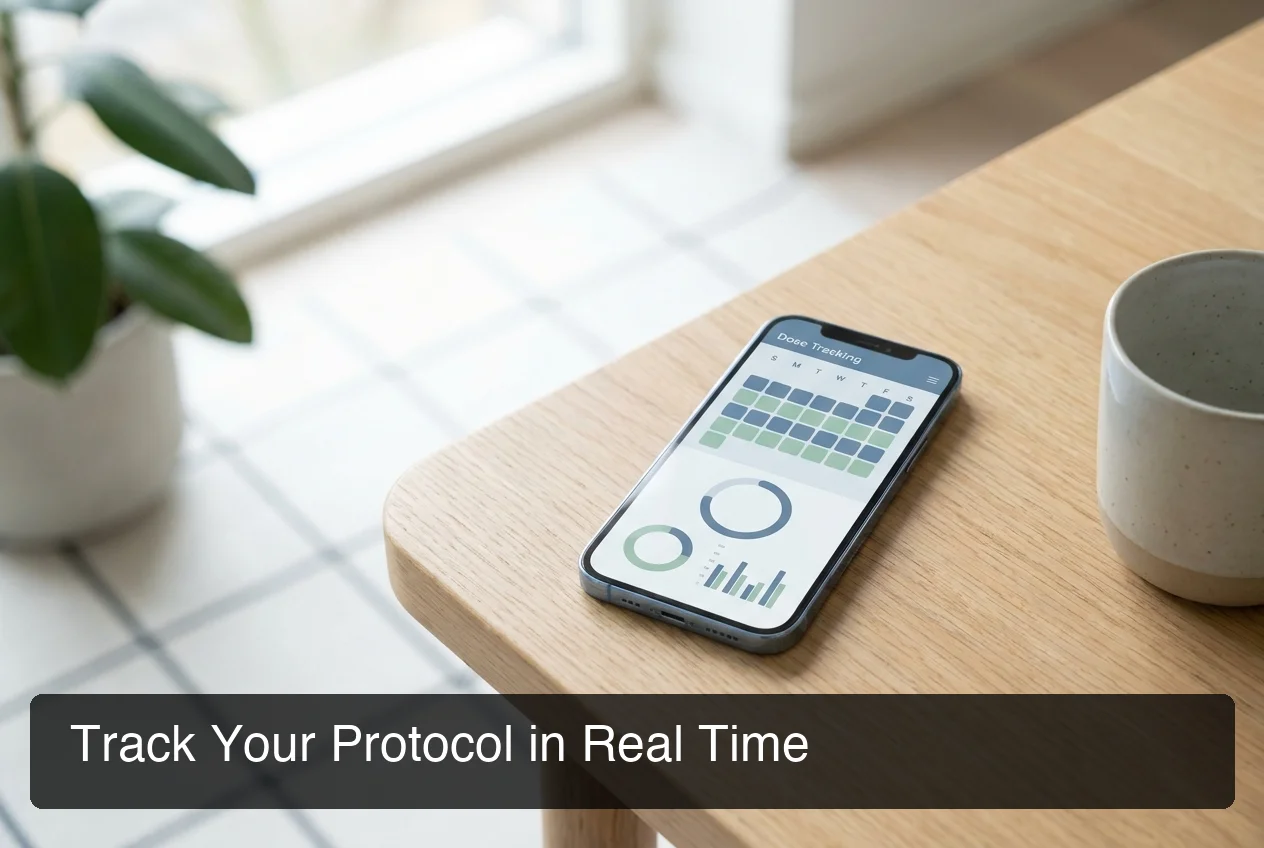 Each active peptide gets its own card — dose history, cycle day, and progress metrics stay separated instead of blurring together.
PeptideIQ's stack management view gives each active peptide its own card — CJC-1295, ipamorelin, and a recovery peptide can run in parallel, each with independent dosing guidance and a cycle timeline. Progress correlation then overlays your logged metrics (weight, energy, recovery score) against each peptide's specific timeline, so a strength gain in week 9 gets attributed to the growth hormone pair rather than lost in a single undifferentiated log.
Pro tip: Log wellness metrics against the specific peptide and week they correspond to, not just the date — that's the difference between "I feel better" and "ipamorelin at week 8 correlates with a measurable recovery score improvement."
Do Peptides for Muscle Growth Cause Water Retention or Other Side Effects?
CJC-1295 and ipamorelin can cause mild water retention, joint stiffness, and increased hunger in the first 2-3 weeks as growth hormone and IGF-1 levels rise — most of this subsides once the body adjusts to elevated levels. GLP-1 peptides carry a different side-effect profile entirely: nausea, fatigue, and constipation dominate, especially during dose titration.
Neither side-effect pattern is dangerous at standard doses, but both are easy to misread without a baseline. A water-retention bump from ipamorelin can look identical to a stalled fat-loss plateau if you're only watching the scale.
Get Started with PeptideIQ
Running a dual-goal peptide stack without a way to separate what each compound is doing is guesswork with extra steps. PeptideIQ's protocol tracking logs every dose, correlates it against your actual progress, and shows you which peptide in your stack is earning its place.
Download PeptideIQ on the App Store
FAQ
How do you know which peptide stack is right for your goal?
Match the peptide to your dominant constraint: growth hormone peptides (CJC-1295, ipamorelin) if muscle is the priority, GLP-1s (semaglutide, tirzepatide) if fat loss is more urgent, and both together if you're an experienced user tracking each separately.
Which peptide burns the most fat?
Tirzepatide currently shows the strongest fat-loss results among widely available peptides in clinical data, followed closely by semaglutide. Both outperform growth hormone secretagogues for fat loss alone, though neither builds muscle the way CJC-1295 and ipamorelin do.
What peptide works like Ozempic?
Compounded semaglutide and tirzepatide work through the same GLP-1 receptor mechanism as Ozempic, which is itself a brand name for semaglutide. Tirzepatide adds a second mechanism (GIP receptor activity) that often produces greater fat loss at comparable doses.
Does BPC-157 burn fat?
No — BPC-157 is a recovery and healing peptide, not a fat-loss compound. It supports tendon, ligament, and gut repair, which matters in a muscle-and-fat-loss stack only by keeping training consistent, not by directly affecting body composition.