
What Is a Peptide? The Beginner's Guide | PeptideIQ
What Is a Peptide? The Beginner's Complete Guide
Peptides are everywhere — but what is a peptide, exactly? From clinical weight loss drugs to DIY biohacking stacks, understanding the science behind them matters more than the hype.
Key Takeaways
- Peptides are short chains of amino acids (typically 2–50) that function as signaling molecules in your body, regulating everything from muscle growth to healing and longevity.
- Unlike whole proteins, peptides are smaller and more targeted — they bind to specific receptors, making them more efficient at triggering precise biological responses.
- Different peptide types target different systems: BPC-157 for healing, GHK-Cu for anti-aging, semaglutide for weight loss, and CJC-1295 for growth hormone stimulation.
- Most research peptides exist in a legal gray zone; they're not FDA-approved for human use in the US but available for research, making sourcing and quality critical.
- Proper reconstitution, storage, and dosing accuracy are non-negotiable — this is where a structured tracking approach becomes essential for safety and results.
Contents
- What Is a Peptide and How Is It Different From a Protein?
- How Do Peptides Work in Your Body?
- What Are the Main Types of Peptides and What Do They Do?
- Are Peptides Safe and Are They Legal?
- What Can You Realistically Expect From Using Peptides?
- How Do You Get Started With Peptides Safely?
- What Is a Peptide Dose and Why Does Proper Mixing Matter?
- Frequently Asked Questions
What Is a Peptide and How Is It Different From a Protein?
A peptide is a short chain of amino acids — typically 2 to 50 — linked by peptide bonds. Unlike proteins, which contain hundreds to thousands of amino acids folded into complex structures, peptides are smaller, more targeted, and more readily absorbed — enabling them to act as precise biological messengers rather than structural building blocks.
The term "amino acid" refers to one of 20 naturally occurring molecules that serve as the building blocks of all biological proteins and peptides. When two amino acids bond together, they form a dipeptide. Chains of 10–50 amino acids are called oligopeptides.
Why the Protein vs. Peptide Distinction Matters
Size isn't just a technicality — it determines how a molecule behaves in your body. A full protein like hemoglobin (574 amino acids) cannot easily cross cell membranes or bind receptor sites the way a 15-amino-acid peptide can.
This is why semaglutide — a 31-amino-acid peptide — binds specifically to GLP-1 receptors in the brain and gut to suppress appetite with precision. A general protein supplement simply cannot replicate that targeted signal.
 Peptides are not proteins — their smaller size is exactly what gives them their receptor-specific, targeted action.
How Do Peptides Work in Your Body?
Peptides function as signaling molecules — they bind to specific receptors on cell surfaces and trigger targeted biological responses. When a peptide binds its receptor, it can signal a cell to produce collagen, release growth hormone, suppress appetite, or accelerate tissue repair, depending entirely on the peptide's unique amino acid sequence.
Your body naturally produces thousands of peptides. Insulin is a peptide (51 amino acids) that signals cells to absorb glucose. Oxytocin (9 amino acids) signals bonding and trust. GLP-1 signals satiety. Synthetic peptides work by mimicking or amplifying signals your body already uses.
Endogenous vs. Synthetic Peptides
Endogenous peptides are produced by your body, degrade quickly, and maintain tight concentration control. Synthetic peptides mimic natural sequences but are engineered for stability, potency, or longer half-lives.
BPC-157, for example, is derived from a fragment of a naturally-occurring compound found in gastric juice. It doesn't exist at therapeutic concentrations in your body naturally — but the receptors it targets do.
Key insight: The reason synthetic peptides can feel so impactful is that you're essentially giving your body more signal than it would generate on its own — pushing a known biological lever harder than your natural system would.
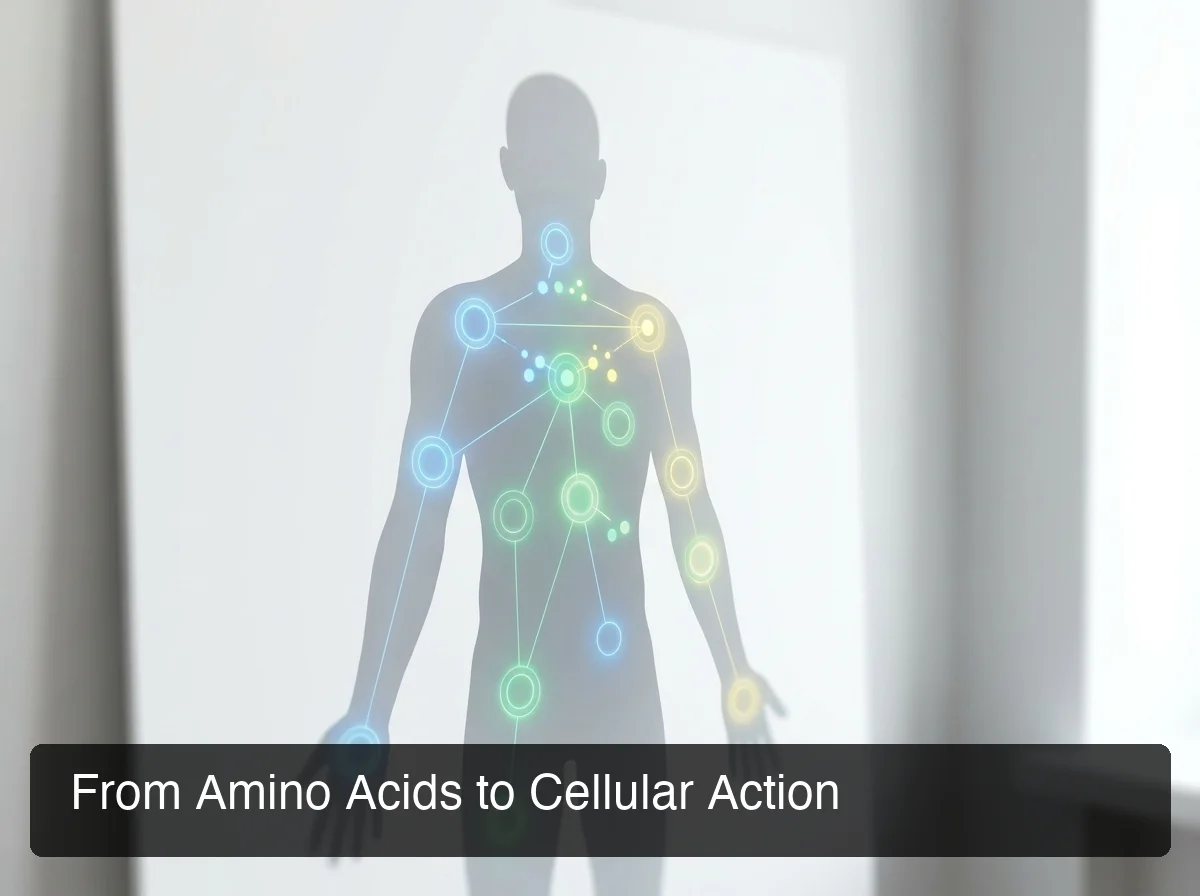 Peptides work because your cells already have the receptors to receive their signal — synthetic peptides amplify existing biological pathways.
What Are the Main Types of Peptides and What Do They Do?
There are thousands of peptides, but for wellness and performance use, four categories dominate: healing peptides (BPC-157, TB-500), growth hormone-stimulating peptides (CJC-1295, Ipamorelin), anti-aging and longevity peptides (GHK-Cu, Epitalon), and GLP-1 metabolic peptides (semaglutide, tirzepatide). Each category targets a distinct biological system with different evidence levels and use cases.
Understanding the categories matters more than memorizing individual peptide names. Someone asking about a "healing peptide" is talking about something fundamentally different from a GLP-1 agonist or a growth hormone-releasing peptide (GHRP).
Peptide Categories at a Glance
| Peptide | Category | Primary Use | Evidence Level |
|---|---|---|---|
| BPC-157 | Healing | Injury recovery, gut health | Strong animal evidence |
| TB-500 | Healing | Soft tissue repair | Strong animal evidence |
| CJC-1295 + Ipamorelin | GH-stimulating | Recovery, sleep, muscle | Early human trials |
| Semaglutide | GLP-1/Metabolic | Weight loss | FDA-approved |
| Tirzepatide | GLP-1/GIP | Weight loss, metabolic | FDA-approved |
| GHK-Cu | Anti-aging | Collagen, skin, cell repair | Early human trials |
| Epitalon | Longevity | Telomere health, sleep | Early human trials |
| Semax / Selank | Cognitive | Focus, anxiety reduction | Early human trials |
For a comprehensive peptide guide covering full protocols and applications across each category, the detailed cluster guides expand on each peptide's mechanism and standard protocols.
By the numbers: Semaglutide and tirzepatide generated nearly $30 billion in combined revenue in 2024 — the GLP-1 wave has effectively mainstreamed the word "peptide" for millions of people who would never have encountered it otherwise.
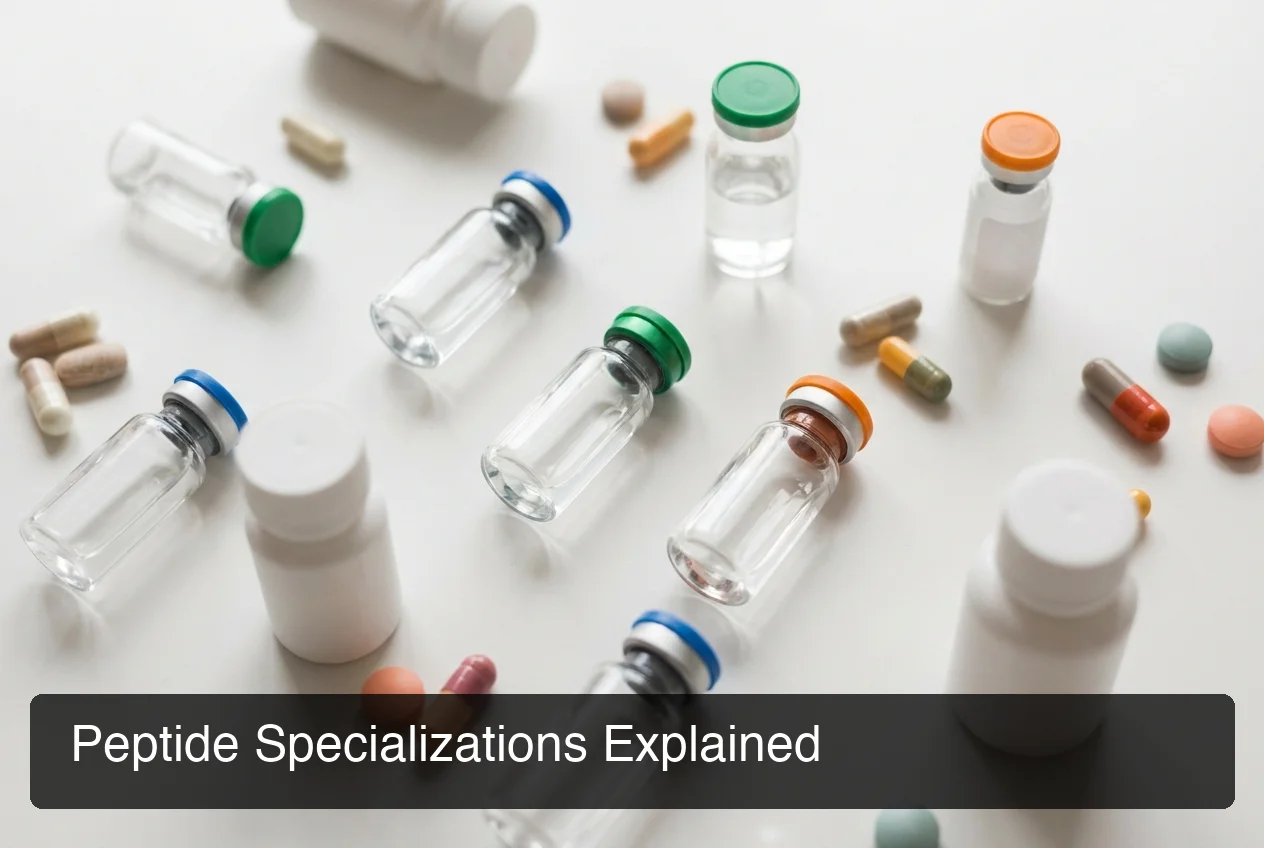 The four peptide categories serve entirely different systems — choosing the right category starts with identifying your goal.
Are Peptides Safe and Are They Legal?
Most research peptides occupy a legal gray zone in the US — they are not FDA-approved for human use but available as research chemicals, meaning they're legal to purchase but not to market for human consumption. FDA-approved exceptions like semaglutide and tirzepatide require prescriptions and have substantial clinical safety data.
Safety and legality are two distinct questions that most sources conflate. Here's how to think about each separately.
Legality
The FDA regulates drugs intended for human use. Research peptides like BPC-157, GHK-Cu, and CJC-1295 are not approved drugs — vendors sell them as "research chemicals" for laboratory use. Purchasing them is not illegal, but selling them for human consumption is.
In February 2026, US Health Secretary RFK Jr. announced that 14 previously restricted peptides would return to legal compounding status — a significant policy shift expanding legitimate access to compounds that had been temporarily removed from the market. For a full breakdown of which peptides are FDA-approved, see the list of FDA-approved peptides.
For the clinical application angle and what "peptide therapy" means in a supervised setting, read Is Peptide Therapy Safe? What Clinical Evidence Actually Shows.
Safety
Evidence levels vary dramatically by peptide. Semaglutide has large-scale clinical trial data. BPC-157 has extensive animal studies but limited human trial data. "No evidence of harm" in animals is not the same as "proven safe in humans."
FDA testing has found that up to 40% of online peptide products contain incorrect dosages or undeclared ingredients — which makes sourcing quality often the primary safety variable, not the peptide itself.
For a thorough breakdown of safety evidence by peptide type, see Are Peptides Safe? What the Research Actually Shows.
Bottom line: "Are peptides safe?" is the wrong question. The right questions are: which peptide, from which source, at which dose, for which person? Evidence quality ranges from FDA-approved to purely anecdotal — treat each peptide on its own merits.
What Can You Realistically Expect From Using Peptides?
Results from peptides depend on the specific peptide, dose, administration method, consistency, and individual biology. BPC-157 users typically report injury improvements in 4–8 weeks. Semaglutide delivers 1–2kg weight loss per month at therapeutic doses. GHK-Cu skin improvements emerge at 8–12 weeks. No peptide produces overnight results, and tracking is the only way to measure progress objectively.
This is where most first-time users get disappointed — they expect rapid, dramatic changes and underestimate what consistent protocol adherence actually requires.
What Influences Your Results
Several factors determine whether a peptide protocol delivers:
- Dose accuracy: Underdosing by 50% can eliminate the effect entirely. Most peptides have narrow therapeutic windows.
- Consistency: Missing doses disrupts the continuous signaling effect. GLP-1s in particular require steady-state concentration to maintain appetite suppression.
- Timing: Growth hormone-stimulating peptides require fasted administration for peak effect. Dosing CJC-1295 after a meal significantly reduces its impact.
- Storage: Reconstituted peptides degrade faster than lyophilized powder. Refrigeration is mandatory; freezing extends shelf life for unopened vials.
- Source quality: Up to 40% of online peptides have incorrect concentrations. A peptide "not working" is sometimes just underdosed product from a low-quality vendor.
Without systematic tracking, it's nearly impossible to isolate which variable is limiting your results. People who log their protocols — doses, timing, wellness metrics, side effects — consistently report more predictable outcomes than those who don't.
How Do You Get Started With Peptides Safely?
 The practical side of peptide use: preparation, reconstitution, and systematic tracking are what separate a structured protocol from a guessing game.
Starting peptides safely requires four steps: verify source quality, learn reconstitution (mixing freeze-dried peptide powder with bacteriostatic water), calculate your dose accurately, and track your protocol systematically. Skipping any step — especially sourcing or dosing accuracy — significantly increases risk and reduces your ability to determine whether a protocol is working.
Step 1 — Verify Your Source
Research third-party testing certificates before purchasing. Reputable vendors provide Certificates of Analysis (CoA) showing purity and concentration. No CoA is a serious red flag.
Step 2 — Learn Reconstitution
Peptides arrive as freeze-dried (lyophilized) powder. Before injecting, you mix them with bacteriostatic water (BAC water). The ratio of powder to BAC water determines your concentration, which determines how many units to draw in your syringe.
For a full step-by-step walkthrough, see our how to mix peptides guide — where every reconstitution step is covered with exact measurements and common mistakes to avoid.
Step 3 — Calculate Your Dose
The reconstitution math is where most beginners make errors — and errors compound through every injection. The peptide dose calculator guide walks through the concentration formula and syringe unit conversion in detail.
Step 4 — Track Your Protocol
For injection site guidance and technique, see Where to Inject Peptides: Complete Guide to Injection Sites & Technique and the Peptide Injection Site Beginner's Guide.
Tracking every dose, wellness check-in, and symptom gives you the data to know whether a protocol is working — and what to adjust when it isn't.
What Is a Peptide Dose and Why Does Proper Mixing Matter?
Dosage precision is not optional — it determines whether a peptide protocol succeeds or fails. Most peptides are measured in micrograms (mcg), not milligrams (mg). A 5mg vial of BPC-157 at 500mcg per dose contains 10 doses. Add too much BAC water during reconstitution and you're unknowingly underdosing every injection by a factor of 2 or 3.
The Reconstitution Formula
The core calculation:
Concentration (mcg/mL) = vial amount (mcg) ÷ BAC water added (mL)
Then: Volume to draw (mL) = desired dose (mcg) ÷ concentration (mcg/mL)
Then convert mL to syringe units based on your syringe type (U-100, U-50, or U-30) — the unit count changes depending on syringe.
Why Systematic Tracking Changes Everything
Running a peptide protocol without logging doses, symptoms, and progress is running an uncontrolled experiment. You cannot identify what's working, what's causing side effects, or whether missed doses have affected the outcome.
PeptideIQ handles the reconstitution math, tracks dose history, logs wellness metrics, flags expiry dates, and gives you an AI co-pilot grounded in your specific protocol context — not generic peptide information. For anyone running peptides seriously, the difference between guessing and tracking is the difference between random outcomes and reproducible results.
Download PeptideIQ
Understanding the science is step one. Executing a safe, consistent protocol is what produces results — and that's where most people without a structured system fall short.
PeptideIQ is the AI-powered guided system for peptide users: build your protocol, track every dose, get AI insights grounded in your specific cycle and data. The app is available now on iOS.
Not ready to start a protocol yet? Download PeptideIQ on the App Store and explore the tracking tools and peptide library first.
Frequently Asked Questions
What do peptides do to your body?
Peptides act as signaling molecules that bind to specific receptors and trigger targeted biological responses. Depending on the peptide, these signals can stimulate collagen production, suppress appetite, increase growth hormone release, accelerate tissue healing, or regulate cognitive function — all through receptor pathways that already exist naturally in your body.
Are peptides the same as steroids?
No. Peptides and steroids are chemically and mechanistically distinct. Steroids are lipid-based molecules that enter cell nuclei and directly alter gene expression. Peptides are amino acid chains that bind to cell-surface receptors without entering the nucleus. They have different legal statuses, side effect profiles, and mechanisms of action.
What is the difference between a peptide and a protein?
The difference is size and function. Peptides are short chains of 2–50 amino acids that act primarily as biological signaling molecules. Proteins contain hundreds to thousands of amino acids and serve structural, enzymatic, or transport roles. All proteins are built from peptide chains, but a peptide is not itself a protein.
Are research peptides legal to buy in the US?
Research peptides like BPC-157 and GHK-Cu exist in a legal gray zone — they are legal to purchase as research chemicals but cannot legally be sold for human consumption. FDA-approved peptides like semaglutide and tirzepatide require prescriptions. In February 2026, 14 previously restricted peptides returned to legal compounding status in the US.
What foods are highest in peptides?
Bioactive peptides occur naturally in animal proteins: collagen peptides from bone broth, casein and whey peptides from dairy, and peptides from fish skin and egg whites. However, dietary peptides are digested before reaching systemic circulation, giving them effects far weaker than injected therapeutic peptides. Food sources complement but cannot substitute for clinical protocols.
Who should avoid peptides?
People with active cancer should generally avoid growth-promoting peptides (GHRPs, IGF-1 stimulating compounds). Pregnant or breastfeeding women should avoid all non-FDA-approved peptides due to unknown fetal safety profiles. Anyone with autoimmune conditions should consult a physician before using immunomodulatory peptides like Thymosin Alpha-1. Always verify with a healthcare provider who understands peptide mechanisms.
What is PeptideIQ?
PeptideIQ is the AI-powered guided system for peptide users — build your protocol, track every dose, and get AI insights that know your data, your cycle, and your specific situation. It's available now as an iOS app on the App Store. Unlike generic health loggers, the AI is initialized with your full protocol context.