
Peptide Dose Calculator: Right Dose | PeptideIQ
Peptide Dose Calculator: How to Calculate the Right Dose Every Time
If you've ever stared at a vial of BPC-157 wondering how many units to draw, you're not alone. A peptide dose calculator removes that uncertainty in seconds—replacing guesswork with math that's actually correct.
Key Takeaways
- A peptide dose calculator uses vial concentration, BAC water volume, and your target dose to compute the exact injection volume—no manual math required.
- Even a 10% dosing error can reduce peptide efficacy or trigger side effects, making precision tools non-negotiable for anyone running a protocol.
- Most calculators require three inputs: peptide vial amount (mg), reconstitution water volume (ml), and desired dose (mcg)—and output the exact syringe units to draw.
- Manual calculation is the #1 cause of wasted peptides and failed protocols; a dedicated calculator eliminates that risk entirely.
- PeptideIQ's built-in reconstitution calculator handles the math, saves your vial data, and visually shows exactly where to draw on your syringe.
Contents
- What Is a Peptide Dose Calculator?
- How Do Peptide Dosing Calculators Work?
- What Information Do You Need to Use a Peptide Dose Calculator?
- How Much of Each Peptide Should You Use?
- Why Is Precise Dosing Important for Peptides?
- Can You Use a Dose Calculator for All Peptides?
- How Accurate Are Peptide Dosing Calculators?
- How to Use a Peptide Dose Calculator: Step-by-Step
- Frequently Asked Questions
 Precision dosing starts before the injection — getting the calculation right is the first step in any effective peptide protocol.
What Is a Peptide Dose Calculator?
A peptide dose calculator is a tool that converts your target dose (in mcg) and vial concentration into the exact volume to draw into a syringe. Given your vial size, the amount of reconstitution water added, and your desired dose, it outputs the precise number of syringe units—eliminating manual math and the errors that come with it.
Most peptides are measured in micrograms (mcg) or milligrams (mg), but insulin syringes are marked in units—typically U-100, U-50, or U-30. Converting between these scales by hand is where most people make mistakes.
A dose calculator handles that conversion instantly, regardless of which peptide you're using or how you've diluted your vial.
If you're new to peptide terminology, What Is a Peptide? The Beginner's Complete Guide is a good starting point before diving into dosing math.
How Do Peptide Dosing Calculators Work?
Peptide dosing calculators use a simple three-step formula: divide the total peptide amount by the volume of water added to get the concentration, then divide your target dose by the concentration to get the volume to inject. The result is expressed in milliliters (ml) or syringe units depending on your syringe type.
The core formula:
- Concentration (mcg/ml) = Peptide amount (mcg) ÷ BAC water added (ml)
- Injection volume (ml) = Target dose (mcg) ÷ Concentration (mcg/ml)
- Syringe units (U-100) = Injection volume (ml) × 100
Why Manual Calculation Fails
Most people either use the wrong units, forget to convert mg to mcg (1 mg = 1,000 mcg), or get confused by fractional milliliters. A calculator removes every one of these failure points.
Key insight: The math itself is simple — the errors come from unit confusion and decimal misplacement. A calculator locks in the conversion so the only variable is your inputs.
What Information Do You Need to Use a Peptide Dose Calculator?
To use a peptide dose calculator, you need three pieces of information: the peptide amount in your vial (mg), the volume of bacteriostatic water you're adding (ml), and your target dose per injection (mcg). Everything else — concentration, injection volume, and syringe units — is calculated automatically.
Here's what each input means:
- Vial amount (mg): The peptide quantity in your vial. Common sizes are 2mg, 5mg, and 10mg.
- BAC water volume (ml): How much bacteriostatic water you mixed in during reconstitution. This determines the resulting concentration.
- Target dose (mcg): How many micrograms you want per injection. This comes from your protocol — not from the calculator.
Where People Go Wrong
The most common input error is confusing mg and mcg. A 5mg vial contains 5,000mcg of peptide — if you enter 5 where the calculator expects 5,000, your dose will be off by 1,000x.
Always double-check your unit scale before confirming the calculation.
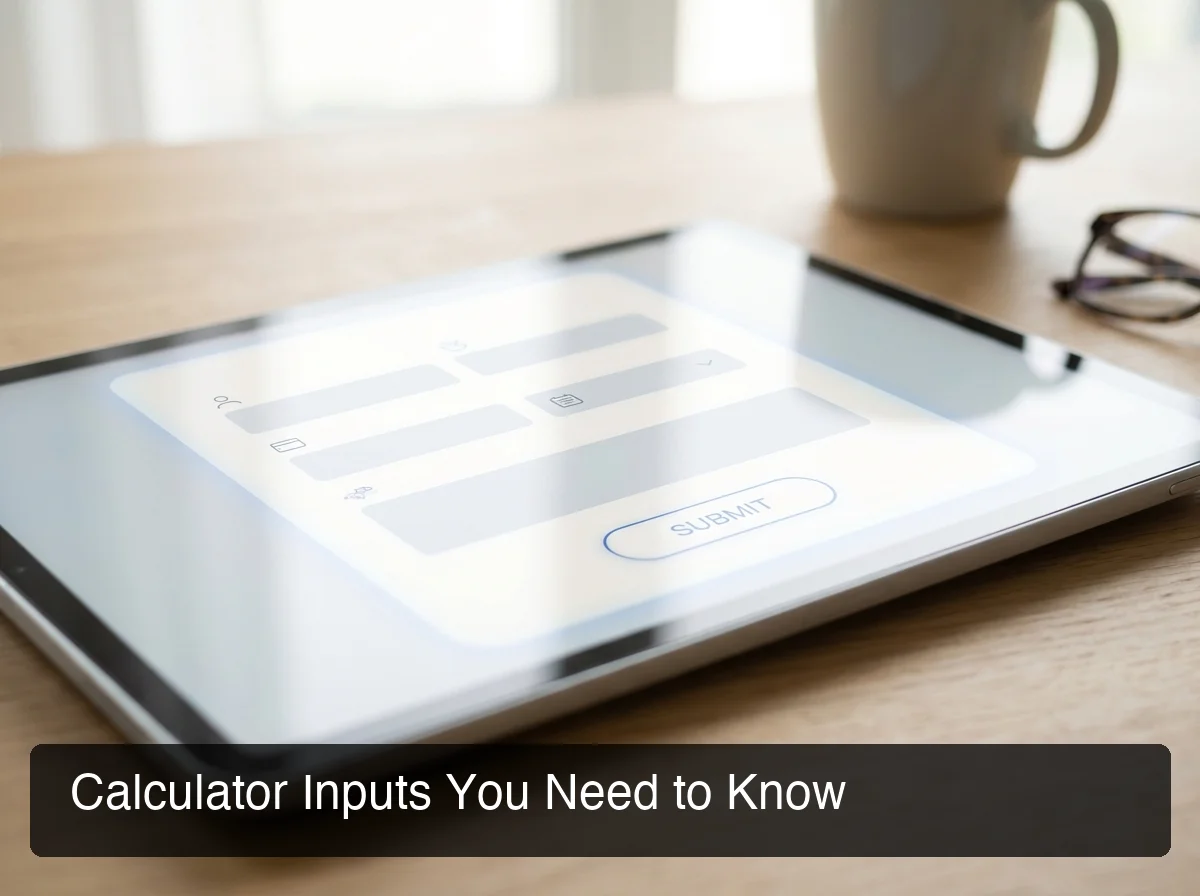 Three inputs are all you need: vial amount, water volume, and target dose — the calculator handles the rest.
How Much of Each Peptide Should You Use?
There is no universal peptide dose — each compound has a different recommended starting range based on mechanism, half-life, and protocol type. Most research-based protocols express dose in mcg per injection; some (like GLP-1s) use mg per week. Always confirm the correct unit for your specific peptide before entering it into a calculator.
The table below covers typical beginner starting doses for commonly used peptides:
| Peptide | Typical Starting Dose | Frequency |
|---|---|---|
| BPC-157 | 200–500 mcg | Once or twice daily |
| Ipamorelin | 200–300 mcg | Once daily (fasted) |
| CJC-1295 (no DAC) | 100–200 mcg | Once daily (fasted) |
| Semaglutide | 0.25 mg/week | Weekly injection |
| TB-500 | 2–2.5 mg | Twice weekly |
| GHK-Cu | 1–2 mg | Daily subcutaneous |
| Sermorelin | 200–500 mcg | Once daily (fasted) |
These are starting ranges only. Your protocol, goals, and body weight all affect optimal dosing — which is where a personalized tracking system becomes essential.
By the numbers: A 5mg BPC-157 vial reconstituted in 2ml BAC water has a concentration of 2,500 mcg/ml. At 250 mcg per dose, that's 10 doses — and each dose draws to exactly the 10-unit mark on a U-100 syringe.
Why Is Precise Dosing Important for Peptides?
Peptide efficacy is dose-dependent — too little and you don't reach the therapeutic threshold; too much and you increase side effect risk without proportionally increasing benefit. Research on BPC-157, CJC-1295, and semaglutide all shows that dosing outside the target window reduces outcomes. Even a 10–15% variance from your intended dose can meaningfully affect results.
Inaccurate dosing affects your protocol in three compounding ways:
- Wasted product — overdosing burns through your vial faster than expected, raising the cost per protocol.
- Inconsistent plasma levels — peptides like Ipamorelin and CJC-1295 require consistent peak concentrations for effective growth hormone stimulation. Variable dosing undermines this.
- Misleading feedback — if your results aren't what you expected and your dosing was off, you can't tell whether the peptide isn't working or the math was wrong.
Precise dosing also directly supports peptide therapy safety — FDA testing found up to 40% of online peptide products contained incorrect labeled dosages, meaning your baseline calculation has to be correct even when the product label isn't.
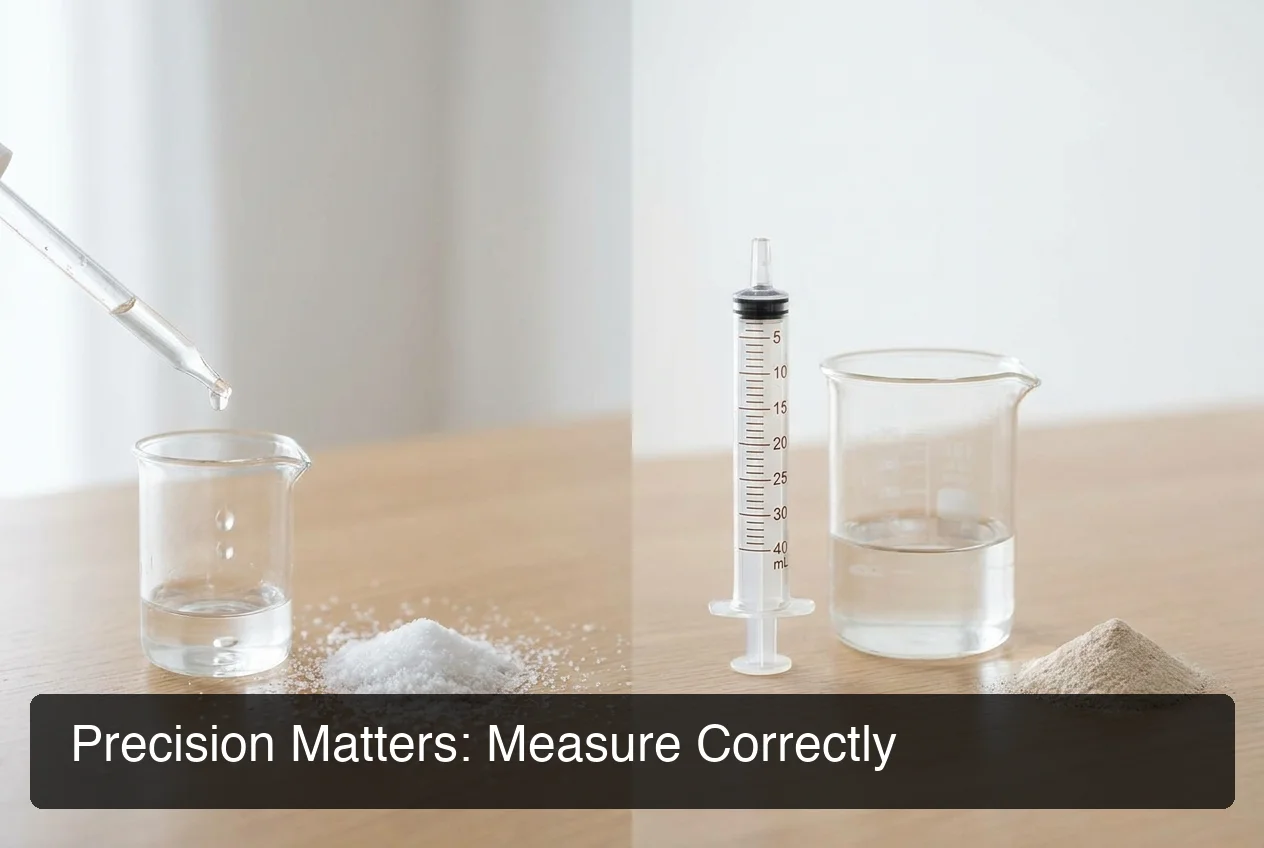 Eyeballing syringe volumes introduces 15–20% error on average. Calculated dosing eliminates the variable entirely.
What Happens When You Underdose?
Underdosing is more common than overdosing and typically results in a protocol that "doesn't seem to work." If you're wondering whether peptides actually work, the honest answer is: they work at the right dose. Under-dosed protocols are the most common reason for absent results.
Can You Use a Dose Calculator for All Peptides?
Yes — a peptide dose calculator works for any injectable peptide that requires reconstitution with bacteriostatic water. This includes research peptides (BPC-157, TB-500, Ipamorelin), GHRPs, GHRHs, and most longevity compounds. Oral peptides and pre-mixed GLP-1 pens (like brand-name Ozempic) do not require reconstitution and therefore don't need a reconstitution calculator.
For blended vials containing multiple peptides, the same formula applies per compound. Some calculators include a blend mode that calculates each peptide's individual draw volume from a shared vial.
What About Weight-Based Dosing?
Some peptides — particularly GLP-1s for weight loss — use body-weight-based dosing, typically expressed as mcg/kg per injection. In those cases, your target dose changes as your weight changes. A tracking app that stores your weight profile handles this recalculation automatically.
How Accurate Are Peptide Dosing Calculators?
Digital peptide dose calculators are as accurate as their inputs. Given correct vial amount, water volume, and target dose, a calculator produces the exact correct injection volume every time — there is no inherent margin of error in the formula. The only source of error is user input.
Manual math introduces three categories of error:
- Unit confusion (mg vs mcg)
- Decimal misplacement (0.1ml vs 1ml)
- Rounding error (truncating fractional syringe units)
Online calculators can also carry rounding errors if they truncate decimal values too aggressively. The best tools display results to two decimal places and let you select your syringe type (U-100, U-50, U-30) so unit conversion is automatic.
Bottom line: A calculator is only as accurate as your inputs. Measure your BAC water with a calibrated syringe, not a rough pour — that's the most common source of concentration error.
How to Use a Peptide Dose Calculator: Step-by-Step
 PeptideIQ's reconstitution calculator walks you through every input and visually marks the syringe draw line — no math required.
Using a peptide dose calculator takes under a minute once you have your vial and BAC water in front of you. The process is: reconstitute first, then calculate. Never estimate your BAC water volume — measure it with a calibrated syringe.
Follow these steps:
- Check your vial label. Note the peptide amount in mg (e.g., 5mg) and convert to mcg (5mg = 5,000mcg).
- Reconstitute with measured BAC water. Use a calibrated syringe to add a precise volume of bacteriostatic water — 1ml, 2ml, or 3ml depending on your preferred concentration.
- Enter your inputs. Vial amount (mcg), water volume (ml), and your target dose per injection (mcg).
- Read the output. The calculator shows injection volume (ml) and syringe units for your syringe type.
- Draw to the marked unit line. For a U-100 syringe, if your output is 0.1ml, draw to the 10-unit mark.
- Inject at the correct site. After calculating your dose, proper peptide injection site selection is the next critical step — subcutaneous vs intramuscular depends on your specific peptide.
Reconstitution Tips That Affect Accuracy
- Always add water to the vial — not the reverse.
- Gently roll the vial to mix; never shake it.
- Refrigerate immediately after reconstitution; most peptides expire within 30 days once mixed.
Get Started with PeptideIQ
Getting the dose right is step one — but knowing whether your protocol is actually working requires ongoing tracking. PeptideIQ's built-in reconstitution calculator handles the math, saves each vial's concentration data, and visually marks your syringe draw line so you never calculate from scratch again. It's the guided system built for people who take their protocol seriously.
Download PeptideIQ on the App Store
Frequently Asked Questions
What is the formula for peptide dose calculation?
The formula is: Concentration (mcg/ml) = Peptide amount (mcg) ÷ BAC water added (ml), then Injection volume (ml) = Target dose (mcg) ÷ Concentration (mcg/ml). For U-100 syringes, multiply injection volume by 100 to get syringe units. Always convert mg to mcg first — 1mg = 1,000mcg.
How much BAC water should I add to a peptide vial?
The amount of BAC water you add sets the vial's concentration. Adding 1ml to a 5mg vial gives 5,000 mcg/ml; adding 2ml gives 2,500 mcg/ml — more manageable for most dose sizes. Most users add 1–2ml depending on their target dose and syringe type.
What is the difference between a peptide dose calculator and a reconstitution calculator?
A reconstitution calculator determines how much BAC water to add to reach a target concentration. A dose calculator takes that concentration as an input and tells you how much to draw per injection. Most modern tools — including PeptideIQ — combine both steps: enter vial amount and water volume to get concentration, then enter your target dose to get syringe units, all in one workflow.
Can I use an insulin syringe for peptide injections?
Yes — standard U-100 insulin syringes (100 units per ml) are the most common tool for subcutaneous peptide injections. U-50 and U-30 syringes offer finer precision for very small doses. A peptide dosage calculator automatically adjusts its output for your syringe type, so the unit reading stays accurate regardless of which you choose.
Why do my peptide calculator results seem too small?
Small draw volumes are completely normal — a 250 mcg dose from a 5mg vial reconstituted in 2ml gives just 0.1ml (the 10-unit mark on a U-100 syringe). If results seem implausibly off, the most likely cause is a mg/mcg unit mix-up — check that you haven't entered 5 where the calculator expects 5,000.
Does body weight affect peptide dosing?
Yes, for weight-based protocols — common with GLP-1s — dose is expressed as mcg per kilogram, so your target changes as your weight changes. A tracking app that stores your weight profile recalculates this automatically each time you log a dose.
Is PeptideIQ's calculator free to use?
PeptideIQ is available now on iOS. Core tracking and the reconstitution calculator are free, with the AI co-pilot and advanced analytics available through an optional Pro subscription.