

Do Peptides Actually Work? Evidence-Backed Answers
Do Peptides Actually Work? The Evidence-Backed Answer
Do peptides actually work? Not all of them — at least not in the same way, or with the same clinical evidence behind them.
Key Takeaways
- Peptide effectiveness varies dramatically by type: semaglutide and tirzepatide have robust FDA-approved clinical trial data, while many research peptides rely on animal models with limited human trials.
- Results timelines depend on the peptide class — weight loss peptides show measurable changes in 2–8 weeks, while longevity and healing peptides typically take 4–12 weeks.
- Peptides work by binding to specific cellular receptors and activating signaling pathways — more targeted than oral supplements and faster-acting than most natural alternatives.
- Legal status varies: FDA-approved GLP-1 peptides are prescription medications; research-grade peptides like BPC-157 occupy a gray area in the US.
- Tracking protocol adherence, dosing, and outcome metrics is the only reliable way to know whether a specific peptide is working for you — generic claims are not a substitute for personal data.
Contents
- How Do Peptides Actually Work in Your Body?
- What Does the Clinical Evidence Say About Peptide Effectiveness?
- Which Peptides Have the Strongest Research Backing?
- How Long Before You See Results from Peptides?
- Are Peptides More Effective Than Natural Alternatives?
- Do Peptides Actually Work Differently for Different People?
- What Percentage of People Actually See Results with Peptides?
- Track Your Peptide Results with PeptideIQ
- Frequently Asked Questions
 Clinical research is catching up with consumer demand — but the evidence gap varies widely by peptide type.
How Do Peptides Actually Work in Your Body?
Peptides are short chains of amino acids that bind to specific receptors on cell surfaces, triggering targeted biological responses. Unlike oral supplements that must survive digestion and broad metabolic processing, peptides act like precise molecular keys — each designed to unlock a specific cellular process such as tissue repair, hormone release, or fat metabolism.
When a peptide binds to its receptor, it triggers an intracellular signaling cascade. This is why BPC-157 specifically promotes tissue healing while semaglutide activates GLP-1 receptors that regulate appetite and insulin. The mechanism is targeted by design.
This specificity is also why delivery method matters. Injectable peptides bypass the gastrointestinal system, which degrades many peptide bonds. Oral bioavailability for most research peptides is under 10% — which is why most protocols require subcutaneous injection.
Why Peptides Differ from Supplements
Traditional supplements like creatine or protein powder work through nutritional pathways — they provide substrates your body uses. Peptides work through signaling pathways — they instruct your body what to do.
This distinction matters for effectiveness. A peptide doesn't "add" to a process; it activates or modulates one. That's what makes them powerful when matched to the right protocol — and ineffective when misapplied.
If you're new to peptide classification and structure, the beginner's guide to what a peptide is covers the foundational science before you commit to a protocol.
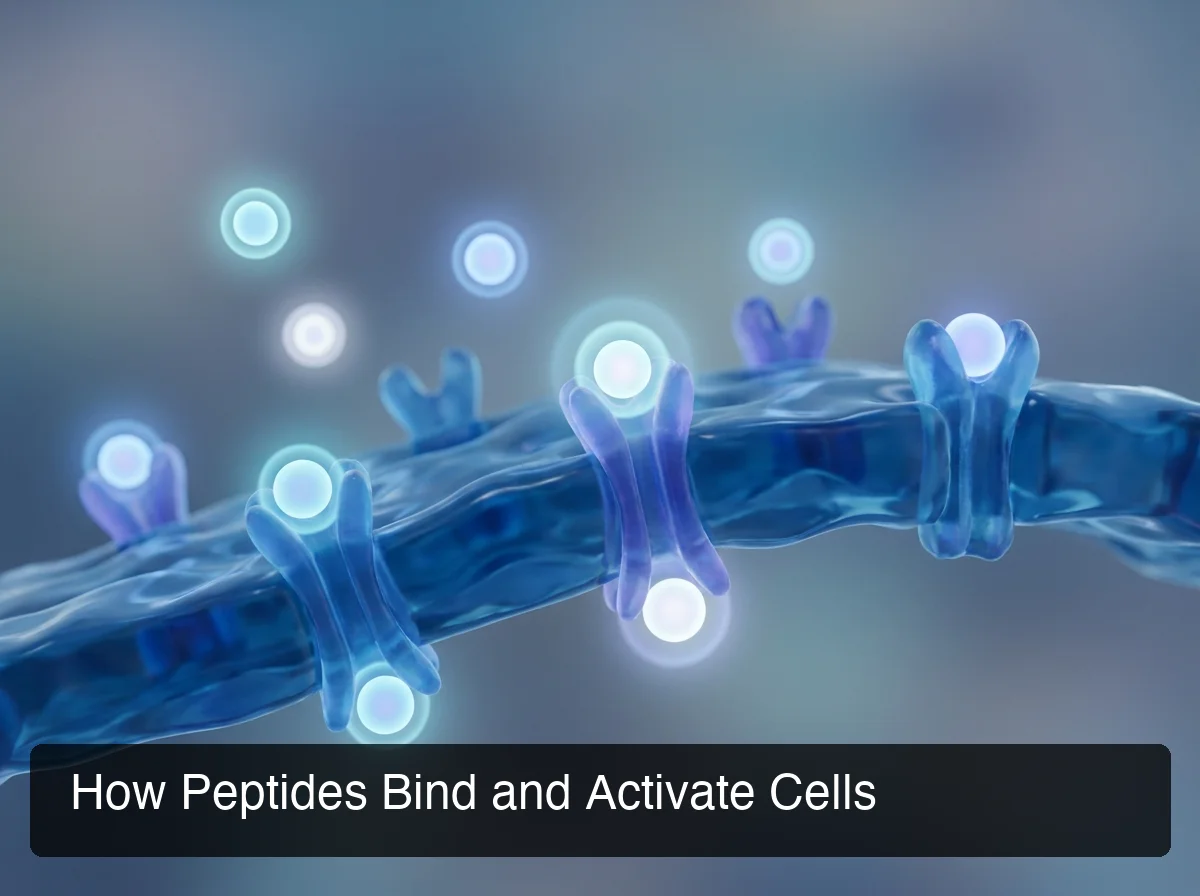 Peptides bind to specific cellular receptors, triggering precise biological responses — unlike broad-spectrum supplements.
Key insight: Peptide effectiveness is receptor-specific. The same compound can produce dramatically different outcomes depending on dosage, timing, and individual receptor expression.
What Does the Clinical Evidence Say About Peptide Effectiveness?
Clinical evidence for peptides exists on a spectrum — from FDA-approved medications with thousands of patients in controlled trials to compounds with compelling animal data but no published human studies. The honest answer: it depends entirely on which peptide you're asking about.
WebMD and mainstream medical sources note that "little evidence supports" many marketed peptides. That's accurate for the unregulated supplement category — but it misrepresents the full landscape. When you separate FDA-approved peptides from research-grade compounds, the picture becomes far more nuanced.
Evidence Tiers by Peptide Type
| Peptide | Primary Use | Evidence Level | Regulatory Status |
|---|---|---|---|
| Semaglutide | Weight loss | Phase 3 RCTs, 10–15% weight reduction | FDA-Approved |
| Tirzepatide | Weight loss | SURMOUNT trials, 20%+ weight reduction | FDA-Approved |
| BPC-157 | Tissue repair | Strong rodent models, no human RCTs | Research grade |
| CJC-1295 + Ipamorelin | GH release, recovery | Phase 1/2 trials | Research grade |
| GHK-Cu | Anti-aging, skin | Topical efficacy studies | Cosmetic-grade |
| TB-500 | Healing, recovery | Animal studies | Research grade |
| Epitalon | Longevity | Soviet-era clinical trials | Research grade |
Our list of FDA-approved peptides provides full regulatory detail on which compounds have passed clinical scrutiny. For the intersection of evidence and safety, see our companion piece on is peptide therapy safe.
By the numbers: Semaglutide and tirzepatide together generated nearly $30 billion in 2024 revenue — driven by clinical trials showing 10–20%+ body weight reduction reproducible across tens of thousands of participants.
 Not all peptide research is equal — FDA-approved compounds have robust RCT data while most research peptides rely on animal models.
Which Peptides Have the Strongest Research Backing?
The strongest human evidence belongs to GLP-1 receptor agonists — semaglutide and tirzepatide. Both have undergone large-scale randomized controlled trials, full FDA approval processes, and post-market surveillance. Beyond GLP-1s, the evidence ladder drops significantly, with most research peptides supported by compelling but non-human data.
GLP-1 Peptides — Strongest Evidence
Semaglutide's STEP trials enrolled 4,500+ participants and showed consistent 10–15% body weight reduction over 68 weeks. Tirzepatide's SURMOUNT-1 trial showed 20.9% average weight loss — the strongest result of any weight loss trial in history. This is not anecdote; it is reproducible at scale.
Healing and Recovery Peptides — Moderate Evidence
BPC-157 has over 50 published studies, primarily in rodent models. In these studies, it consistently accelerates tendon, ligament, and muscle repair — with additional data on gastric healing. The absence of human RCTs is a gap, not a disqualification. No clinical trials exist primarily because BPC-157 is not a commercial pharmaceutical with a sponsor funding studies.
Longevity and Anti-Aging Peptides — Early Evidence
GHK-Cu has strong data for topical collagen stimulation and wound healing. Epitalon has Soviet-era clinical data on telomere elongation but has not been replicated in modern Western RCT format. MOTS-c and Thymosin Alpha-1 show early-phase promise in metabolic and immune function research.
How Long Before You See Results from Peptides?
Results timelines depend on peptide class and goal. GLP-1 peptides show measurable weight changes within 2–4 weeks at therapeutic doses. Healing peptides like BPC-157 typically show pain score reductions in 3–6 weeks. Longevity compounds are best evaluated over 8–16 weeks with biomarker tracking.
Timeline by Peptide Category
- Weight loss (GLP-1s): Appetite suppression noticeable in weeks 1–2; measurable weight loss by week 2–4; full titration effects by weeks 8–12
- Injury recovery (BPC-157, TB-500): Subjective pain reduction in 2–4 weeks; functional improvement in 4–8 weeks; full cycle assessment at 8–12 weeks
- Muscle/performance (CJC-1295/Ipamorelin): IGF-1 elevation in 4–6 weeks; body composition changes in 8–12 weeks
- Longevity/anti-aging: Biomarker tracking required; 12–24 weeks before meaningful comparison
 Realistic timeline expectations prevent early abandonment of protocols that need more time to show effect.
Bottom line: The most common mistake peptide users make is stopping at week 3 because results aren't dramatic yet. Most peptide mechanisms require 4–8 weeks of consistent dosing to build to full clinical effect.
Detailed before-and-after transformation data is most meaningful when logged week by week against dosing adherence — something we'll cover in depth in the upcoming article on peptide before-and-after results.
Are Peptides More Effective Than Natural Alternatives?
For targeted, protocol-specific outcomes, injectable peptides outperform natural alternatives in clinical studies. Semaglutide's 10–15% weight loss is 3–4x the result of diet and lifestyle interventions alone. For general wellness goals without a specific receptor target, the comparison is less clear.
Natural alternatives like intermittent fasting, resistance training, and sleep optimization activate some of the same pathways as growth hormone peptides — but more slowly and less specifically. The question isn't binary; it's about whether your goal requires targeted cellular signaling or general health behavior change.
When Peptides Outperform
Peptides are most clearly superior when: a specific receptor-mediated outcome is needed, natural alternatives have already been optimized and plateaued, or injury recovery timelines need to be meaningfully compressed.
When Natural Approaches Are Sufficient
For someone with no metabolic dysfunction, consistent sleep, and structured training, adding GH-stimulating peptides may provide marginal additional benefit. Peptides raise the ceiling — they don't substitute for the floor.
Do Peptides Actually Work Differently for Different People?
Yes — significantly. Receptor density, metabolic rate, body composition, injection technique, and concurrent medications all affect outcomes. Two people on identical semaglutide protocols can experience 6% vs. 18% weight loss at 12 weeks. This variability isn't random — it's protocol-dependent and trackable.
Key Variability Factors
- Receptor sensitivity: Individual differences in GLP-1 receptor expression explain a substantial portion of response variance in weight loss trials
- Dosing precision: Underdosing by 20% due to reconstitution errors can significantly reduce efficacy
- Protocol adherence: Missing doses disrupts pharmacokinetic accumulation — especially for peptides with short half-lives
- Metabolic context: Insulin resistance, cortisol levels, and thyroid function all modulate peptide receptor activity
Understanding are peptides safe alongside effectiveness is critical — the same protocol errors that reduce efficacy tend to increase known peptide side effects simultaneously.
Key insight: Individual response variance tells you that dosage and timing adjustments matter. The same peptide at 250mcg twice daily may underperform compared to 500mcg once daily for a specific physiology — only tracking can reveal this.
What Percentage of People Actually See Results with Peptides?
In FDA-approved GLP-1 clinical trials, 80–90% of participants experience statistically significant weight loss vs. placebo. For research-grade peptides, the "success rate" is difficult to quantify — most users in community settings don't have systematic outcome data, making real-world efficacy hard to assess.
The gap between clinical trial results and real-world results is largely a protocol problem. In trials, dosing is precisely controlled, adherence is monitored, and outcomes are measured objectively. In gray-market use, none of those conditions are guaranteed.
What Reduces Real-World Effectiveness
- Incorrect reconstitution — altering dose concentration without realizing it
- Inconsistent injection timing — breaking pharmacokinetic accumulation
- Subtherapeutic dosing — fear-based self-reduction below effective threshold
- Poor storage — allowing peptide degradation before use
- Inadequate cycle length — stopping before the efficacy window opens
PeptideIQ's dose tracking, wellness logging, and AI co-pilot exist specifically to close this gap. When every dose is logged, every metric tracked, and every pattern visible, you're running the same controlled conditions that produce clinical trial results — not guessing.
Track Your Peptide Results with PeptideIQ
Knowing whether a peptide is working requires the same thing clinical trials rely on: systematic tracking. PeptideIQ is the AI-powered guided system that logs your dose history, wellness metrics, and outcome progression week by week — so you can see exactly whether your protocol is performing.
Download PeptideIQ on the App Store
Not on a protocol yet? The PeptideIQ peptide library and AI co-pilot are free to explore — browse evidence levels, understand mechanisms, and build your first protocol before you commit.
Frequently Asked Questions
Are peptides actually worth it?
For FDA-approved GLP-1 peptides with strong clinical evidence, yes — for eligible users. For research-grade compounds, "worth it" depends on your specific goal, the evidence tier of the compound, and protocol discipline. Expecting results without consistent dosing and tracking is the primary reason peptides disappoint users who otherwise had real potential for results.
Do peptides really work to build muscle?
Growth hormone-stimulating peptides — CJC-1295, Ipamorelin, GHRP-2 — increase IGF-1 levels, which supports muscle protein synthesis. Research shows strength and mass increases are possible after 8–12 weeks of consistent use. Results are protocol-dependent: GH peptides work best dosed fasted, combined with resistance training, and run for complete 8–16 week cycles.
What peptides does Joe Rogan take?
Joe Rogan has publicly discussed BPC-157 for joint and tendon recovery, describing it as part of his healing protocol following elbow tendinitis. His coverage significantly raised public awareness of BPC-157 — though his experience is anecdotal, not clinical. He has also mentioned semaglutide-class compounds in weight-related discussions.
Are peptide shots like Ozempic?
Ozempic (semaglutide) is itself a peptide — a GLP-1 receptor agonist. "Peptide shots" is a broad category that includes Ozempic, Mounjaro, and research-grade injectable compounds. Not all peptide injections are GLP-1 weight loss drugs; the category spans healing, recovery, longevity, and cognitive peptides as well.
How long before you see results from peptides?
GLP-1 weight loss peptides typically show appetite reduction within 1–2 weeks and measurable weight loss by week 4. Healing peptides like BPC-157 show pain score improvements in 3–6 weeks. Longevity compounds require 8–16 weeks of consistent use alongside biomarker tracking to assess meaningful change.
Are peptides legal in the US?
FDA-approved peptides — semaglutide, tirzepatide — are legal with a valid prescription. Research-grade peptides occupy a gray area: technically purchasable as research chemicals but not approved for human use. Peptide legal status varies significantly by compound, jurisdiction, and intended use — our upcoming article on peptide legal status covers this in full detail.
Can peptides work without tracking your results?
Technically yes — but practically, you won't know. Protocol adherence, dosing accuracy, and outcome measurement are the three variables that determine whether you experience results. Without systematic tracking, you cannot diagnose whether underperformance is due to the compound itself, a reconstitution error, a dosing frequency issue, or individual receptor variance.