

Peptides Before and After: Real Results | PeptideIQ
Peptides Before and After: What Real Results Look Like
Peptide users want one thing before committing to a protocol: proof. Here's what real peptides before and after results look like — across different compounds, timelines, and user profiles.
Key Takeaways
- Peptide before-and-after results typically appear within 4-12 weeks depending on the peptide type and protocol consistency.
- GLP-1 peptides (semaglutide, tirzepatide) produce the fastest visible fat loss; BPC-157 and GHK-Cu show slower but deeper cellular improvements.
- Real-world users report 5-15 lbs of lean muscle gains, reduced body fat, and faster recovery over a complete 8-12 week cycle.
- Diet, resistance training, and consistent dosing amplify visible transformations — peptides accelerate results but don't replace effort.
- Tracking baseline metrics (body composition, strength, recovery scores) is essential to accurately measure your personal before-and-after progress.
Contents
- What Peptides Before and After Results Should You Realistically Expect?
- How Long Do Peptides Before and After Results Take to Appear?
- Can You See Peptide Before-and-After Changes Without a Gym Routine?
- How Do Results Compare Across Different Peptides?
- What Metrics Should You Track for Peptide Before-and-After Progress?
- Are Peptide Before-and-After Results Permanent, or Do They Reverse?
- How Do Peptide Before-and-After Results Vary by Age, Gender, and Fitness Level?
- Get Started with PeptideIQ
- FAQ
What Peptides Before and After Results Should You Realistically Expect?
Realistic peptide before-and-after results depend entirely on which compound you're using. Muscle-building peptides (CJC-1295, Ipamorelin) show strength and recovery gains in 6-10 weeks; fat loss peptides like semaglutide produce 10-15% body weight reduction over 12-24 weeks; healing peptides like BPC-157 reduce pain scores by 30-50% in 4-8 weeks. Starting baseline and protocol consistency matter as much as the compound itself.
The results vary because different peptides work through completely different mechanisms. Understanding what peptides are and how they work is the first step to setting expectations that match your specific compound.
There's also a noise problem online. Many before-and-after claims mix results from completely different compounds — a semaglutide fat loss photo gets attributed to "peptides" generically, inflating expectations for someone on a recovery protocol.
Key insight: The most common reason peptide results disappoint is mismatched expectations — expecting weight loss results from a healing peptide or vice versa. Choose your peptide category before evaluating timelines.
What Each Peptide Category Actually Changes
Each peptide category produces a distinct transformation signature:
- Fat loss (GLP-1s): Reduced appetite, scale weight drop, visible body composition shift within 4-8 weeks
- Muscle & recovery (GHRPs, CJC-1295/Ipamorelin): Better sleep quality, faster post-workout recovery, strength gains by weeks 6-10
- Healing (BPC-157, TB-500): Reduced injury pain, improved mobility, measurable pain score decline within 3-6 weeks
- Longevity & cellular (GHK-Cu, Epitalon): Skin texture improvement, energy levels, less visible before-and-after but significant biomarker changes over 12+ weeks
 Different peptide categories produce distinct transformations — matching the compound to the goal is what separates real results from disappointment.
How Long Do Peptides Before and After Results Take to Appear?
Most peptide before-and-after changes emerge in three phases: early physiological signals (weeks 1-3), measurable metric changes (weeks 4-8), and full visible transformation (weeks 8-12+). Faster results correlate with peptides that directly modulate appetite or metabolism; slower results come from peptides working at the cellular level.
Timeline varies significantly by compound — the breakdown below covers the most common protocols.
Weeks 1-3: Early Physiological Signals
The first signs of peptide activity are usually not visible in the mirror. You may notice improved sleep quality on GHRP protocols, reduced hunger signals on GLP-1s, or mild warmth at the injection site with BPC-157.
These aren't before-and-after moments — they're bioactive confirmation the peptide is working. Log them anyway. They become meaningful data points weeks later.
Weeks 4-8: Measurable Changes Begin
This is when most users first see something they can point to:
- GLP-1 users: 3-7 lbs weight reduction, clothes fitting differently
- CJC-1295/Ipamorelin users: Noticeably faster gym recovery, improved sleep depth, early body composition shift
- BPC-157 users: 30-50% reduction in logged pain scores, improved range of motion
- GHK-Cu users: Skin firmness beginning, reduced fine lines, energy improvement
 Documented muscle gains from GHRP protocols typically become measurable by week 6-8 when protocol consistency is tracked from day one.
Weeks 8-12+: Full Protocol Assessment
This is the right time to evaluate your results. A full 8-12 week cycle provides enough data to distinguish compound efficacy from lifestyle variables.
Users who track rigorously at this stage have clear evidence: adherence rate, primary metric trend, and correlation between dose consistency and outcome. Users who didn't track are left with a photo comparison and no explanation.
Can You See Peptide Before-and-After Changes Without a Gym Routine?
Yes — the magnitude and type of change depends entirely on which peptide you're running. GLP-1 peptides produce measurable fat loss without exercise; BPC-157 heals regardless of activity level; longevity peptides work at the cellular level entirely. Only muscle-building GHRPs require a training stimulus to show visible physique changes.
The gym-free scenario that shows the clearest before-and-after is a GLP-1 protocol. Users running semaglutide or tirzepatide without exercise changes report 5-10% body weight reduction over 12-16 weeks. The visual result is real — but clinical studies show pairing GLP-1s with resistance training preserves lean mass and produces better long-term body composition.
Bottom line: GLP-1 peptides are the exception — they produce visible results without training. For every other category, lifestyle inputs amplify results significantly. Peptides are signal accelerators, not replacements for the protocol they're part of.
For peptides like CJC-1295 or Ipamorelin, no gym means no physique change worth photographing. Growth hormone-stimulating peptides work by accelerating repair and growth of muscle tissue — without the training stimulus, there's nothing to accelerate.
How Do Results Compare Across Different Peptides?
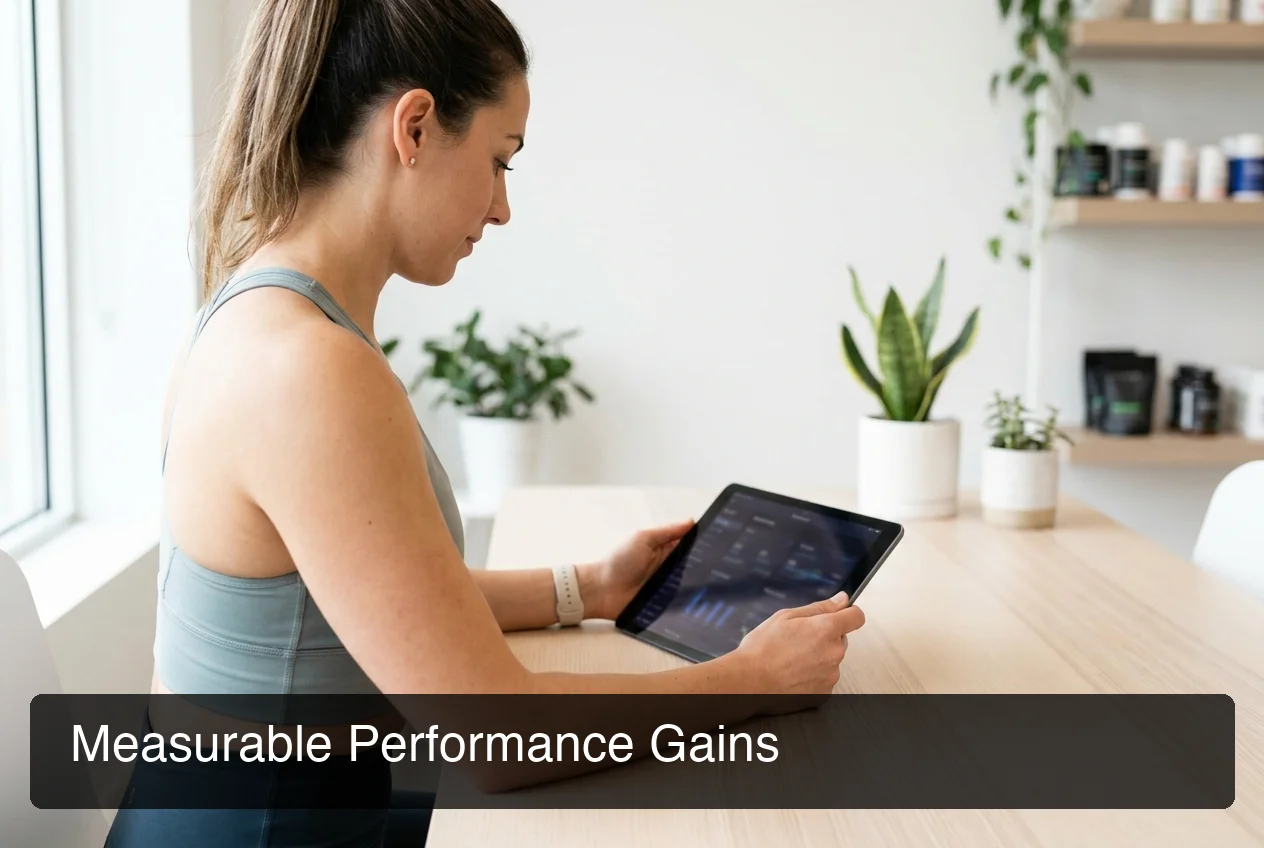 Structured protocol tracking separates real progress from guesswork — the foundation of any credible peptide before-and-after.
The most useful way to compare peptide before-and-after results is by goal category, timeline, and evidence quality. Semaglutide has the strongest clinical data with documented 10-15% body weight loss. Muscle-building peptides show consistent strength improvements. Healing peptides report strong user outcomes with growing clinical backing.
Here's a direct comparison across the most commonly used peptide categories:
| Peptide | Primary Before-After Result | Timeline | Evidence Level | Training Required? |
|---|---|---|---|---|
| Semaglutide / Tirzepatide | 10-15% body weight loss | 12-24 weeks | FDA-approved | No (helps) |
| CJC-1295 + Ipamorelin | 5-10 lbs lean muscle, faster recovery | 8-12 weeks | Strong anecdotal | Yes |
| BPC-157 | 30-50% pain score reduction | 4-8 weeks | Animal + anecdotal | No |
| GHK-Cu | Skin firmness, energy, cellular repair | 8-16 weeks | Early human trials | No |
| TB-500 | Injury recovery, flexibility | 4-8 weeks | Animal + anecdotal | No |
| Sermorelin | Improved sleep, body composition | 6-12 weeks | FDA-approved (Rx) | Optional |
Tracking these results is where most users fall short. Without logging baseline metrics and weekly check-ins, the "before" is a memory and the "after" is a guess. PeptideIQ's protocol tracking logs every dose, wellness metric, and body composition data point — giving you a real before-and-after dataset instead of a gut feeling.
If you're evaluating whether peptides actually produce these results, the evidence varies significantly by compound — for the full breakdown, see do peptides actually work.
By the numbers: Semaglutide clinical trials show 10-15% body weight reduction over 68 weeks. CJC-1295/Ipamorelin community logs report 5-8 lbs lean mass gain in 12 weeks combined with consistent resistance training.
What Metrics Should You Track for Peptide Before-and-After Progress?
The most useful peptide before-and-after metrics are: weekly body weight, primary goal metric (pain score, strength PR, or energy level), adherence rate, side effect log, and photos at consistent angles every 2 weeks. Baseline bloodwork before starting and at cycle end provides the most objective before-and-after evidence.
Most people take one photo on day 1 and one photo on day 90. That gives you two data points and no explanation for what happened between them.
The Baseline Snapshot (Day 0)
Before your first dose, document:
- Body weight and approximate body fat %
- Primary goal metric (current pain level, max lifts, or starting weight)
- Energy and mood baselines (1-10 scale)
- Front, side, and back photos in consistent lighting
- Baseline bloodwork if possible (IGF-1, testosterone, metabolic panel)
Weekly Check-In Metrics
During the cycle, log consistently:
- Scale weight trend (weekly average, not daily single readings)
- Energy, mood, and sleep quality (1-10)
- Side effects and severity
- Dose adherence — missed doses are critical context for result interpretation
- Any notable performance or appearance changes
Logging these produces the data needed for a meaningful comparison. For safety context on long-term protocol tracking, see are peptides safe and is peptide therapy safe.
Are Peptide Before-and-After Results Permanent, or Do They Reverse?
Peptide before-and-after results have different permanence depending on the compound. Fat loss from GLP-1s reverses significantly after stopping — studies show roughly two-thirds returns within a year; BPC-157 injury healing is typically permanent; muscle from GHRPs fades without training. Cellular changes from longevity peptides are the most durable category.
This is the most honest part of the before-and-after conversation: sustainability.
Result Durability by Category
| Peptide Category | What Reverses | What Stays |
|---|---|---|
| GLP-1 (fat loss) | Most weight loss reverses without maintenance | Improved metabolic habits may persist |
| GHRP (muscle/recovery) | Muscle gains fade without training | Neural adaptations, baseline fitness |
| BPC-157 (healing) | Healing is typically permanent | Functional recovery stays |
| GHK-Cu (longevity) | Skin effects gradually fade | Cellular repair benefits are cumulative |
The practical implication: peptides work best as protocol-based tools with clear cycle-and-rest periods, not indefinite supplements. Knowing when to run, when to rest, and how to maintain results is the difference between a one-time transformation and a sustained outcome.
 Evidence-based tracking reveals not just initial results but long-term durability — the real measure of peptide effectiveness.
Key insight: Longevity peptides (GHK-Cu, Epitalon) may have the most durable effects because they work at the cellular level — improving collagen synthesis, DNA repair, and telomere health in ways that don't fully reverse between cycles.
How Do Peptide Before-and-After Results Vary by Age, Gender, and Fitness Level?
Peptides before and after results vary substantially by baseline physiology. Men under 40 with training show faster GHRP gains; women report stronger responses to GLP-1 and longevity compounds. Users over 45 show the most dramatic changes from GHK-Cu and sermorelin — because natural growth hormone and collagen production has declined most significantly.
Age is often the biggest amplifier of peptide results. The lower your natural baseline of the hormone or signal the peptide stimulates, the more dramatic the observable change.
Age and Baseline Effect
- 20s-30s: Growth hormone is still relatively high — GHRP results are modest. BPC-157 healing results are fast due to better tissue regeneration capacity.
- 40s-50s: Natural GH has declined 15-20% per decade. Sermorelin and CJC-1295 produce more visible results. GHK-Cu anti-aging effects are most pronounced.
- 60s+: Greatest potential for before-and-after changes from longevity protocols. Cellular repair mechanisms have declined most significantly — response to intervention is amplified.
Fitness Level Effect
Trained athletes on GHRP protocols show faster absolute strength gains but smaller percentage improvements — they're operating near their genetic ceiling. Beginners or detrained users show more dramatic physique changes because the baseline is lower.
The bottom line: if you're an advanced athlete, set conservative physique expectations and track recovery metrics instead. If you're older or returning from injury, your before-and-after potential is likely higher than you expect.
Get Started with PeptideIQ
The difference between users who document clear before-and-after results and users who don't isn't the peptide — it's the tracking. PeptideIQ logs every dose, wellness metric, and protocol variable so your before-and-after data is real and reproducible, not reconstructed from memory.
Download PeptideIQ on the App Store
FAQ
How long after taking peptides do you see results?
Most users see the first measurable peptide before-and-after changes between weeks 3 and 6 of a consistent protocol. GLP-1 peptides show appetite and weight changes earliest — often by week 2-3. Muscle-building and healing peptides typically require 4-6 weeks before changes are clearly documented in tracked metrics.
What are realistic peptide before-and-after expectations for muscle growth?
Users on CJC-1295 and Ipamorelin with consistent resistance training report 5-10 lbs of lean muscle gain over a 10-12 week cycle. Recovery speed is often the first measurable change — users log 20-30% faster post-workout recovery by week 6, which then enables greater training volume and subsequent physique changes.
Do peptide results vary between men and women?
Yes — women tend to respond more strongly to GLP-1 peptides and longevity compounds, while men under 40 show stronger absolute results from GHRP protocols. Hormonal baseline differences affect both the magnitude and timeline of before-and-after results. Both groups benefit from protocol tracking to identify which variables drive their specific outcomes.
Are the before-and-after results shared online accurate?
Many community-reported results are real but lack protocol documentation — you cannot evaluate or replicate a result you cannot verify. The most credible transformations come from tracked protocols with logged dosage, adherence, training variables, and baseline metrics. Untracked results are impossible to reproduce because the variables that drove them are unknown.
What happens to peptide results after you stop?
GLP-1 fat loss reverses significantly without maintenance — clinical data shows roughly two-thirds of weight returns within 12 months of stopping. BPC-157 injury healing is typically permanent, while muscle gains from GHRP protocols fade without continued training. The fitness baseline and metabolic improvements generally persist.
Do peptides work without diet and exercise changes?
GLP-1 peptides produce measurable fat loss without dietary changes due to appetite suppression — clinical trials confirm this. Muscle-building peptides (GHRPs) require a training stimulus to show physique changes. Healing and longevity peptides work independently of exercise, while diet quality amplifies every category — peptides accelerate the protocol you're already on.