
BPC-157 Capsules vs Injection | PeptideIQ
BPC 157 Capsules vs Injection: What the Bioavailability Data Actually Shows
BPC 157 capsules vs injection comes down to one number most vendor pages skip: bioavailability. That gap isn't a rounding error — it's the difference between a protocol that shows results in a month and one that might take twice as long, at a fraction of the effective dose, often because the oral format is easier to sell than it is to dose correctly.
Key Takeaways
- BPC-157 injections have 40-50% bioavailability vs oral capsules at 5-10% — injections are significantly more efficient
- Oral capsules require 5-10× higher doses to match injection efficacy, making them substantially more expensive
- Injection protocols show measurable results in weeks 3-6; oral routes typically require 8+ weeks minimum
- Your administration choice directly impacts dosing and protocol timeline — PeptideIQ calculates both automatically
- Most committed users choose injections for speed and certainty; oral forms are primary for convenience or accessibility barriers
Contents
- What Is the Bioavailability Difference in BPC 157 Capsules vs Injection?
- How Much More BPC-157 Do You Need to Take Orally vs by Injection?
- BPC 157 Capsules vs Injection: Which Format Actually Works Better?
- How Should You Decide Between Capsules and Injection for Your Goal?
- How Long Does It Take for Oral BPC-157 Capsules to Work?
- Why Would You Choose BPC-157 Oral Over Injections?
- Why PeptideIQ Users Don't Guess at the Format-to-Dose Math
- Get Started with PeptideIQ
- FAQ
What Is the Bioavailability Difference in BPC 157 Capsules vs Injection?
BPC-157 injections deliver roughly 40-50% bioavailability, meaning nearly half the dose reaches systemic circulation intact. Oral capsules deliver only 5-10%, because stomach acid and digestive enzymes break down most of the peptide before it can be absorbed. That's not a minor difference — it's an 8-fold gap in some cases.
 Same peptide, two very different absorption stories.
Subcutaneous injection bypasses the digestive system entirely. The peptide enters fatty tissue and diffuses into the bloodstream largely intact, which is why injected BPC-157 shows up in plasma within 15-30 minutes.
Oral BPC-157 has to survive an acidic stomach environment and first-pass liver metabolism before any of it reaches circulation. Some formulations use enteric coating or stabilized capsules to improve survival rates, but even the best oral products can't fully close that gap.
By the numbers: A 250mcg injected dose delivers roughly 100-125mcg of active peptide into circulation. A 250mcg oral capsule delivers closer to 12-25mcg — you'd need a 2,000-2,500mcg capsule dose to match it.
How Much More BPC-157 Do You Need to Take Orally vs by Injection?
To match the systemic exposure of a standard injected dose, oral BPC-157 typically needs 5-10 times more peptide by weight. A common 250mcg injection protocol translates to an oral dose in the 1,250-2,500mcg range — and that's before accounting for individual variation in gut absorption.
This multiplier matters for two practical reasons. First, cost: peptide pricing scales with milligrams, so a 5-10x dose multiplier means oral protocols cost meaningfully more per week of equivalent exposure. Second, dosing precision gets harder — capsule manufacturers rarely publish third-party absorption testing, so the "effective dose" on any given label is an estimate, not a measured number.
Our BPC-157 dosage reference guide breaks down exact injection dosing ranges by goal and body weight, which is the baseline most oral dose calculations should be built from. If you're specifically weighing the oral route, our BPC-157 oral peptide guide covers bioavailability and dosing requirements for that format in more depth.
- Standard injection dose: 200-500mcg per administration, 1-2x daily
- Equivalent oral dose: 1,000-5,000mcg per administration to approximate the same exposure
- Dosing math changes again if you're stacking — regardless of format, actual dose ultimately scales with body weight, not a flat number
BPC 157 Capsules vs Injection: Which Format Actually Works Better?
For systemic healing goals — tendons, ligaments, joints, muscle — injections work better because they deliver more active peptide with more predictable timing. Capsules can still contribute meaningfully to gut-specific repair, where local exposure in the digestive tract matters more than systemic circulation.
That distinction is where most comparison articles get sloppy. They treat "which works better" as a single universal answer, when the honest answer depends on what you're actually trying to heal.
| Factor | Capsules (Oral) | Injection (Subcutaneous) |
|---|---|---|
| Bioavailability | 5-10% | 40-50% |
| Typical effective dose | 1,000-2,500mcg | 200-500mcg |
| Onset for systemic effect | 8+ weeks | 3-6 weeks |
| Best for | Gut/digestive repair, accessibility barriers | Tendon, ligament, muscle, systemic healing |
| Needle required | No | Yes |
| Relative cost per protocol | Higher (larger doses needed) | Lower (smaller effective doses) |
For advanced protocol design — say, running BPC-157 alongside TB-500 for a combined systemic healing stack — format choice compounds fast, since two peptides means two absorption curves to track. Our BPC-157 TB-500 stack protocol walks through how that combination is typically dosed.
Vendor comparison pages tend to flatten this into a single "capsules are convenient, injections are effective" line, which is true but incomplete. It skips the part where the convenience only holds up if you're also willing to accept a longer timeline and a larger, more expensive dose to get there.
How Should You Decide Between Capsules and Injection for Your Goal?
The decision comes down to two questions: how fast do you need results, and how committed are you to the administration method? Users chasing measurable healing on a deadline — an injury, a competition, a return-to-training date — do better with injections. Users limited by access, needle comfort, or logistics do better starting oral and adjusting expectations accordingly.
Think of it less as "which is better" and more as a tradeoff you're choosing deliberately:
- Committed and goal-driven? Injections give you the fastest, most predictable path — 3-6 weeks to measurable change, at a lower effective dose.
- New to peptides or needle-averse? Oral capsules remove the biggest barrier to starting at all, as long as you accept the 8+ week timeline and the higher dose requirement.
- Focused on gut health specifically? Oral may be the more logical starting point regardless of speed, since that use case doesn't lean on systemic bioavailability the same way.
- Running a longer cycle already? The oral timeline penalty matters less if your protocol was already going to run 10-12 weeks for other reasons.
Most committed users land on injections once they understand the math. The ones who stick with oral tend to have a specific reason — access, comfort, or a gut-focused goal — rather than a belief that the formats are interchangeable.
How Long Does It Take for Oral BPC-157 Capsules to Work?
Oral BPC-157 typically requires 8 or more weeks before users notice systemic improvement, roughly double the 3-6 week window common with injections. The lower bioavailability means it takes longer to accumulate a meaningful tissue concentration.
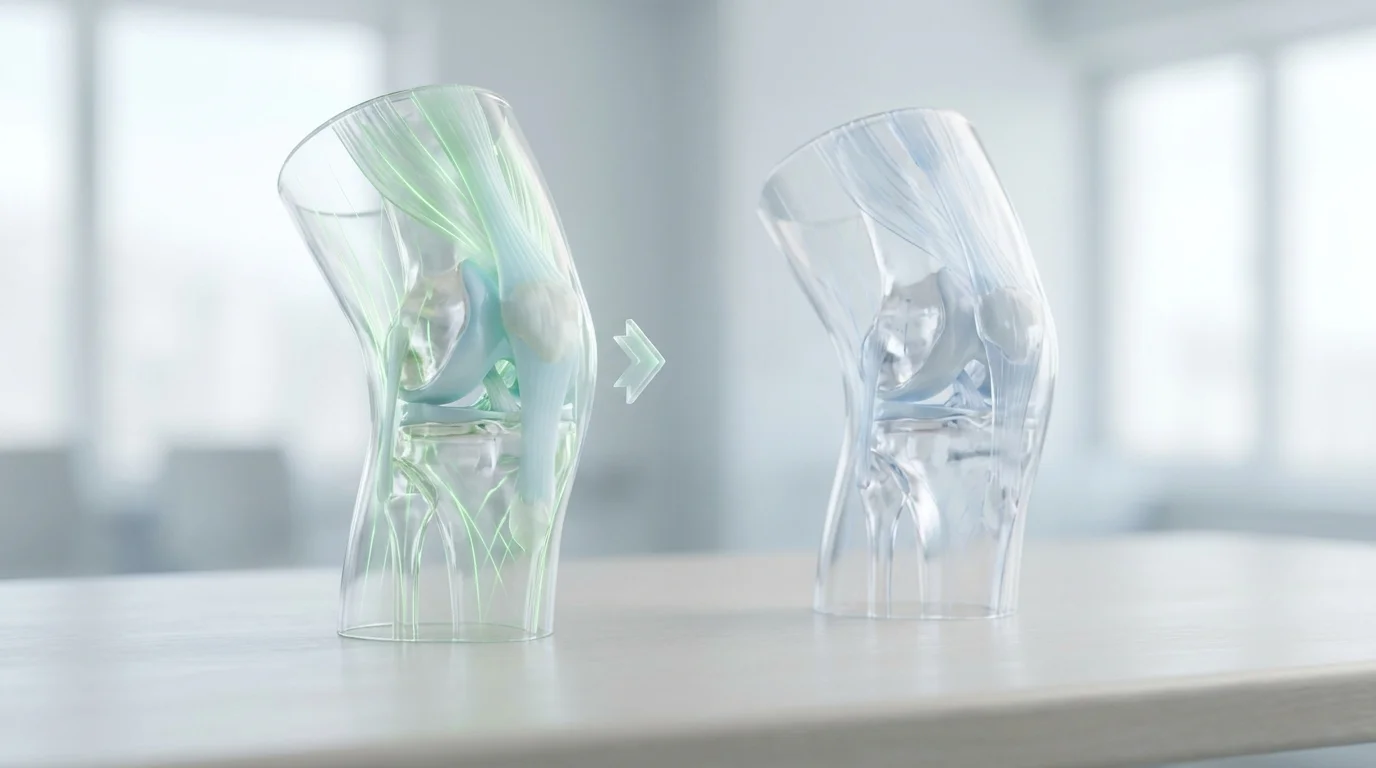 Same destination, different speed — and a longer wait can mean a longer commitment to consistent dosing.
That extended timeline isn't just about patience. It's a compliance problem. An 8-12 week oral protocol has more days where a missed dose can quietly erode progress, compared to a 3-6 week injection cycle where consistency is easier to maintain.
Gut-focused use is the exception. Oral BPC-157 for digestive complaints can show earlier subjective relief in some users — likely because local GI exposure doesn't depend on systemic bioavailability the same way tendon or muscle healing does.
Why Would You Choose BPC-157 Oral Over Injections?
Speed and efficiency clearly favor injections. So why does the oral form still have a real audience?
- Needle aversion. Some users simply won't self-inject, regardless of the bioavailability tradeoff.
- Travel and discretion. Capsules pack easily, need no refrigeration mid-trip, and don't require reconstitution kits.
- Accessibility barriers. Sourcing sterile water, syringes, and proper storage isn't equally easy for everyone.
- The convenience factor. No draw, no injection site rotation, no reconstitution math — just a capsule with food.
Common mistake: Assuming the convenience factor means the dose math is optional. It isn't — an oral capsule protocol still needs a deliberate dose adjustment for the bioavailability gap, not just "take one capsule instead of one shot."
None of these reasons make oral BPC-157 more effective. They make it more accessible for people who would otherwise not use BPC-157 at all — which is a legitimate reason to choose it, as long as the dosing and timeline expectations are set correctly going in.
Why PeptideIQ Users Don't Guess at the Format-to-Dose Math
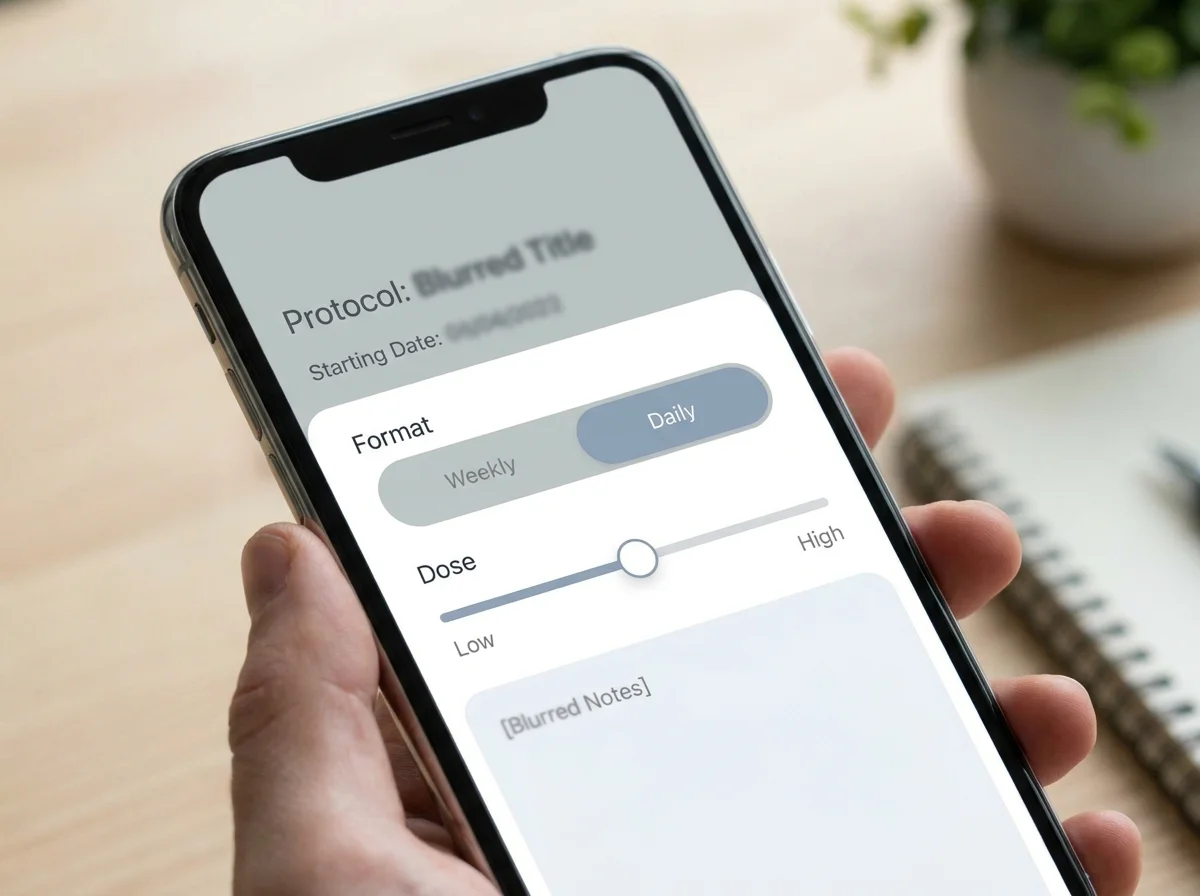 Format switches from injection to oral (or back) without the user redoing the math by hand.
This is exactly the kind of decision PeptideIQ's Cycle Planner is built to handle. When you select a peptide and set your administration format, the protocol planner auto-adjusts the dosing calculation behind the scenes — it knows the bioavailability difference between capsules (roughly 5-10%) and injections (roughly 40-50%), and scales the recommended dose and timeline accordingly instead of leaving you to eyeball a multiplier.
It matters most when someone switches formats mid-journey — starting oral for convenience, then moving to injections once they're comfortable, or vice versa for a trip or supply gap. Most trackers just log "took a dose" with no awareness that the number means something different depending on format. PeptideIQ's planner treats format as a first-class input to the dose calculation, not an afterthought.
Bottom line: The format you choose changes your numbers, not just your routine — and a system that adjusts for that automatically removes the single biggest source of dosing error in oral-to-injection comparisons.
Get Started with PeptideIQ
Choosing between BPC-157 capsules and injections shouldn't require a spreadsheet. PeptideIQ's protocol planner calculates the right dose and expected timeline for your chosen format automatically, so you're never guessing whether your oral dose is actually equivalent to the injection protocol you read about.
Download PeptideIQ on the App Store
FAQ
Are BPC-157 capsules as effective as injections?
Not for systemic healing goals like tendons or muscle — injections deliver 40-50% bioavailability versus 5-10% for capsules. Oral capsules can still contribute to gut-specific repair, where local digestive tract exposure matters more than how much peptide reaches systemic circulation.
Can you switch between BPC-157 capsules and injections mid-cycle?
Yes, but the dose needs to change with the format. Switching from injection to oral means increasing the dose 5-10x to maintain similar exposure; switching back means reducing it. Track the switch date so you can judge results against the correct baseline.
Why is BPC-157 bioavailability so much lower orally?
Stomach acid and digestive enzymes break down most peptide structures before they can be absorbed, and first-pass liver metabolism further reduces what reaches circulation. Injection bypasses both barriers, which is why the bioavailability gap is so large.
Do BPC-157 capsules work for gut health specifically?
Oral BPC-157 was originally researched largely in the context of gastrointestinal protection and healing, so local digestive tract exposure may matter more than systemic bioavailability for that specific use case. Systemic goals like tendon repair still favor injection.
How much BPC-157 capsule dose replaces a standard injection dose?
A common 250mcg injected dose typically requires roughly 1,250-2,500mcg orally to approximate similar systemic exposure, based on the 5-10x bioavailability multiplier. Exact numbers vary by individual absorption and capsule formulation.
Is oral BPC-157 safe to take without cycling?
BPC-157 safety data for either format is still limited to animal studies and anecdotal human use, so cycling with rest periods is the more cautious approach regardless of administration route. Evidence quality — not just format — should shape how conservative your protocol is.