
BPC-157 Oral Peptide: Bioavailability & Protocols
BPC 157 Oral Peptide: Bioavailability, Dosage & Protocols
Most people searching for BPC 157 oral peptide find tablets first. The research says injections work better — and there's a clear scientific reason why.
 Understanding BPC-157 oral peptide bioavailability is the first step to choosing the right delivery route.
Key Takeaways
- Oral BPC-157 has an estimated bioavailability of just 5–15% — most active peptide is broken down before reaching systemic circulation
- Sublingual (under-tongue) absorption shows theoretical promise (~20–35%) but lacks human clinical data
- Subcutaneous injection delivers 85–95% bioavailability with consistent, predictable results
- Most evidence-based protocols use 250–500 mcg subcutaneous injection once or twice daily for 4–12 weeks
- Tracking injection dates, dose amounts, and subjective response is the only reliable way to know if BPC-157 is working
Contents
- What Is Oral BPC-157?
- Is BPC 157 Oral Peptide Bioavailable?
- Does Oral BPC-157 Work as Well as Injections?
- How Much BPC 157 Oral Peptide Should You Take?
- How Long Does Oral BPC-157 Take to Work?
- What Are the Side Effects of Oral BPC-157?
- Can You Combine Oral BPC-157 With Other Peptides?
- Frequently Asked Questions
What Is Oral BPC-157?
BPC-157 (Body Protection Compound-157) is a synthetic 15-amino-acid peptide derived from a gastric juice protein, studied in animal models for tissue healing, gut repair, and tendon recovery. "Oral BPC-157" refers to any capsule, tablet, or liquid form meant to be swallowed — as opposed to subcutaneous injection, which is the primary research-validated route.
BPC-157 is a research peptide with no FDA approval for human use. If you're new to the distinction between research peptides and approved compounds, the complete guide to peptide basics provides a useful foundation before diving into BPC-157's delivery mechanics. For a full reference on which peptides carry regulatory approval, the list of FDA-approved peptides is worth reviewing alongside this article.
Why Does the Oral Form Exist?
Oral BPC-157 exists primarily because injections create a barrier for many users. Capsules require no reconstitution, no needles, and no injection technique — and for people targeting gut-specific benefits like IBD, gastric ulcers, or leaky gut, swallowing the peptide so it passes through the GI tract directly has genuine theoretical appeal.
The key question is whether enough BPC-157 survives digestion to produce a meaningful systemic effect.
Key insight: BPC-157 was originally studied for its effects on the gastrointestinal tract — making the oral argument compelling at first glance. But peptides are chains of amino acids, and the digestive system is designed to break those chains apart.
Is BPC 157 Oral Peptide Bioavailable?
Oral BPC-157 bioavailability is estimated at 5–15% in most analyses, meaning up to 95% of the active peptide is degraded by stomach acid and GI enzymes before reaching systemic circulation. This makes oral BPC-157 a significantly less efficient delivery route than subcutaneous injection for any goal beyond the gut itself.
 Injection delivers far more active BPC-157 to systemic circulation than swallowing a capsule at the same nominal dose.
How BPC-157 Breaks Down in the Gut
Peptides are particularly vulnerable to proteolytic enzymes — the same enzymes that digest the protein in food. Pepsin, trypsin, and chymotrypsin cleave BPC-157's amino acid chain before it can be absorbed through the intestinal wall.
Liposomal formulations (like those marketed by Quicksilver Scientific) attempt to protect the peptide by encasing it in a lipid bubble. This can improve absorption somewhat, but independent clinical data on liposomal BPC-157 bioavailability in humans is largely absent.
Oral vs. Sublingual vs. Injection
| Route | Estimated Bioavailability | Onset | Consistency |
|---|---|---|---|
| Oral (swallowed capsule) | 5–15% | 1–4 hours | Low — highly variable |
| Sublingual or buccal | ~20–35% (theoretical) | 30–60 min | Moderate — limited data |
| Subcutaneous injection | ~85–95% | 30–60 min | High — predictable |
Sublingual delivery — holding BPC-157 solution under the tongue — bypasses first-pass GI degradation by absorbing through the sublingual mucosa directly into the bloodstream. The theory is sound, and some users report better results than swallowing capsules. But human studies are absent; most cited numbers are extrapolated from similar peptide compounds.
By the numbers: Subcutaneous injection delivers up to 19× more active BPC-157 than a swallowed capsule at equivalent doses. A 500 mcg oral capsule may yield the systemic equivalent of just 25–75 mcg.
Does Oral BPC-157 Work as Well as Injections?
For systemic healing goals — tendon repair, ligament recovery, joint protection, or neurological benefits — oral BPC-157 does not work as well as subcutaneous injection. The bioavailability gap is too large. For localized gut benefits, oral delivery may be comparable or superior because the peptide acts directly on the GI mucosa before it is broken down.
This is a meaningful distinction. Multiple animal studies show BPC-157 oral administration producing GI healing benefits — IBD, gastric ulcers, and intestinal permeability all respond in rodent models. The peptide doesn't need to survive digestion when the target tissue is the gut wall itself.
The Systemic vs. Local Delivery Trade-Off
For any goal beyond the GI tract — muscle recovery, tendon healing, neurological effects, joint protection — BPC-157 must reach systemic circulation. With only 5–15% surviving oral transit, you would need to take 5–10× the standard injection dose to approximate the same blood levels.
That is both impractical and expensive. Most serious users choose subcutaneous injection for this reason.
For beginners setting up their first protocol, the peptide guide for beginners covers injection setup, reconstitution, and syringe selection step by step — including what BAC water is and how to draw your first dose.
How Much BPC 157 Oral Peptide Should You Take?
Standard oral BPC-157 dosage runs 500–1,500 mcg per day, split across 1–2 doses taken on an empty stomach. The higher nominal dose partially compensates for poor bioavailability. Subcutaneous injection protocols use 250–500 mcg once or twice daily — delivering comparable or greater active peptide at a fraction of the stated dose.
The peptide dosing calculator removes the math for injection protocols entirely — input vial size, BAC water volume, and target dose, and it returns exact syringe units to draw.
Oral BPC-157 Protocol
- Dose: 500–1,500 mcg/day
- Frequency: Once or twice daily
- Timing: Empty stomach, 20–30 min before food
- Cycle length: 8–12 weeks continuous
- Best for: GI-specific conditions (IBD, gastric ulcers, gut permeability)
Subcutaneous Injection Protocol
- Dose: 250–500 mcg/day
- Frequency: Once or twice daily
- Timing: Morning or post-workout
- Cycle length: 4–12 weeks
- Best for: Tendon repair, joint healing, muscle recovery, neurological support
Should You Take BPC-157 on an Empty Stomach?
For oral dosing, empty stomach administration is consistently recommended. Food triggers digestive enzyme release, which further degrades the peptide before absorption.
For injection, this fasting requirement is irrelevant — subcutaneous delivery bypasses the digestive system entirely, and timing relative to meals has no documented impact on absorption.
How Long Does Oral BPC-157 Take to Work?
Oral BPC-157 users typically report early effects within 1–3 weeks for gut symptoms and 4–8 weeks for musculoskeletal recovery — though inconsistent absorption means timelines vary widely between individuals. Injection users see more reliable timelines: initial effects within days, with peak repair benefit between weeks 3–6.
 BPC-157 healing timelines vary significantly by delivery method — injection produces more predictable, trackable outcomes.
For a detailed breakdown of what to expect week by week — including dose-specific response timelines by condition — the BPC-157 timeline guide covers the full picture and is a useful companion to this article.
Why Oral Results Are Harder to Interpret
Variable absorption is the core problem. Two people taking the same oral dose may have very different blood levels due to differences in gastric acid secretion, gut motility, and enzyme activity. This makes it nearly impossible to correlate dose with outcome.
With injection, the bioavailability is consistent. If you're not seeing results at 250 mcg twice daily after 6 weeks, you can confidently adjust upward — the variable is dosage, not absorption efficiency.
Bottom line: Oral BPC-157 timelines are harder to optimize because the input is unpredictable. Injection protocols give you a fixed starting point — which is the prerequisite for any meaningful tracking and adjustment.
What Are the Side Effects of Oral BPC-157?
Oral BPC-157 is generally well-tolerated in the doses studied. Common side effects include nausea, mild digestive discomfort, and transient fatigue — most resolve within the first 1–2 weeks. Serious adverse events are not documented in available literature, though long-term human safety data is limited given BPC-157's research-only status.
BPC-157 is not FDA-approved. Its classification as a research peptide means formal human safety trials are absent, and everything known comes from animal studies and user-reported experiences. This reality should factor into any decision to use it.
What to Watch For
Common tolerability signals by severity:
- Nausea: Most often on first use; typically resolves within the first week
- Fatigue: Reported by a small percentage of users in the first few days; mild and transient
- Headache: Usually linked to dehydration; increases fluids before assuming it's compound-related
- Digestive changes: Loose stools or mild GI discomfort, most common at high oral doses
Kidney impact appears minimal in animal studies, with some research showing cytoprotective effects. Any persistent side effects warrant stopping use and consulting a healthcare provider.
Can You Combine Oral BPC-157 With Other Peptides?
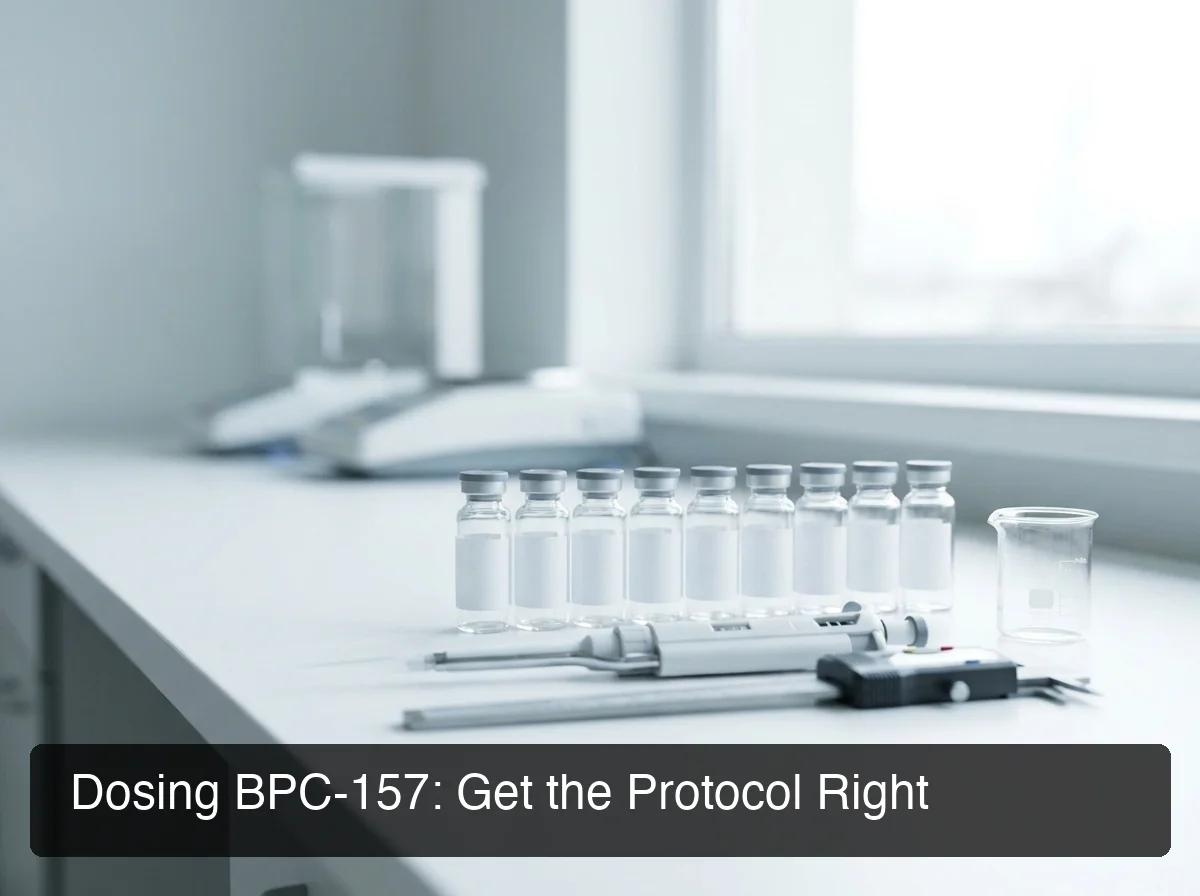 Running complementary protocols like BPC-157 combined with TB-500 requires a structured logging system to distinguish which compound is driving results.
BPC-157 stacks well with TB-500, Thymosin Alpha-1, and GHK-Cu for complementary healing protocols. The BPC-157 and TB-500 combination is the most widely used pairing — BPC-157 targets local tissue repair while TB-500 drives systemic recovery and anti-inflammatory activity, with overlapping but distinct mechanisms.
When running stacked complementary protocols, the challenge is attribution: which peptide is driving the improvement, and which dose is optimal? Without structured tracking across both compounds, you're guessing.
Common BPC-157 Stacks
- BPC-157 + TB-500: Synergistic tissue repair; BPC-157 targets the local injury site, TB-500 drives systemic healing and reduces inflammation. The most-used injury recovery combination.
- BPC-157 + Thymosin Alpha-1: Immune modulation plus tissue repair; used for autoimmune and chronic inflammatory conditions where immune dysregulation is part of the picture.
- BPC-157 + GHK-Cu: Cellular regeneration focus; GHK-Cu supports collagen synthesis and tissue remodeling, making this combination popular for longevity and skin health alongside recovery goals.
PeptideIQ tracks each peptide in your stack separately — dose, route, timing, and response — and gives you an AI co-pilot that surfaces insights grounded in your specific data, not generic peptide information. When you're stacking two compounds with overlapping timelines, having a system that knows both protocols is what separates guessing from knowing.
For those planning to add injections to their protocol, separate guides cover the full technical process for reconstituting BPC-157 and preparing your injection correctly.
Get Started with PeptideIQ
BPC-157 produces real, measurable results — but only if you can separate signal from noise. Tracking injection dates, dosage amounts, and weekly response data is the only reliable way to know whether your protocol is working — and when to adjust.
Download PeptideIQ on the App Store — the AI-powered guided system that tracks your peptide protocol, knows your cycle, and delivers insights specific to your data.
Frequently Asked Questions
Is there an oral version of BPC-157?
Yes. Oral BPC-157 is available as capsules, tablets, and liposomal liquid formulations. However, oral bioavailability is estimated at just 5–15%, meaning most active peptide is degraded before reaching systemic circulation. Liposomal versions aim to improve this, but independent human data confirming meaningfully improved bioavailability remains limited.
Can you take BPC-157 orally every day?
Yes. Daily oral BPC-157 is a common protocol — typically 500–1,500 mcg split across one or two doses taken on an empty stomach, run for 8–12 continuous weeks. For non-GI goals like tendon or joint recovery, daily subcutaneous injection at 250–500 mcg delivers far more consistent results than daily oral dosing at any dose.
What is the oral BPC-157 dosage?
The standard oral BPC-157 dosage is 500–1,500 mcg per day, split across 1–2 doses, taken on an empty stomach. The higher nominal dose compensates partially for low bioavailability. Subcutaneous injection protocols use 250–500 mcg daily and typically deliver equivalent or greater systemic active-peptide levels at a lower stated dose.
Is BPC-157 hard on kidneys?
Animal studies do not indicate significant kidney toxicity at standard BPC-157 doses. In rodent models, BPC-157 has shown cytoprotective effects across multiple organ systems, including the kidneys. Long-term human safety data is absent. Any user with pre-existing kidney conditions should consult a healthcare provider before starting a BPC-157 protocol.
What is the difference between liposomal and regular oral BPC-157?
Liposomal BPC-157 encases the peptide in a lipid bubble designed to protect it from digestive enzymes and improve mucosal absorption. Regular oral capsules offer no such protection. Liposomal formulations likely improve bioavailability over standard capsules, but independent clinical confirmation of the magnitude of improvement in humans is not currently available.
Does oral BPC-157 work for gut issues?
Oral BPC-157 may be effective for GI-specific conditions — IBD, gastric ulcers, and leaky gut — because the peptide can act topically on the gut lining before being broken down. Animal studies support this application specifically. For gut goals, oral administration is a reasonable delivery route; for systemic healing goals, injection is the evidence-supported choice.