
How Long Does BPC-157 Take to Work? | PeptideIQ
How Long Does BPC-157 Take to Work? Timeline, Results by Condition & What to Expect
If you've started a BPC-157 protocol, the first question you'll ask is: how long does BPC-157 take to work? The honest answer is more nuanced than most sources admit — and it depends almost entirely on which tissue you're healing.
Key Takeaways
- BPC-157 effects begin at the cellular level within hours, but visible healing results typically appear within 2–8 weeks depending on the condition being treated.
- Consistent dosing, proper injection technique, and adequate rest are critical variables that determine how quickly you experience results.
- Research shows BPC-157 accelerates tissue repair across gut, skin, muscle, and connective tissue — with gut issues showing the fastest response (2–4 weeks).
- Timeline varies dramatically by condition: minor injuries show results in 2–3 weeks, while complex gut or joint issues may require 8–12 weeks of consistent use.
- Tracking your dose log, pain scores, and wellness data is the clearest way to know if the protocol is working — invisible progress is still progress.
Contents
- What Is BPC-157 and How Does It Work?
- How Long Does BPC-157 Take to Work?
- What Does the Research Say About BPC-157 Timeline?
- How Long Does BPC-157 Take to Work by Condition?
- What Factors Affect How Quickly BPC-157 Delivers Results?
- How to Optimize Your BPC-157 Protocol for Faster Results?
- BPC-157 vs Other Healing Peptides: Timeline Comparison
- BPC-157 in PeptideIQ: Your Tracking and Protocol Companion
- Frequently Asked Questions
What Is BPC-157 and How Does It Work?
BPC-157 (Body Protection Compound-157) is a synthetic peptide derived from a protein found in human gastric juice. It works by activating growth hormone receptors, upregulating nitric oxide synthesis, and stimulating angiogenesis — the formation of new blood vessels — which accelerates tissue repair across gut lining, muscle, tendon, ligament, and skin.
Unlike most compounds, BPC-157 operates through several parallel pathways simultaneously — which explains its versatility across tissue types.
 BPC-157 works via multiple biological pathways — the timeline depends on which tissue is healing.
How BPC-157 Activates Healing
Within hours of administration, BPC-157 begins:
- Upregulating VEGF (vascular endothelial growth factor) to accelerate new blood vessel formation
- Suppressing pro-inflammatory cytokines that stall the healing process
- Activating tendon fibroblasts to rebuild connective tissue
- Protecting the gut lining from further damage while initiating mucosal repair
The gap between "the peptide is working" and "I can feel it working" is where most users lose patience — and that gap is what this article maps precisely.
Key insight: BPC-157 begins acting at the molecular level within 24–48 hours. The visible or felt improvement always lags behind the biology by days to weeks.
How Long Does BPC-157 Take to Work?
BPC-157 typically produces the first noticeable effects within 1–2 weeks, with most users experiencing meaningful improvement by weeks 4–6. The full extent of healing — particularly for chronic injuries or gut issues — generally requires 8–12 weeks of consistent use. Cellular-level activity begins within hours, but subjective improvement takes longer to manifest.
This timeline isn't a failure of the peptide. It reflects the biology of tissue repair, which is inherently staged — you cannot fast-track collagen synthesis or mucosal regeneration.
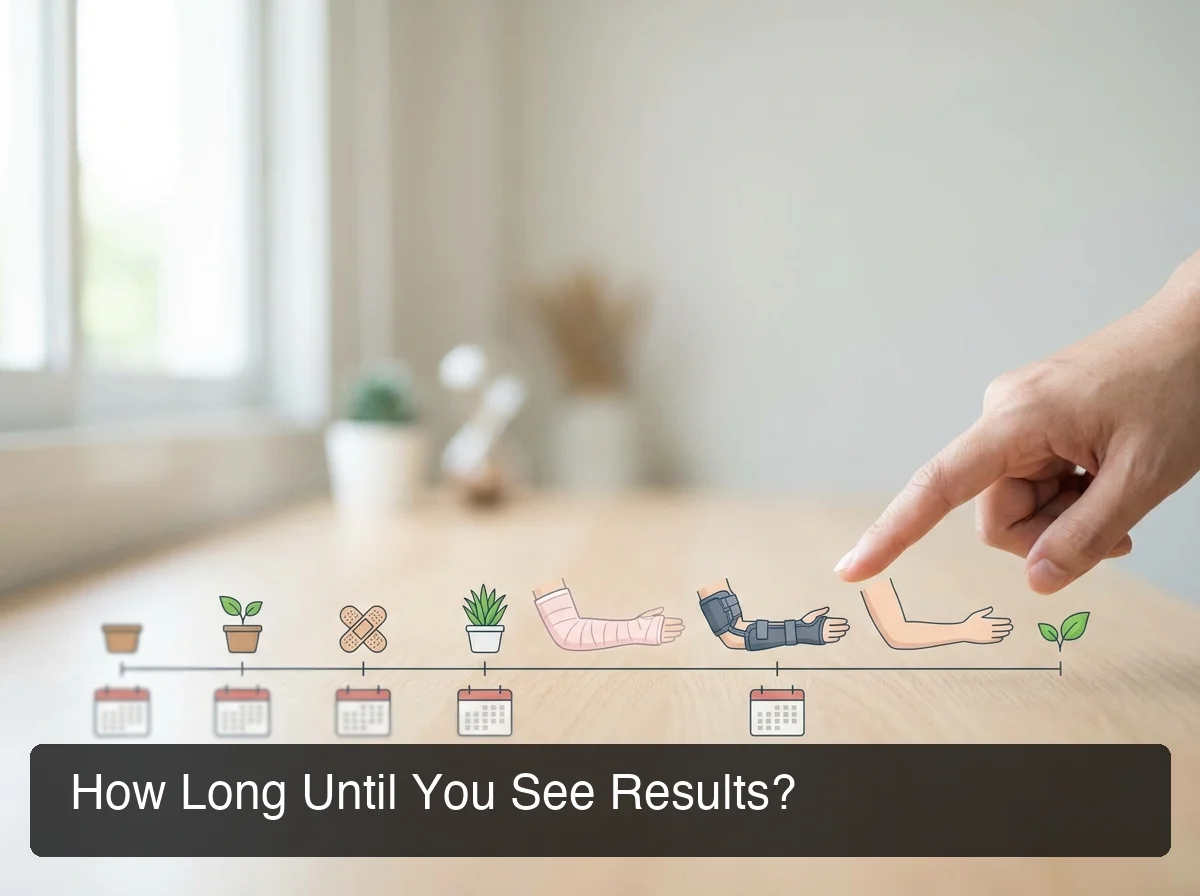 Staged improvement: inflammation reduction first, then functional recovery, then structural repair.
Week-by-Week BPC-157 Timeline
| Week | What's Happening | What You May Feel |
|---|---|---|
| Days 1–3 | Anti-inflammatory cascade activates | Subtle warmth at injury site, mild soreness reduction |
| Week 1–2 | Angiogenesis begins, VEGF upregulated | Reduced baseline pain, improved sleep in some users |
| Week 2–4 | Fibroblast activation, collagen begins rebuilding | Noticeable mobility improvement, reduced stiffness |
| Week 4–6 | Significant tissue remodeling underway | Functional improvement — movement that was restricted becomes easier |
| Week 6–12 | Structural repair, connective tissue strengthening | Near-full recovery in many injury cases; gut healing stabilizes |
By the numbers: Studies show BPC-157 accelerated tendon repair by 2–4x compared to controls in animal models. Human anecdotal reports consistently cluster first improvements in the 10–14 day window.
What Does the Research Say About BPC-157 Timeline?
The bulk of BPC-157 research is from animal models, and results are consistently remarkable. Rats with severed tendons showed full functional recovery in 4–6 weeks with BPC-157 vs 10+ weeks in controls. Human clinical data is limited but growing — anecdotal reports from thousands of self-experimenters align closely with the animal model timelines.
BPC-157 carries a "Strong Animal Evidence" classification. The mechanism is understood, the animal data is robust, and the human anecdotal base is extensive — but large-scale human RCTs are still pending.
What Animal Studies Show
Animal studies documented BPC-157 healing effects across multiple tissue types:
- Tendon and ligament: Full functional recovery in 4–6 weeks vs 10–14 weeks in controls
- Gut mucosa: Significant ulcer healing within 7–14 days
- Muscle tissue: Accelerated repair after crush injury, 2–3 week advantage over controls
What Human Anecdotal Data Shows
The self-experimenter community shows remarkably consistent patterns:
- Day 3–7: Reduced resting pain and better sleep in some users
- Week 2: The most commonly reported "first clear improvement" point
- Week 4–6: Functional recovery for acute injuries in most users
- Week 8–12: Resolution of chronic injuries and persistent gut issues
Bottom line: The research supports a 2–6 week window for noticeable improvement in acute injuries, and 8–12 weeks for chronic or complex conditions. Anyone claiming overnight results is selling something.
How Long Does BPC-157 Take to Work by Condition?
BPC-157 timeline varies significantly based on the condition being treated. Gut and skin issues tend to respond fastest (2–4 weeks) because they involve surface-level mucosal and epithelial tissue. Tendons, ligaments, and joints respond slowest (6–12 weeks) because connective tissue has low blood supply and remodels gradually.
Here is a condition-by-condition breakdown based on animal data and aggregated self-experimenter reports:
BPC-157 Timeline by Condition
| Condition | First Noticeable Effects | Significant Improvement | Full Recovery Range |
|---|---|---|---|
| Gut / digestive (IBS, leaky gut, ulcers) | 1–2 weeks | 2–4 weeks | 4–8 weeks |
| Skin healing / wound repair | 1–2 weeks | 2–3 weeks | 3–6 weeks |
| Muscle strain / tears | 2–3 weeks | 3–5 weeks | 4–8 weeks |
| Tendinitis / tendon injury | 3–4 weeks | 5–8 weeks | 8–12 weeks |
| Ligament damage (partial tears) | 3–4 weeks | 6–8 weeks | 10–16 weeks |
| Joint inflammation | 2–3 weeks | 4–6 weeks | 8–12 weeks |
| Nerve-related pain | 2–4 weeks | 4–8 weeks | Variable |
Why Gut Issues Respond Fastest
The GI tract has extremely high cell turnover (gut epithelial cells replace every 3–5 days), and BPC-157 was originally derived from gastric juice — which may explain its particularly strong activity there. Users with IBD, leaky gut, or recurring GI inflammation consistently report improvement within the first 2 weeks, faster than any other tissue type.
What Factors Affect How Quickly BPC-157 Delivers Results?
The five most significant variables in BPC-157 timeline are: dosage accuracy, administration method (injection vs oral), injection site consistency, protocol adherence (missed doses compound slowdown), and severity of the underlying condition. Individual biology — age, inflammation baseline, sleep quality — creates additional variation of 2–4 weeks in either direction.
1. Dose and Frequency
The commonly cited effective range is 200–500 mcg per day, typically split into 1–2 injections. Underdosing significantly extends the timeline — a user at 100 mcg/day may see 50–70% of the results at 2x the time.
2. Injectable vs Oral Administration
Subcutaneous or intramuscular injection delivers BPC-157 with near-complete bioavailability. Oral capsules are faster and easier, but evidence suggests reduced systemic bioavailability — though they may be more effective for gut-specific conditions where local delivery matters.
For systemic and injury healing protocols, learn proper subcutaneous injection technique to maximize absorption.
3. Injection Site for Localized Healing
For targeted tissue repair, injection near the injury site (not at it — typically 2–3 cm away) appears to produce faster localized results than distal injection. Understanding where to inject peptides and rotating sites properly prevents tissue fatigue and maintains absorption quality.
4. Protocol Adherence
Missing doses is not neutral. BPC-157 works through sustained receptor engagement. A missed day resets some of the angiogenic signaling and delays the cumulative effect. Users who log every dose — even partial or late doses — consistently report better outcomes than those who dose informally.
5. Rest and Recovery
BPC-157 accelerates healing — it does not replace it. Continuing to stress injured tissue on protocol significantly limits results. Adequate sleep (7+ hours), sufficient protein (1.6g+ per kg bodyweight), and reduced training load during the first 4 weeks directly determine how fast you see results.
How to Optimize Your BPC-157 Protocol for Faster Results?
To optimize BPC-157 results, use 200–500 mcg/day via subcutaneous injection, maintain consistent daily dosing for a minimum 8-week cycle, rest the injured area during the first 4 weeks, and track wellness metrics weekly.
Standard Protocol Guidelines
- Starting dose: 250 mcg/day — single AM injection
- Accelerated (severe injuries): 250 mcg twice daily (AM + PM)
- Gut-specific: 500 mcg oral 2x daily for localized GI conditions
- Minimum cycle: 8 weeks; 12 weeks for chronic conditions
- Rest period: 4–6 weeks off between cycles
Stacking with TB-500
BPC-157 and TB-500 (the "Wolverine Stack") have complementary mechanisms — angiogenesis and local tendon repair vs systemic immune modulation. Combined users report first improvements at days 7–10 rather than 14.
BPC-157 vs Other Healing Peptides: Timeline Comparison
BPC-157 has one of the fastest documented healing timelines among peptides — typically producing first results in 1–2 weeks. TB-500 is comparable, while GHK-Cu and Thymosin Alpha-1 work on longer timelines of 4–8 weeks. For acute injury recovery, BPC-157 is consistently cited as the fastest-acting healing peptide available.
This comparison matters when choosing which peptide to prioritize — including GLP-1 compounds like semaglutide, which have their own distinct timeline and side-effect profiles.
Healing Peptide Timeline Comparison
| Peptide | Primary Use | First Effects | Significant Results | Typical Cycle |
|---|---|---|---|---|
| BPC-157 | Soft tissue, gut, tendons | Days 7–14 | Weeks 3–6 | 8–12 weeks |
| TB-500 | Systemic tissue regeneration | Days 7–14 | Weeks 4–6 | 8–12 weeks |
| GHK-Cu | Skin, collagen, anti-aging | Weeks 2–4 | Weeks 6–10 | 8–16 weeks |
| Thymosin Alpha-1 | Immune modulation, healing | Weeks 2–4 | Weeks 8–12 | 12+ weeks |
| Epithalon | Longevity, telomere health | Weeks 4–8 | Months 2–4 | 10–20 days/year |
 BPC-157 and TB-500 show the fastest timelines among healing peptides.
BPC-157 and TB-500 lead the pack for acute recovery. For longevity-focused healing, MOTS-c peptide offers complementary mitochondrial and metabolic recovery mechanisms.
Key insight: No peptide works in isolation. Rest, nutrition, and sleep quality determine whether BPC-157's activity translates into felt improvement — tracking is the only reliable way to know what's working.
BPC-157 in PeptideIQ: Your Tracking and Protocol Companion
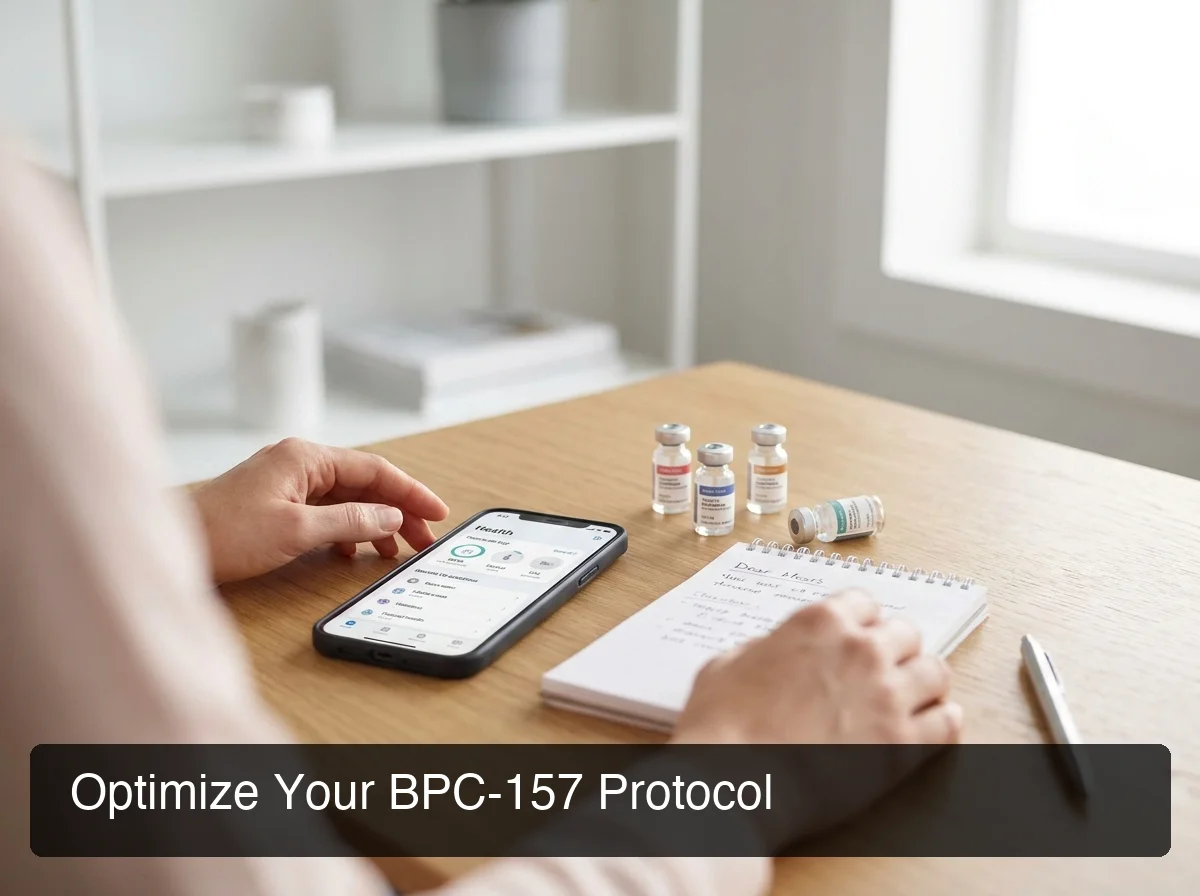 PeptideIQ tracks doses, pain scores, and weekly AI insights — so you know if the protocol is working.
The most common reason BPC-157 protocols appear to fail is invisible progress. The biology is working, but without a structured way to track pain scores and wellness metrics week over week, users lose confidence and abandon protocols at week 4 — exactly when results are beginning.
PeptideIQ tracks every BPC-157 dose, logs your wellness check-ins (energy, pain score, sleep quality), and generates weekly AI insight cards specific to your protocol and data. At week 3, instead of wondering "is this working?", you'd see: "Your average pain score dropped from 7.2 in Week 1 to 4.8 this week — a 33% reduction. Keep logging."
That specific, data-grounded feedback is what keeps protocols on track long enough to work.
Get Started with PeptideIQ
If you're running a BPC-157 protocol — or planning to start — the difference between a protocol that "didn't seem to work" and one that produces real healing is almost always visibility into what's happening week by week.
Download PeptideIQ on the App Store
Frequently Asked Questions
How quickly does BPC-157 take effect?
BPC-157 begins acting at the cellular level within 24–48 hours of administration, activating anti-inflammatory pathways and angiogenesis. Most users notice the first subjective improvement — reduced resting pain or better sleep — between days 7 and 14. Full functional recovery typically requires 4–8 weeks depending on injury type and severity.
Is the BPC-157 pill form effective?
Oral BPC-157 is effective specifically for gut and digestive conditions because it delivers the peptide locally to GI tissue where it's most active. For systemic healing of muscle, tendon, or joint injuries, subcutaneous injection provides significantly better bioavailability and is the preferred administration method.
How long should you take BPC-157?
Most effective protocols run 8–12 weeks with a 4–6 week off period between cycles. Minor acute injuries may resolve in 6–8 weeks; chronic injuries and gut conditions typically require a full 12-week run. Cycles shorter than 6 weeks rarely allow enough time for structural tissue remodeling.
What peptides does Joe Rogan take for healing?
Joe Rogan has publicly discussed using BPC-157 and TB-500 together — the "Wolverine Stack" — for injury recovery, citing elbow tendinitis as his reason. His episodes on these peptides significantly spiked mainstream search interest and introduced millions of new users to healing peptide protocols.
How long does BPC-157 and TB-500 take to work together?
The BPC-157 and TB-500 stack typically shows first effects 7–10 days into the protocol, slightly faster than either alone. Their complementary mechanisms — BPC-157 driving angiogenesis and local tendon repair, TB-500 providing systemic immune modulation — create additive healing effects that users report as more rapid and comprehensive than single-peptide protocols.
How long does BPC-157 take to work for gut health?
Gut conditions respond fastest to BPC-157 — typically 1–2 weeks for initial improvement and 4–8 weeks for significant resolution. The GI tract has extremely high cell turnover, and BPC-157's origin in gastric juice makes it particularly potent in the gut environment compared to other tissue types.
Are peptides like BPC-157 safe to use?
BPC-157 has a strong animal safety profile with no significant adverse events documented in studies. Thousands of human anecdotal reports show a low side-effect profile — minor injection-site soreness is the most common complaint. Safety depends heavily on sourcing quality, accurate dosing, and proper reconstitution technique.