
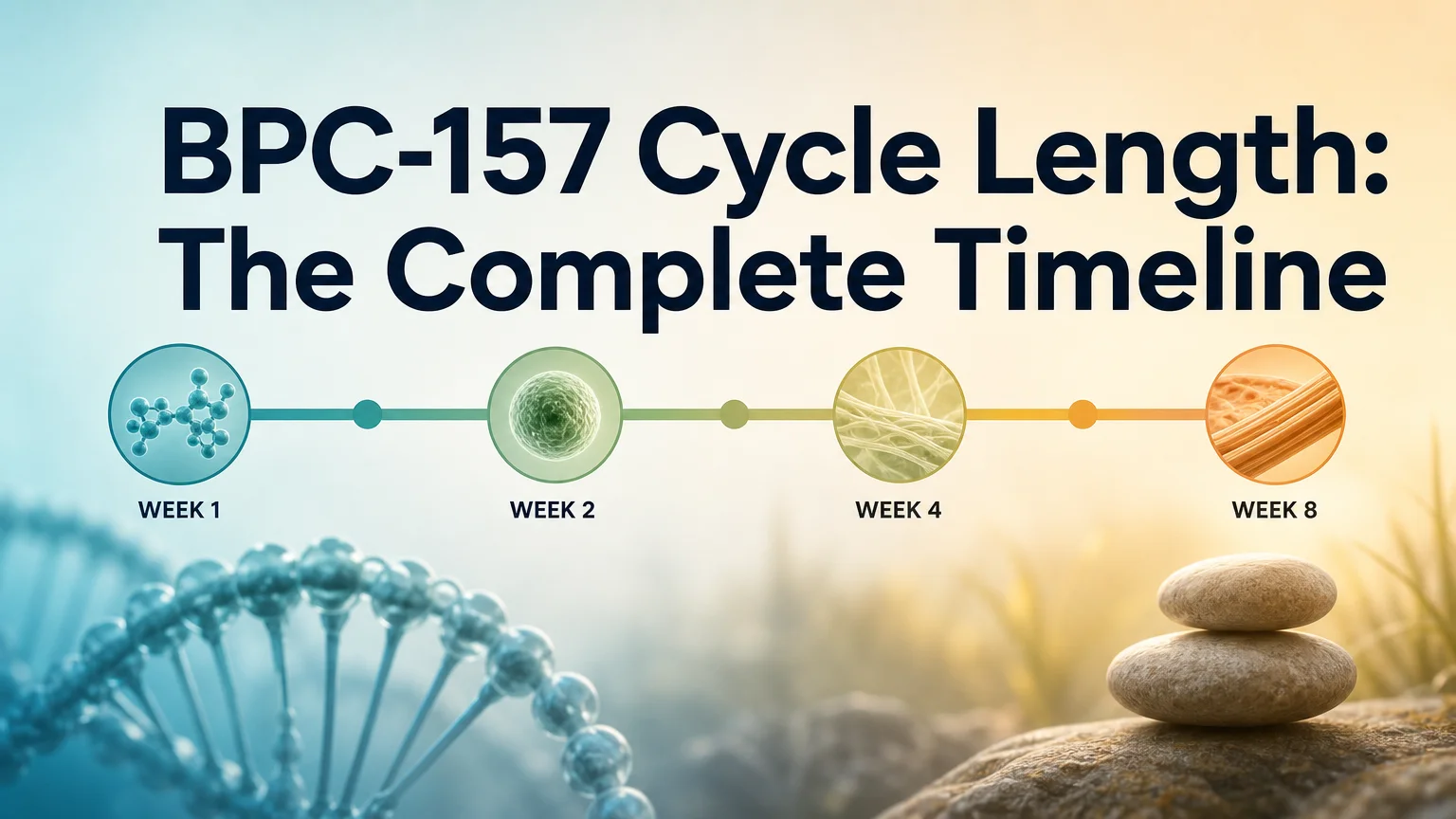
BPC-157 Cycle Length: 4-8 Week Guide | PeptideIQ
BPC-157 Cycle Length: How Long Should Your Protocol Run?
Search "BPC-157 cycle length" and you'll land on ten forum threads with ten different answers — four weeks, six weeks, eight weeks, twelve weeks — each stated with total confidence. None of them ask what you're actually healing, which is the one variable that decides the right number.
Key Takeaways
- Most BPC-157 cycles run 4–8 weeks depending on injury type; longer cycles of 12+ weeks are possible but need close monitoring.
- Optimal cycle length varies by tissue: tendon damage typically needs 6–8 weeks, gut healing often resolves faster at 4–6 weeks.
- Doses run consistently for a minimum of 4 weeks — most visible recovery shows up by week 6, with continued gains through week 8.
- A 1–2 week rest period between cycles lets your body consolidate gains before a second round, if you need one.
- The only way to know your cycle length is actually right for you is tracking week-over-week data, not guessing from a forum post.
Contents
- What's the Optimal BPC-157 Cycle Length for Your Injury Type?
- How Long Should You Run BPC-157 to Actually See Results?
- Is a 4-Week BPC-157 Cycle Ever Long Enough?
- 6-Week vs 8-Week BPC-157 Cycle Length: What's the Real Difference?
- What Does Week-by-Week BPC-157 Recovery Look Like?
- When Should You Extend or Stop a BPC-157 Cycle?
- Should You Take a Break Between BPC-157 Cycles?
- How Do You Know Your BPC-157 Cycle Is Working?
What's the Optimal BPC-157 Cycle Length for Your Injury Type?
The optimal BPC-157 cycle length depends on the tissue involved: acute soft-tissue injuries often resolve in 4–6 weeks, tendon and ligament damage typically needs 6–8 weeks, and gut-lining issues tend to respond faster, often within 4–6 weeks of consistent dosing. Chronic or long-standing damage sometimes justifies 8–12 weeks, but that range should come with closer monitoring, not just a longer calendar block.
Here's how the most common use cases break down:
| Injury Type | Typical Cycle Length | Notes |
|---|---|---|
| Acute soft-tissue injury (sprain, strain) | 4–6 weeks | Often the fastest to respond |
| Tendon or ligament damage | 6–8 weeks | Slower-healing tissue, needs consistency |
| Gut lining / digestive issues | 4–6 weeks | See your BPC-157 dosing chart for gut-specific dose timing |
| Chronic joint pain | 8–12 weeks | Requires closer tracking, possibly a second cycle |
If you're specifically dealing with digestive symptoms, gut-specific BPC-157 protocols follow a different dose-and-duration curve than tendon work, and it's worth treating that as its own category rather than defaulting to a generic injury timeline.
By the numbers: Across the protocols most commonly discussed in clinical anecdote and peptide community reporting, 6–8 weeks is the single most cited BPC-157 cycle length — not because it's a magic number, but because it's the point where slower-healing connective tissue tends to show consistent change.
How Long Should You Run BPC-157 to Actually See Results?
Most people need a minimum of 4 consecutive weeks of daily BPC-157 dosing before meaningful change shows up, with the clearest gains typically appearing between weeks 3 and 6. Running it for less than that rarely gives the compound enough time to influence the healing tissue in a way you'd actually notice.
This is also where cycle length and dose amount get confused with each other. A longer cycle at too low a dose won't outperform a shorter cycle at the right dose — they're two separate variables, and changing one doesn't fix the other. For a full breakdown of how doses should shift as your cycle progresses, the BPC-157 dosing chart covers standard ranges by experience level and body weight.
PeptideIQ's protocol builder reflects this directly: when you select an injury type and goal during setup, it recommends a cycle length anywhere from 4 to 12 weeks, not a single blanket number for every user. A tendon-recovery goal gets a different recommended window than a gut-healing goal, because the underlying tissue timeline is different.
If you want a deeper look at expected timing by condition specifically, how long BPC-157 takes to work breaks down the healing curve week by week.
Is a 4-Week BPC-157 Cycle Ever Long Enough?
A 4-week BPC-157 cycle is long enough for mild, acute soft-tissue injuries — a minor strain or a recent sprain — but it's usually too short for tendon, ligament, or chronic joint damage, which needs the extra 2–4 weeks that slower-healing tissue requires. Four weeks is also a reasonable starting point for a first-timer who wants to gauge tolerance before committing to a longer protocol.
A few situations where 4 weeks tends to be enough:
- Recent, mild soft-tissue strains without structural damage
- Post-workout inflammation or general recovery support
- A short trial run to confirm side-effect tolerance before scaling up
- Digestive discomfort that responds early to treatment
If four weeks in you're not seeing any change at all, that's usually a signal to look at dose or consistency before automatically extending the timeline — not a reason to assume BPC-157 doesn't work for you.
6-Week vs 8-Week BPC-157 Cycle Length: What's the Real Difference?
A 6-week BPC-157 cycle typically covers moderate soft-tissue and gut-related healing, while an 8-week cycle is built for slower-healing tissue like tendons and ligaments, where the extra two weeks often make the difference between partial and near-complete recovery. The gap isn't about one being "stronger" — it's about giving connective tissue the time it biologically needs.
| Factor | 6-Week Cycle | 8-Week Cycle |
|---|---|---|
| Best for | Gut healing, moderate soft-tissue injury | Tendon, ligament, chronic joint issues |
| Typical dose range | 200–400 mcg/day | 250–500 mcg/day |
| Rest period after | 1 week | 1–2 weeks |
| Re-run candidate | Often not needed | Sometimes, if partial improvement |
Weight and dosage also factor into which length makes sense — heavier body weight sometimes shifts the dose side of the equation without necessarily changing the cycle length itself. The BPC-157 dosage chart by weight walks through how those two variables interact.
What Does Week-by-Week BPC-157 Recovery Look Like?
Week-by-week BPC-157 recovery typically follows a pattern: mild changes in weeks 1–2, noticeable improvement in mobility or pain by weeks 3–4, and the most significant gains landing between weeks 5–6, with continued but slower improvement through week 8. Individual timelines vary, but this general curve holds across most soft-tissue and connective-tissue protocols.
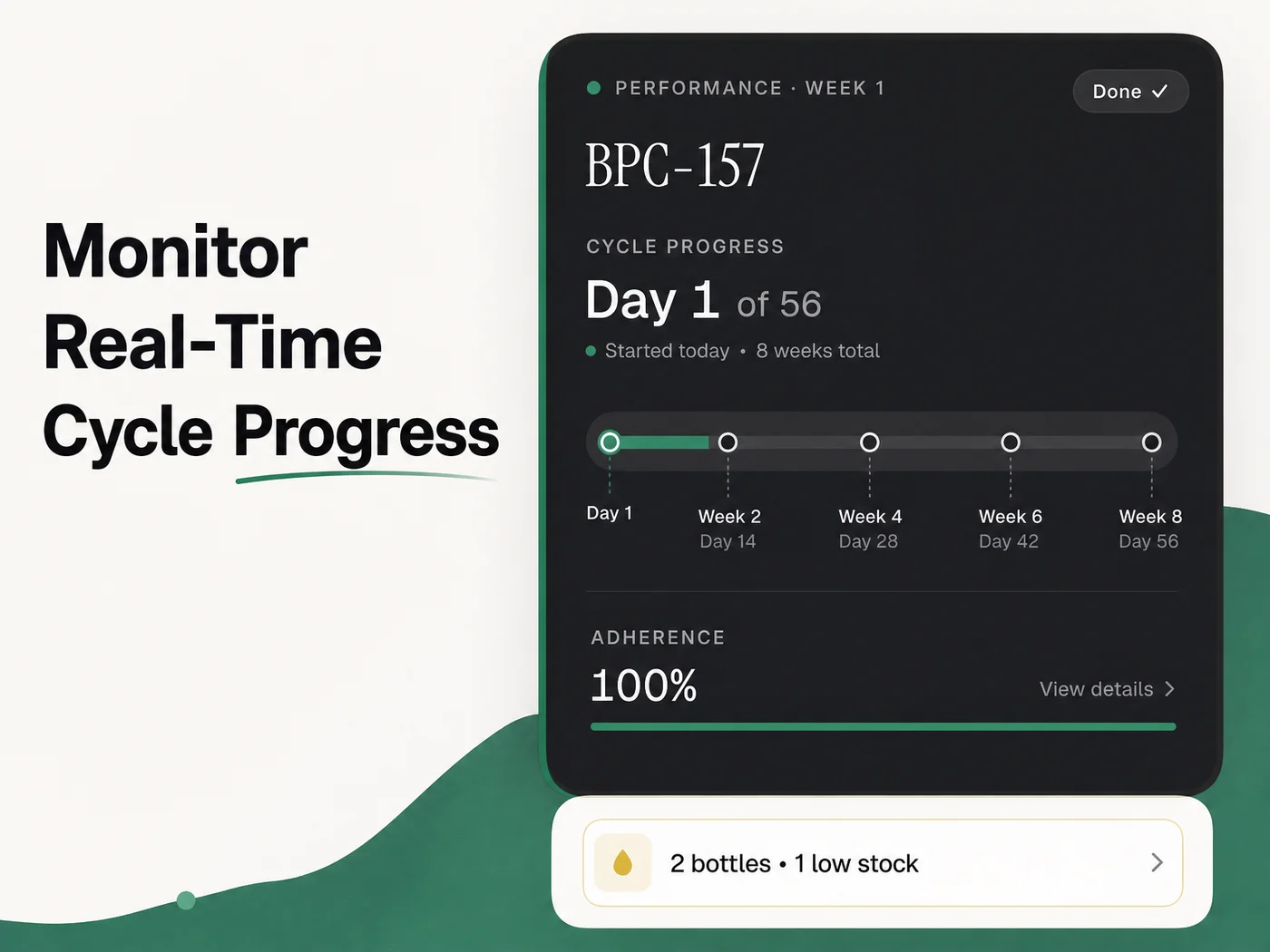 A cycle tracker showing progress logged against each week of an 8-week BPC-157 protocol.
This is roughly what that curve looks like in practice:
- Weeks 1–2: Reduced inflammation, sometimes subtle at first
- Weeks 3–4: Improved mobility, decreased daily pain scores
- Weeks 5–6: The most noticeable shift for most users — this is the window most cycle-length decisions hinge on
- Weeks 7–8: Continued gains, diminishing but still present
The catch is that this curve is a population average, not a guarantee for any individual week. Someone healing a mild strain might peak by week 4; someone with a two-year-old tendon issue might still be climbing at week 8.
When Should You Extend or Stop a BPC-157 Cycle?
You should consider extending a BPC-157 cycle past its planned length when you're seeing steady but incomplete improvement by the final week, and consider stopping on schedule — or early — when you've either hit your goal or plateaued with zero change for two consecutive weeks. Extensions beyond 8 weeks are generally reserved for chronic cases, and should come with closer attention to side effects and progress data, not just an assumption that more time automatically means more healing.
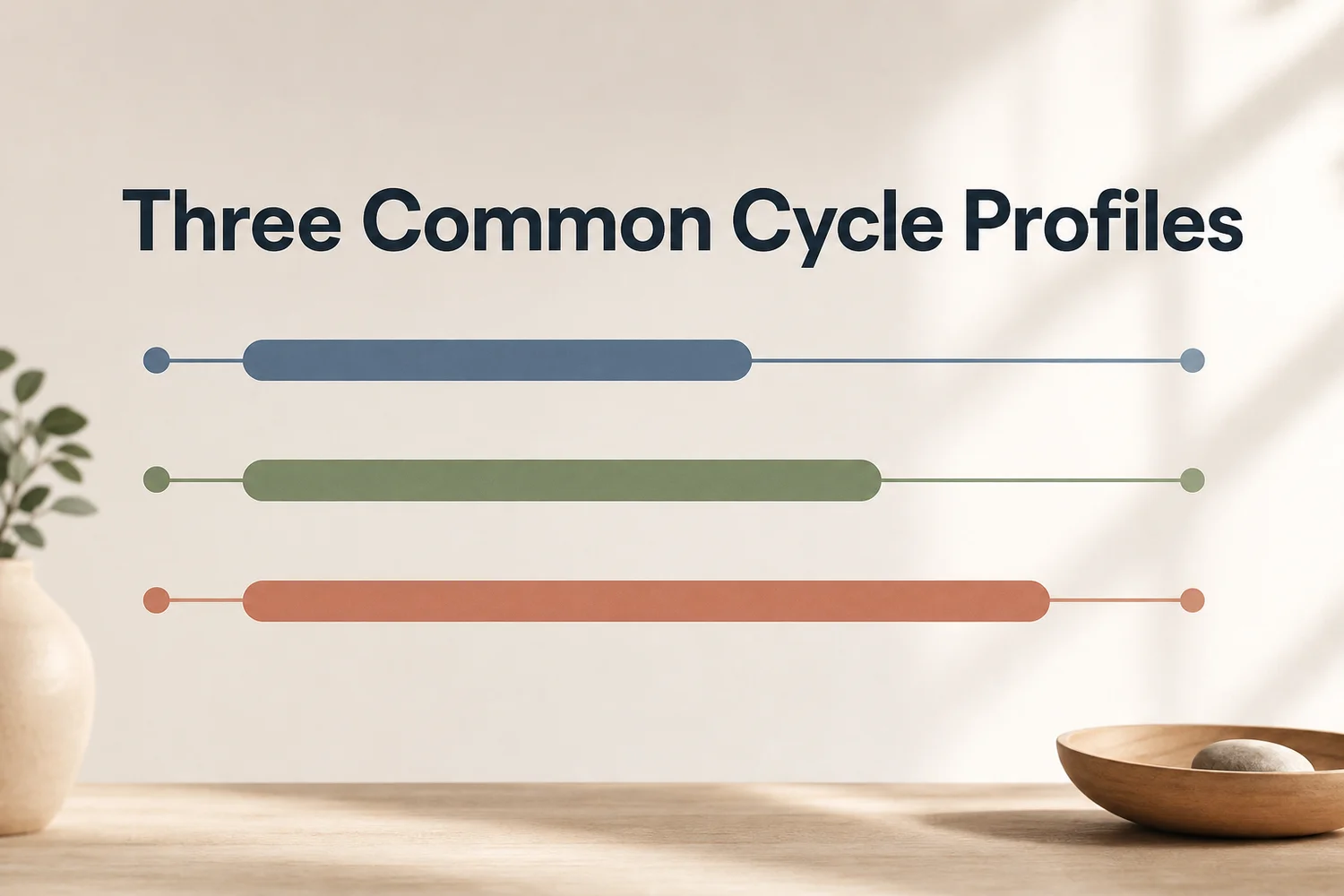 Three common cycle profiles: a 4-week quick-recovery run, a 6-week standard protocol, and an 8-week deep-healing timeline.
Common mistake: Extending a cycle by default because "more must be better" is one of the most common missteps in BPC-157 protocols. If the data from your first 4–6 weeks shows no change at all, the fix is usually dose or consistency, not simply adding more weeks on top of a plan that isn't working.
A reasonable decision framework: if you've improved by at least 30–40% from your baseline by the planned end date, finish the cycle as scheduled. If improvement is real but incomplete, a 2–4 week extension is common. If there's been no measurable change by week 4, that's the point to reassess the whole approach rather than push forward blindly.
Should You Take a Break Between BPC-157 Cycles?
Yes — a 1–2 week rest period between BPC-157 cycles is standard practice, giving your body time to consolidate the healing gains from the first cycle before a second round begins. Running back-to-back cycles with zero break isn't typically dangerous, but it removes the natural checkpoint where you'd otherwise assess whether you actually need to continue.
A short break also serves a practical purpose: it's the cleanest moment to reconstitute a fresh vial, review your logged data from the first cycle, and decide — with evidence instead of a guess — whether a second cycle is worth running. If you're prepping a new vial for round two, how to reconstitute BPC-157 covers the exact mixing steps for first-timers and repeat users alike.
How Do You Know Your BPC-157 Cycle Is Working?
You know a BPC-157 cycle is working when your logged pain, mobility, or symptom scores show a consistent downward or upward trend over multiple weeks — not a single good day, but a pattern that holds across at least 10–14 days of data. Memory alone is a poor tool for this; most people underestimate how much they've actually improved, or miss a plateau because they're not comparing week 2 to week 6 side by side.
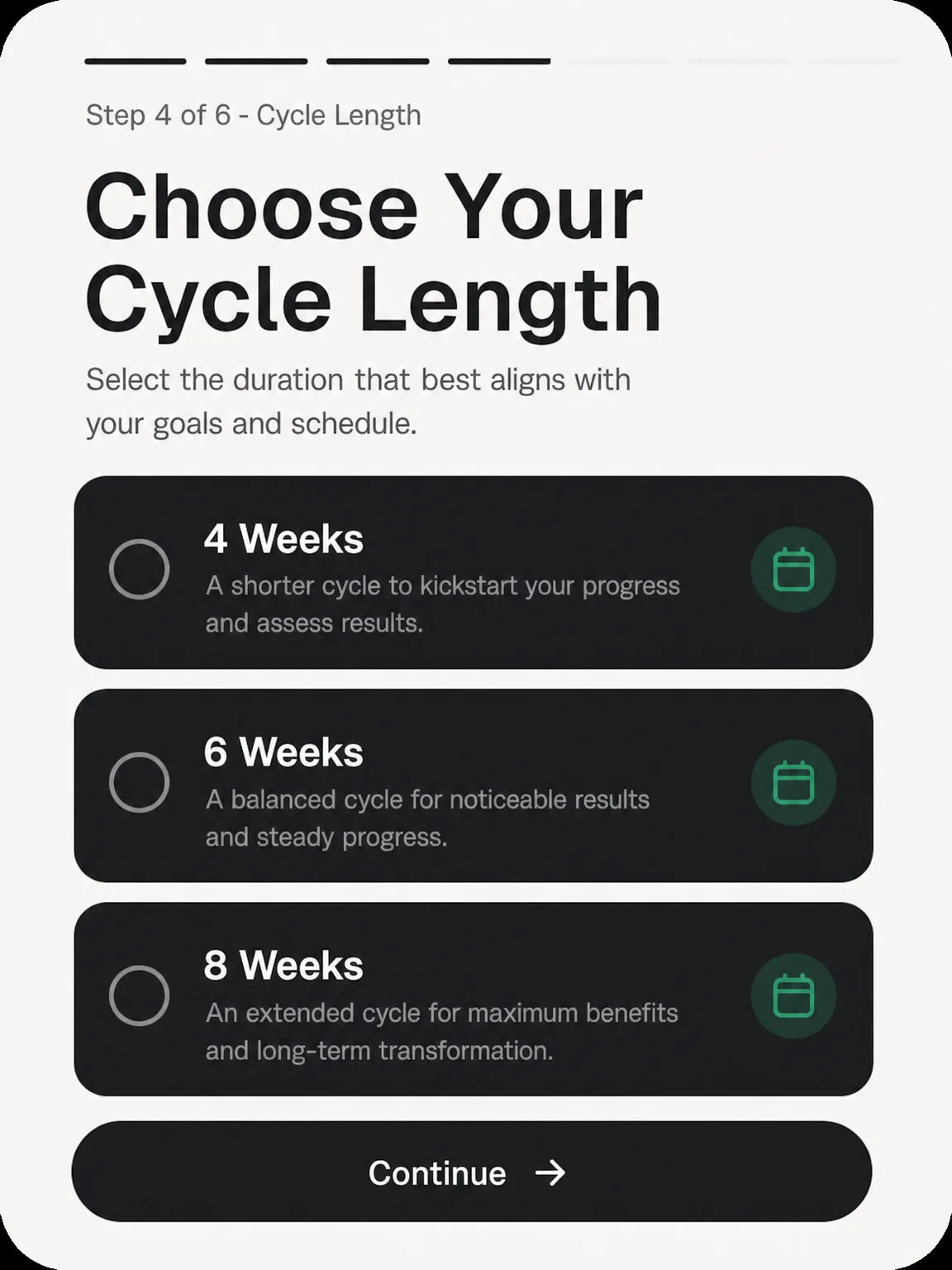 Choosing a cycle length during protocol setup — the starting point for tracking whether it's actually delivering results.
This is the gap PeptideIQ's cycle tracking dashboard is built to close. Instead of relying on a vague sense of "I think I feel better," the app logs weekly wellness sliders — pain, energy, sleep — against your specific cycle day, so a 6-week protocol and an 8-week protocol are being judged on the same objective terms rather than guesswork. If your week 4 numbers look identical to your week 1 numbers, that's a clear, data-backed signal to adjust — not a feeling you have to talk yourself into trusting.
Get Started with PeptideIQ
Picking a cycle length is only half the decision — knowing whether that length is actually working for your specific injury is the part most people skip. PeptideIQ's protocol builder recommends a starting cycle length based on your goal, then tracks your logged data against it every week so you're not guessing at week 6 whether it's time to stop, extend, or start over.
FAQ
How long should a BPC-157 cycle be for tendon injuries?
Tendon and ligament injuries typically need a 6–8 week BPC-157 cycle, since connective tissue heals more slowly than muscle or skin. Some chronic tendon cases benefit from extending to 10–12 weeks with close monitoring, followed by a 1–2 week rest period before considering a second round.
Is it safe to run BPC-157 for 12 weeks straight?
Running BPC-157 for 12 weeks is generally reserved for chronic or slow-healing cases and isn't a default recommendation for most users. If you're extending that far, tracking weekly progress data becomes more important, since a 12-week cycle showing no change by week 6 usually means the protocol needs adjusting, not more time.
What happens if you stop BPC-157 too early?
Stopping a BPC-157 cycle before the tissue has finished its healing response — often before week 4 for tendons — can mean the improvement stalls or partially reverses. Acute, mild injuries are more forgiving of an early stop than chronic tendon or ligament damage.
Should you cycle BPC-157 the same length every time?
Not necessarily — cycle length should match the specific injury and how the previous cycle's data looked, not a fixed number you repeat automatically. A first cycle that showed strong results by week 5 might justify a shorter second round, while incomplete progress might call for a longer one.
How much BPC-157 should you take during an 8-week cycle?
Most 8-week BPC-157 protocols run in the 250–500 mcg per day range, though the exact dose depends on body weight and injury severity. Dose sometimes shifts partway through a longer cycle, which is why tracking both dose and cycle day together matters more than tracking either alone.
Can you repeat a BPC-157 cycle back to back?
Back-to-back cycles without a rest period aren't typically dangerous, but most protocols include a 1–2 week break to consolidate gains and reassess before continuing. That break is also the natural point to review your logged data and confirm a second cycle is actually necessary.