
MOTS-c Peptide: Benefits, Dosage & Longevity Guide
MOTS-c Peptide: Benefits, Dosage & Longevity Guide
The MOTS-c peptide is one of the most compelling longevity compounds in current research — a naturally occurring molecule encoded directly in your mitochondrial DNA that regulates how your cells produce and use energy.
Key Takeaways
- MOTS-c is a naturally occurring mitochondrial peptide that activates AMP-activated protein kinase (AMPK), enhancing cellular energy production and metabolic health — with research suggesting benefits for longevity, weight management, and muscle recovery.
- Unlike systemic peptides, MOTS-c targets mitochondrial function directly, making it a cornerstone of the longevity stack for users seeking metabolic optimization without broad hormonal effects.
- Typical MOTS-c dosing ranges from 100–600 mcg subcutaneously, with most protocols starting at the lower end and titrating based on tolerance and response; consistent sourcing from verified providers is critical due to lack of pharmaceutical regulation.
- Research shows MOTS-c improves insulin sensitivity, increases fatty acid oxidation, and may preserve lean muscle during caloric restriction — key outcomes for the peptide therapy audience.
- Safety profile is favorable in early human studies, but supply-chain sourcing, injection technique, and storage remain the primary risk factors; proper education and trusted suppliers are non-negotiable.
Contents
- What Is the MOTS-c Peptide and How Does It Work for Longevity?
- What Are the Benefits of MOTS-c for Aging and Metabolism?
- How Does MOTS-c Compare to Other Longevity Peptides Like GHK-Cu and LL-37?
- Can MOTS-c Improve Energy, Weight Loss, and Muscle Recovery?
- What Is a Safe MOTS-c Dosage and How Often Should You Use It?
- Are There Side Effects or Safety Risks with MOTS-c Peptide?
- Where Can You Safely Obtain MOTS-c Peptides and What Should You Know?
- Get Started with PeptideIQ
- Frequently Asked Questions
What Is the MOTS-c Peptide and How Does It Work for Longevity?
MOTS-c (Mitochondrial ORF of the 12S rRNA Type-C) is a 16-amino-acid peptide encoded in the mitochondrial genome. It activates AMPK — the master regulator of cellular energy balance — triggering pathways that improve insulin sensitivity, increase fat oxidation, and reduce inflammation. Published research identifies it as a key mediator of metabolic resilience and longevity.
 MOTS-c is a mitochondrially-encoded peptide with hormone-like signaling properties — one of the most significant longevity research discoveries of the past decade.
Unlike traditional peptides synthesized in the cell nucleus, MOTS-c is mitochondria-derived — a discovery first documented in a landmark 2015 Cell Metabolism study by Lee et al. at USC that fundamentally expanded our understanding of mitochondrial signaling.
MOTS-c doesn't just exist inside cells passively. Under metabolic stress — exercise, caloric restriction, or aging-related mitochondrial decline — it translocates from the mitochondria into the cell nucleus, directly influencing gene expression related to metabolic adaptation.
How Does MOTS-c Activate AMPK?
MOTS-c activates AMPK through the folate-purine-AICAR pathway, elevating the AMP:ATP ratio inside cells. This mimics the metabolic state of aerobic exercise — even without physical activity. The downstream effects include enhanced glucose uptake in muscle tissue, reduced de novo lipogenesis (fat creation from carbohydrates), and improved insulin signaling.
This mechanism explains why researchers are studying MOTS-c not only for longevity but for type 2 diabetes, obesity, and exercise-mimicry applications.
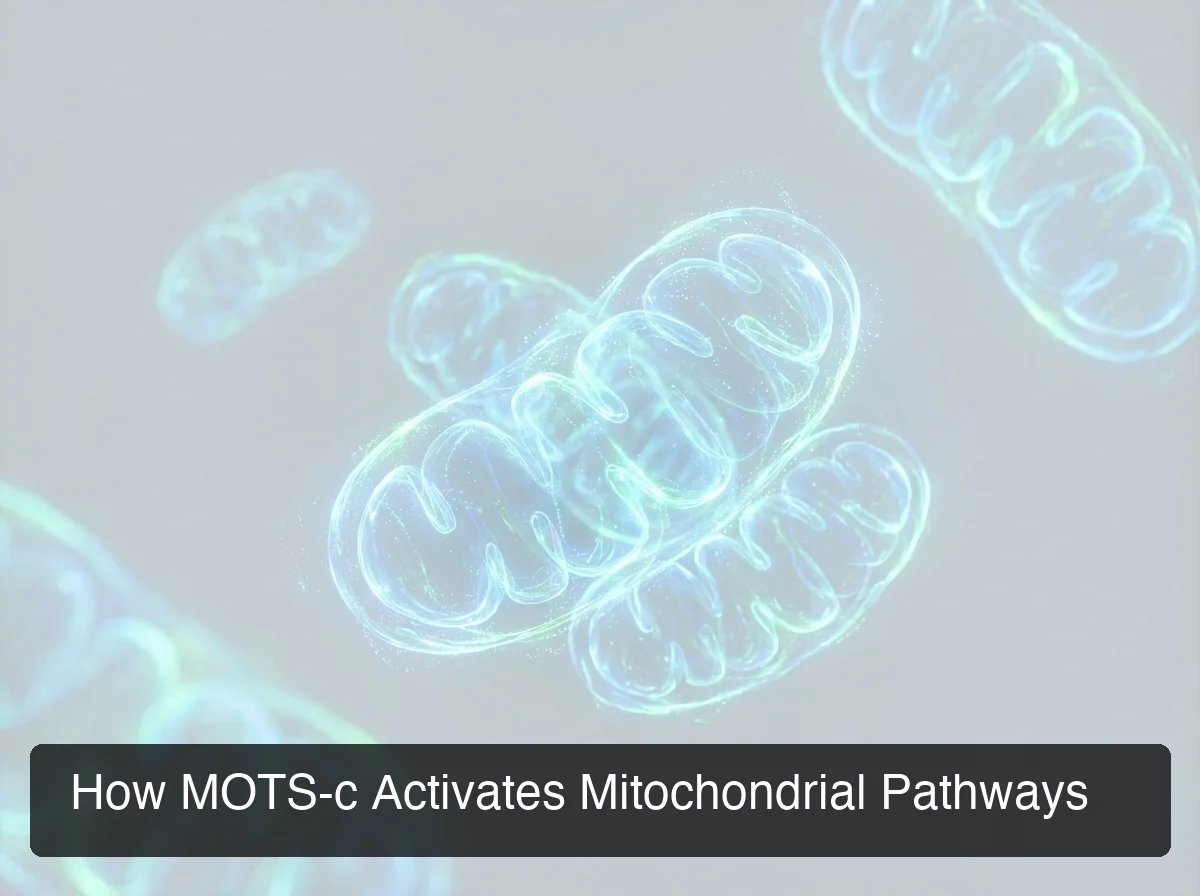 MOTS-c translates mitochondrial metabolic signals into whole-body energy and insulin adaptations via AMPK.
Key insight: MOTS-c is one of the first mitochondrial-encoded peptides confirmed to have hormone-like signaling properties — a discovery that reshaped understanding of mitochondria from passive energy factories to active metabolic communicators.
What Are the Benefits of MOTS-c for Aging and Metabolism?
MOTS-c benefits span metabolic health, longevity signaling, and physical performance. Published research documents improvements in insulin sensitivity, fatty acid oxidation, visceral adiposity, and muscle function — outcomes directly relevant to healthy aging and metabolic resilience. The evidence base is primarily preclinical, with early human trials supporting the mechanistic rationale.
Metabolic and Weight Management Benefits
- Improved insulin sensitivity: Reduces insulin resistance in muscle and adipose tissue through AMPK-mediated glucose uptake
- Increased fatty acid oxidation: Shifts cellular metabolism toward fat as the primary fuel source, supporting fat loss without appetite suppression
- Reduced visceral fat: In rodent models, MOTS-c treatment led to significant reductions in obesity markers even without dietary changes
- Glucose regulation: Demonstrated blood glucose reduction in preclinical diabetes models
Longevity and Anti-Aging Benefits
- Exercise-like metabolic effects: Activates pathways normally triggered by sustained aerobic exercise — including mitochondrial biogenesis
- Reduced inflammaging: AMPK activation suppresses inflammatory cytokines associated with chronic low-grade inflammation in aging
- Mitochondrial resilience: Improves mitochondrial function and stress response across aging cell populations
- Lean muscle preservation during caloric restriction: May prevent lean mass loss during weight-loss protocols — a critical benefit for aging users
 MOTS-c longevity benefits target mitochondrial pathways that progressively decline with age.
By the numbers: In the original 2015 Cell Metabolism study, MOTS-c treatment in mice reversed diet-induced obesity and restored insulin sensitivity — without changes to diet or physical activity.
How Does MOTS-c Compare to Other Longevity Peptides Like GHK-Cu and LL-37?
MOTS-c is uniquely mitochondria-derived and metabolically focused, which sets it apart from GHK-Cu (collagen and cellular regeneration), LL-37 (immune modulation), and Epithalon (telomere signaling). These peptides target different longevity pathways and are often complementary — not redundant — when stacked intentionally.
| Peptide | Primary Mechanism | Key Outcomes | Administration | Evidence Level |
|---|---|---|---|---|
| MOTS-c | AMPK activation, mitochondrial signaling | Metabolic health, energy, insulin sensitivity | Subcutaneous | Early human trials |
| GHK-Cu | Copper-binding, collagen synthesis stimulation | Skin regeneration, wound healing, anti-aging | Subcutaneous or topical | Moderate preclinical |
| LL-37 | Antimicrobial, immune modulation | Immune defense, anti-inflammatory signaling | Various routes | Preclinical + limited human |
| Epithalon | Telomerase activation, pineal modulation | Telomere health, sleep regulation | Subcutaneous | Preclinical |
| Thymosin Alpha-1 | T-cell activation, immune priming | Immune function, antiviral defense | Subcutaneous | Strong preclinical + human |
How Should MOTS-c Stack with Other Longevity Peptides?
MOTS-c stacks most naturally with GHK-Cu for users targeting both metabolic optimization and cellular regeneration. The two peptides operate through entirely complementary pathways with no documented interaction risks.
For users already running BPC-157 for healing and recovery, adding MOTS-c provides a metabolic layer — particularly useful for maintaining energy and lean muscle during injury protocols that involve reduced activity.
Users comparing MOTS-c to GLP-1 options like semaglutide should understand the key distinction: GLP-1s suppress appetite and slow gastric emptying through hormonal pathways, while MOTS-c enhances metabolic efficiency at the mitochondrial level without appetite suppression or the GI side effects associated with semaglutide. For a detailed look at Ozempic's side effects and what makes GLP-1 mechanisms different, that comparison is worth reading before choosing your stack approach.
Bottom line: MOTS-c is the metabolic engine of longevity stacks — not a replacement for GHK-Cu or LL-37, but an essential complement for users whose primary goal is energy production and insulin health optimization.
Can MOTS-c Improve Energy, Weight Loss, and Muscle Recovery?
Yes — across all three domains, MOTS-c has mechanistic and preliminary clinical support. It enhances mitochondrial ATP production (reducing fatigue), improves fat oxidation and insulin signaling (supporting weight loss), and may preserve lean muscle during caloric restriction — three outcomes especially relevant for aging users on longevity protocols.
MOTS-c doesn't work like a GLP-1 — there's no appetite suppression. Instead, it shifts the metabolic environment: increasing fat oxidation, reducing fat storage signals, and improving insulin-mediated glucose uptake in skeletal muscle. The result is improved body composition through metabolic efficiency, without GI side effects.
On the muscle preservation side, MOTS-c's AMPK activation signals muscle cells to maintain metabolic function even in a caloric deficit — a meaningful benefit for users losing weight via GLP-1s or dietary restriction, where lean mass loss is a significant secondary risk.
What Is a Safe MOTS-c Dosage and How Often Should You Use It?
 Precise dosing and proper subcutaneous injection technique are the two most controllable variables in any MOTS-c protocol.
A safe MOTS-c dosage typically ranges from 100–600 mcg per injection, administered subcutaneously 2–5 times per week. Most protocols start at the lower end (100–200 mcg) and titrate upward over 2–4 weeks based on tolerance and response. Cycle length is 4–12 weeks, followed by an equal rest period.
Typical MOTS-c Protocol Ranges
| Protocol Phase | Dose Range | Frequency | Cycle Length |
|---|---|---|---|
| Conservative start | 100–200 mcg | 3x per week | 4–8 weeks |
| Standard protocol | 200–400 mcg | 3–5x per week | 8–12 weeks |
| Advanced research | Up to 600 mcg | 5x per week | 8–12 weeks |
Administration: Subcutaneous Injection
MOTS-c is administered subcutaneously — injected just beneath the skin, not into muscle. Common sites include the abdomen (2 inches from the navel), anterior thigh, and lateral upper arm. Rotating injection sites prevents localized tissue irritation and maintains consistent absorption.
For detailed guidance on where to inject peptides and which sites minimize bruising and maximize absorption, that reference covers all standard subcutaneous sites applicable to MOTS-c. First-time injectors should review the subcutaneous injection guide for safe peptide self-administration before beginning any protocol.
GHK-Cu Dosing Reference for Stack Users
For users pairing MOTS-c with GHK-Cu: GHK-Cu is typically dosed at 200–500 mcg subcutaneously, 3–5x per week — a comparable protocol structure that makes co-administration straightforward to manage.
Storage Requirements
Lyophilized (freeze-dried powder) MOTS-c should be stored at -20°C until reconstitution. Once mixed with bacteriostatic water, refrigerate at 2–8°C and use within 30 days. Avoid direct light exposure and temperature fluctuations, which degrade peptide stability.
Pro tip: Reconstitute MOTS-c by injecting bacteriostatic water slowly down the inside wall of the vial — never directly onto the powder cake. This prevents peptide bond stress and maintains purity.
Are There Side Effects or Safety Risks with MOTS-c Peptide?
MOTS-c has a favorable safety profile in early human studies, with no serious adverse events reported at standard research doses. The most common effects are mild injection site reactions and transient fatigue during initial dose escalation — both of which typically resolve within 1–2 weeks. Users on diabetic medications should monitor blood glucose due to insulin-sensitizing effects.
Documented Side Effects
- Injection site reactions: Redness, minor swelling, or bruising — common with all subcutaneous peptides and preventable with proper technique and site rotation
- Transient fatigue: Some users report increased tiredness during the first 1–2 weeks as cellular metabolic adaptation begins
- Appetite changes: Mild reduction or increase in appetite reported anecdotally, likely tied to improved insulin and glucose signaling
- Hypoglycemia risk: MOTS-c's insulin-sensitizing effects may lower blood glucose; users on metformin or insulin should monitor carefully
Why MOTS-c Carries Lower Risk Than Many Peptides
Unlike growth hormone secretagogues (CJC-1295, Ipamorelin, Sermorelin), MOTS-c does not stimulate broad hormonal systems — it doesn't meaningfully affect IGF-1, cortisol, or testosterone. This makes it suitable for users who want metabolic optimization without GH-axis effects.
MOTS-c is not FDA-approved and exists in the same regulatory category as BPC-157, GHK-Cu, and other longevity research peptides — legal for research in the US, not approved for clinical treatment. For how research peptides differ from FDA-approved peptides like semaglutide, that context is worth reviewing.
The Real Risks Are Supply-Chain Related
The real risks of MOTS-c in practice are not pharmacological:
- Incorrect purity or dosage — FDA testing found up to 40% of online peptide products contained wrong concentrations or undeclared substances
- Improper reconstitution — wrong BAC water volume or contaminated mixing technique
- Injection errors — poor technique increases risk of infection and inconsistent absorption
Where Can You Safely Obtain MOTS-c Peptides and What Should You Know?
Safe MOTS-c sourcing requires verifying that a supplier provides a Certificate of Analysis (CoA) from an independent third-party testing lab, operates transparently, and ships with appropriate cold-chain handling. Suppliers without CoA documentation are the primary safety variable in the peptide space — not the peptide itself.
What to Look For in a MOTS-c Supplier
- Third-party Certificate of Analysis (CoA): Independent lab verification of purity and concentration — non-negotiable before purchasing
- Clearly stated vial quantities: Packaging should specify exact peptide amount (e.g., 5 mg, 10 mg) — not just "research grade"
- Cold-chain shipping: MOTS-c should arrive with cold packs or dry ice; unrefrigerated transit compromises peptide integrity
- Domestic US suppliers: Greater regulatory accountability than unverified international imports
- Community cross-referencing: Verify reputation through established peptide communities such as r/PeptidePathways before committing to a supplier
Bottom line: Sourcing quality, injection technique, and storage protocol are the three controllable risk factors in any MOTS-c protocol. Get these right, and the peptide's risk profile is low.
Get Started with PeptideIQ
If you're building a MOTS-c protocol — or stacking it with GHK-Cu, BPC-157, or other longevity peptides — you need a system to track every dose, monitor your biomarkers, and get AI guidance grounded in your actual cycle data. PeptideIQ is the AI-powered guided system built specifically for serious longevity users who want results, not guesswork.
Download PeptideIQ on the App Store
Not ready to start yet? Explore PeptideIQ — free access to protocol guidance, dosing tools, and AI-powered peptide education.
Frequently Asked Questions
What is MOTS-c peptide used for?
MOTS-c is used for metabolic optimization, energy enhancement, and longevity support. It activates AMPK — the cellular energy master switch — improving insulin sensitivity, fatty acid oxidation, and mitochondrial efficiency. Research also indicates applications for age-related metabolic decline, obesity management, and lean muscle preservation during caloric restriction.
What are the side effects of MOTS-c?
MOTS-c side effects are generally mild at standard research doses. The most common include injection site reactions (redness, minor swelling), transient fatigue during the initial 1–2 week adaptation period, and occasional appetite changes. Users on diabetic medications should monitor blood glucose due to MOTS-c's insulin-sensitizing mechanism.
What is a typical MOTS-c dosage?
A typical MOTS-c dosage ranges from 100–600 mcg subcutaneously, administered 2–5 times per week. Most protocols start at 100–200 mcg and titrate upward based on tolerance. Cycle length is typically 4–12 weeks followed by an equal rest period. Individual response should guide escalation decisions.
Is MOTS-c FDA-approved?
No. MOTS-c is not FDA-approved and is classified as a research peptide. It is legal to purchase for research purposes in the US but is not an approved clinical treatment. This distinguishes it from peptides like semaglutide or tesamorelin, which carry FDA approval for specific medical indications.
How long does MOTS-c take to show results?
Most users report initial energy improvements within 2–3 weeks of consistent dosing. Measurable metabolic changes — body composition shifts, improved insulin sensitivity markers — typically emerge at 6–8 weeks. Full protocol assessment is best conducted at the 8–12 week mark with bloodwork to confirm metabolic impact.