
NAD+ Peptide Benefits: What Is Proven, What Is Not
NAD+ Peptide Benefits: What Is Proven, What Is Not
General education, not medical advice. Injectable NAD+ is not an approved treatment for aging, energy or cognition, and any decision to use it belongs with a clinician.
Short answer: NAD+ is not a peptide. It is a coenzyme your cells already make, and most of the "NAD+ peptide benefits" you see listed online are extrapolated from cell and animal work. People searching that phrase are usually asking one thing: does raising NAD+ do anything I would notice?
Is NAD+ Actually a Peptide?
No. NAD+ (nicotinamide adenine dinucleotide) is a coenzyme made of two linked nucleotides, not a chain of amino acids. A peptide is, by definition, a short chain of amino acids joined by peptide bonds. NAD+ contains none, so it sits in a different chemical class.
The label sticks because NAD+ is sold through the same clinics and vendors that sell peptides, and it appears next to them in "longevity stacks." Search engines then merge the two. If you want the underlying definition, what a peptide actually is covers it from scratch.
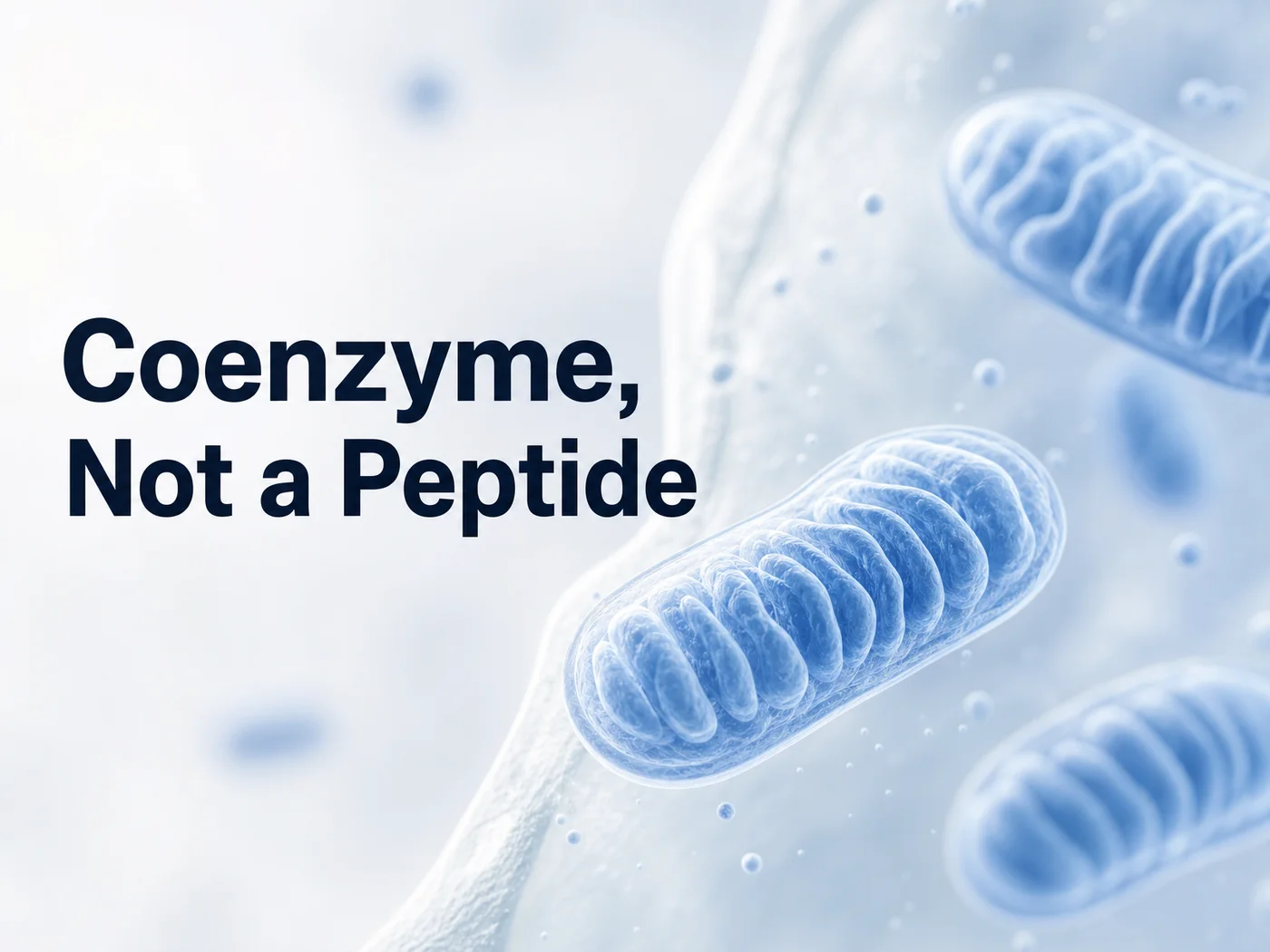 NAD+ works inside the cell's energy machinery, which is why it matters even though it is not a peptide.
Why does the distinction matter? Because it changes the questions worth asking. Peptides like BPC-157 act as signals. NAD+ is a working part of metabolism, so the real question is whether adding more from outside raises levels where it counts.
Key Takeaways
- NAD+ is a coenzyme, not a peptide; the "peptide" label is search shorthand.
- Its role in cell energy metabolism is established biochemistry. That is not the same as proof that injections make you feel better.
- Human evidence for injected NAD+ is thin. Precursor supplements raise blood NAD+ in small trials, with modest clinical effects.
- Track NAD+ next to everything else you take, or you cannot tell whether it did anything.
What Are the Real NAD+ Peptide Benefits?
NAD+ helps cells turn food into usable energy and supports enzymes involved in DNA repair and stress responses. Those functions are well documented in the lab. What is not documented is a reliable, noticeable benefit in healthy adults from raising NAD+ with injections or infusions.
NAD+ shuttles electrons through the reactions that make ATP, the cell's energy currency. It is also consumed by sirtuins and PARP enzymes, which are linked to DNA repair and cellular stress handling. Tissue NAD+ appears to fall with age in animal studies, which is the origin of the anti-aging pitch.
Here is how the commonly listed benefits stack up:
| Claimed benefit | Where the evidence sits | Strength |
|---|---|---|
| Cellular energy metabolism | Basic biochemistry, every textbook | Established (but describes normal function) |
| Slowing age-related decline | Mouse and cell studies with precursors | Animal only |
| Raising blood NAD+ levels | Small human trials of precursors (NR, NMN) | Early human |
| More energy, sharper focus | Clinic reports, patient testimonials | Anecdotal |
| Better skin, recovery, mood | Mostly marketing claims | Anecdotal or none |
Reality check: "Required for energy production" and "supplementing it gives you more energy" are two different claims, and only the first has been shown.
Do the NAD+ Peptide Benefits Hold Up in Human Studies?
Partly. Small human trials show that precursors such as nicotinamide riboside raise blood NAD+ levels and are generally well tolerated. Clinical outcomes, such as insulin sensitivity or body composition, have mostly come back modest or unchanged. Rigorous trials of injected NAD+ itself are scarce.
That gap matters. Oral NAD+ is largely broken down in the gut, which is why research leans on precursors. Injections and IV drips skip the gut, but the pages selling them tend to cite precursor or animal data as if it applied directly.
Three things to look for when you read a benefits claim:
- Who was studied. Mice and cultured cells do not predict how a 45-year-old feels on a Tuesday.
- What was measured. A higher blood NAD+ number is a biomarker, not a symptom improvement.
- How big and how long. Small, short trials can show a signal that fades in larger ones.
Most clinic pages never answer those three questions. Given that, the honest position is "plausible, under-tested," not "proven."
How NAD+ Differs From Peptides Like BPC-157
NAD+ is a metabolic cofactor your body uses directly in energy reactions. Peptides such as BPC-157 or GHK-Cu are short amino-acid chains that act as signals. That means different mechanisms, different evidence bases, and different things worth measuring on yourself.
A peptide protocol usually has a clear target: a sore tendon, a skin goal, a recovery plateau. NAD+ goals tend to be vaguer, "more energy" or "healthy aging," which are harder to confirm.
If you want a comparison point inside the same longevity space, the MOTS-c peptide guide covers another mitochondria-linked compound, and the GHK peptide breakdown shows what a more specific goal looks like.
NAD+ Side Effects and What Is Still Unknown
Reported effects of injected or infused NAD+ include nausea, flushing, headache, cramping and chest tightness, often tied to how fast it is given. High-dose precursors can cause stomach upset or niacin-style flushing. Long-term safety of injected NAD+ has not been established.
Most of what exists here comes from clinic experience and patient reports rather than controlled trials. That is a limitation, not reassurance. Chest tightness, trouble breathing or a severe reaction means stopping and getting medical care.
For the wider picture on compounds with thin long-term data, see what the research on peptides' long-term effects actually shows.
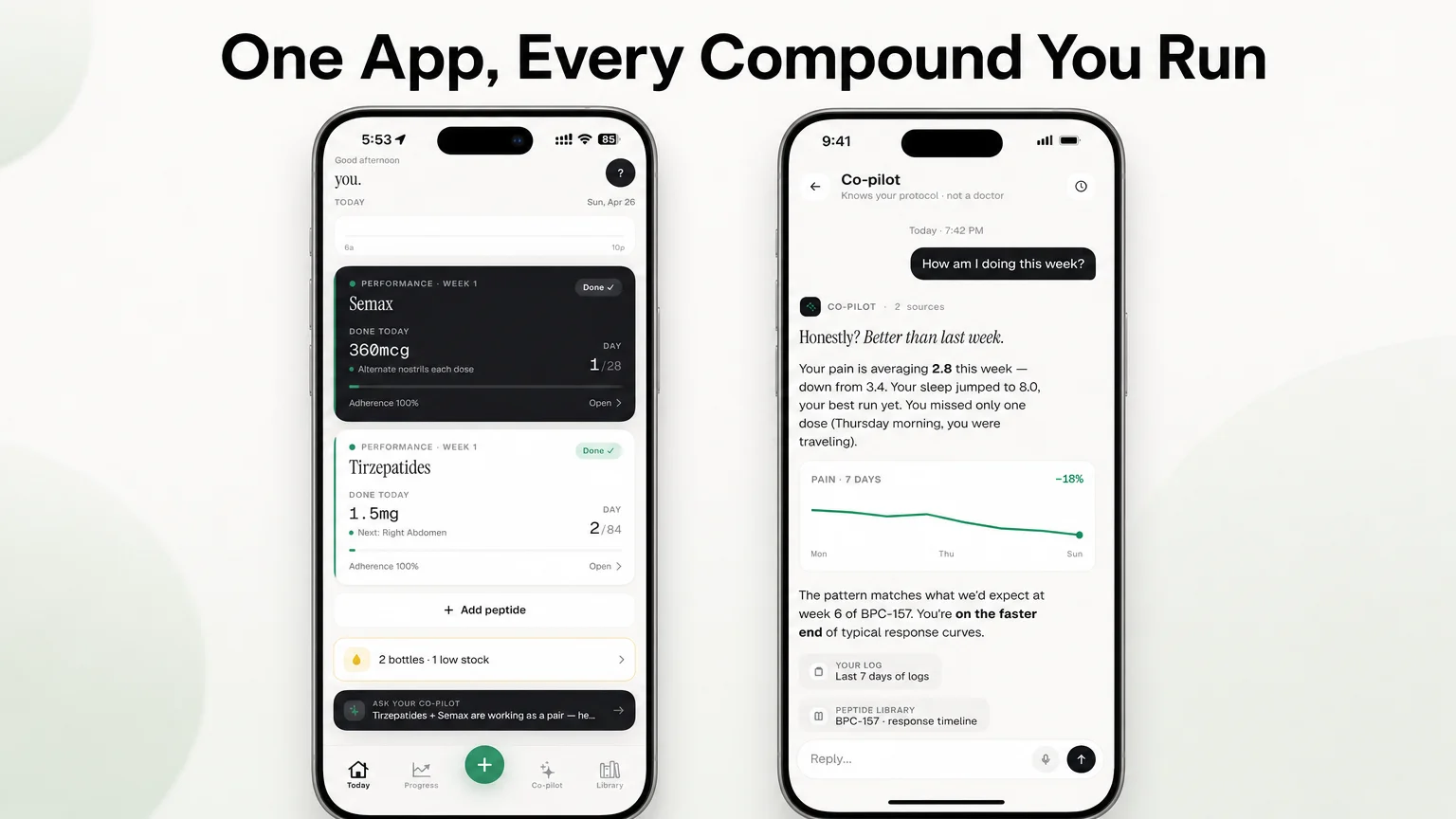 The Today screen and the co-pilot card, side by side: where a new compound gets logged and checked.
How Do You Track NAD+ Alongside Your Other Peptides?
Log NAD+ like any other compound: start date, dose, and a daily read on energy, mood and sleep. Add side effects as they appear. Without a baseline and a dated start, you cannot separate NAD+ from everything else that changed that month.
This is where the tracking habit pays off. If you start NAD+ while already running something else, two variables moved at once.
PeptideIQ's Today screen shows each active protocol with its cycle day and adherence. The daily check-in captures energy, mood and sleep quality on 1-10 sliders, plus a quick-tap side effect grid. NAD+ is in the peptide library, so it can sit beside the rest of your stack.
The Supplement and Interaction Tracker adds a second layer. The co-pilot knows your stack and supplement log, so you can ask "I started taking NAD+ this week, does that interact with anything I'm already on?" and get an answer based on what you actually take, not a generic one.
Get Started with PeptideIQ
If you are adding NAD+ to a stack, the only way to learn whether it did anything is to record it from day one. PeptideIQ keeps doses, symptoms and wellness scores in one place so the comparison is yours, not a testimonial's.
FAQ
Is NAD+ a peptide?
No. NAD+ is a coenzyme built from two nucleotides, found in every living cell. Peptides are short chains of amino acids. NAD+ is often sold alongside peptides, which is why people search for it as "NAD+ peptide," but chemically they are different classes.
What are the benefits of NAD+ injections?
Claimed benefits include more energy, better focus and healthier aging. Evidence is strongest for NAD+'s basic role in cell metabolism, and weakest for noticeable results from injections in healthy adults. Controlled human trials of injected NAD+ are limited, so most claims remain unproven.
Does NAD+ decline with age?
Animal and some tissue studies suggest NAD+ levels fall with age, which drives interest in boosting it. Whether restoring those levels with injections or supplements improves how people feel or live is still being studied, and results so far are modest.
Can you take NAD+ with other peptides?
There is no standard answer, because interaction data is limited. The practical approach is to start one compound at a time, log dates, doses and symptoms, and review the stack with a clinician before combining anything.