
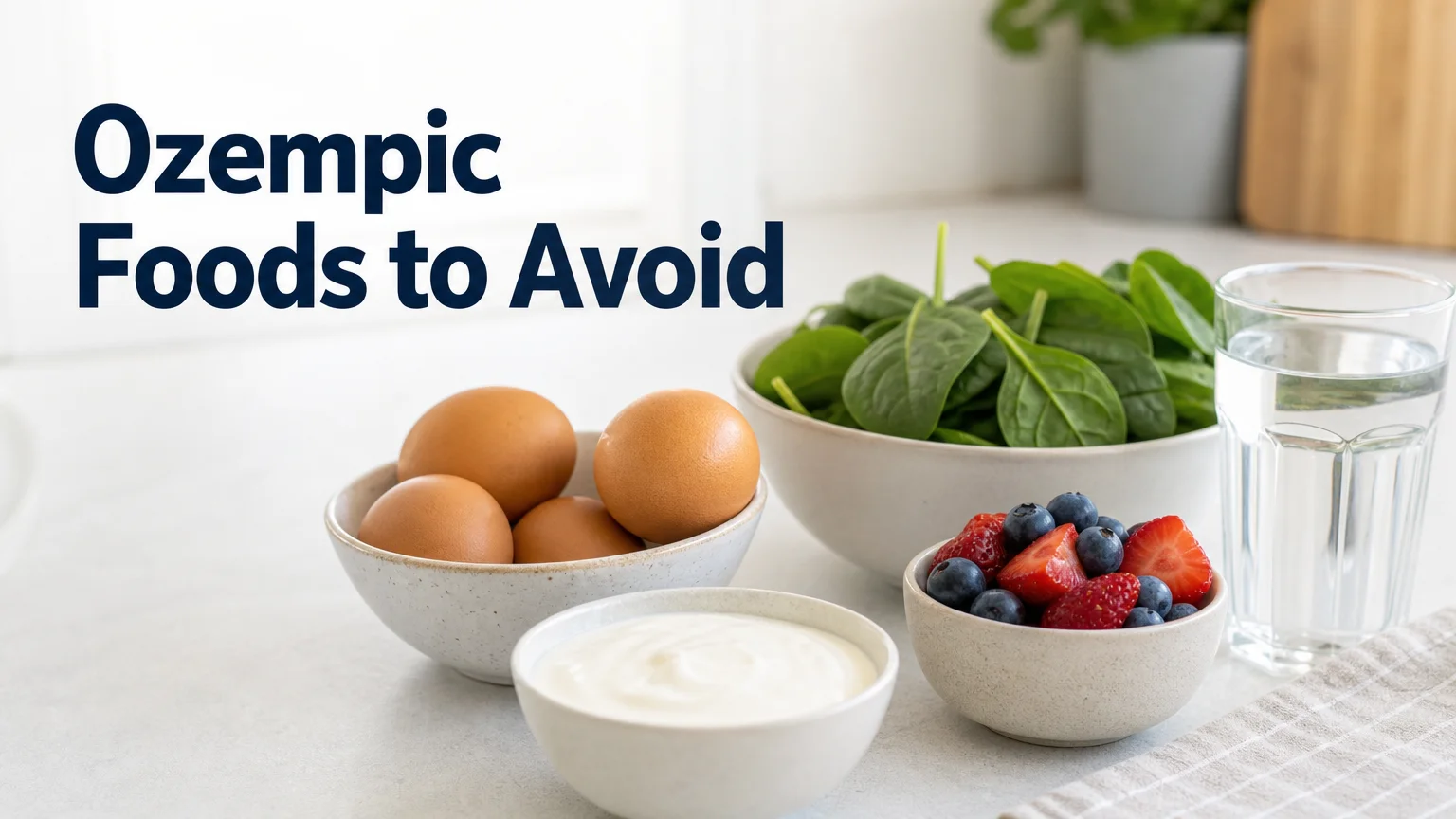
Ozempic Foods to Avoid: What Triggers Side Effects
Ozempic Foods to Avoid: What Triggers Side Effects and Why
Search for Ozempic foods to avoid and you will find tidy lists that read like rules. They are not rules. Novo Nordisk's prescribing information describes side effects, not a banned-foods list, so what follows separates the documented mechanism from the habits people swear by.
General education, not medical advice. Your prescriber sets your medication plan; talk to them before changing it.
Key Takeaways
- Semaglutide slows stomach emptying, which is why large, high-fat, or fried meals are the most common triggers for nausea and bloating.
- Alcohol and sugary drinks can worsen nausea and dehydration, so they are the first things to test by logging.
- Smaller, protein-first meals and steady water intake are the usual tolerance strategies to try before changing a prescription.
- Severe or persistent vomiting, abdominal pain, or dehydration needs a prescriber, not a food swap.
Contents
- Which Ozempic Foods to Avoid Matter Most?
- Why Do Some Foods Make Ozempic Side Effects Worse?
- Are Fried Foods on the Ozempic Foods to Avoid List Off-Limits?
- What Foods Help With Ozempic Nausea and Bloating?
- Is Alcohol Safe to Drink on Ozempic?
- How Do You Track What You Eat and How You Feel?
- When Should You Call Your Doctor About Food Reactions?
- FAQ
Which Ozempic Foods to Avoid Matter Most?
No food is formally banned on Ozempic. The foods most often reported as triggers are the ones that are hard to digest: fried and greasy dishes, very large meals, sugary drinks and sweets, and alcohol. Treat them as foods to test and limit, not forbidden items.
Clinic and patient guides keep landing on the same short list. Here it is, with the reason each one gets named:
- Fried and greasy food (fries, fried chicken, pizza, fast food): fat takes longest to leave the stomach.
- Very large portions: a full plate sits in a stomach that is already emptying slowly.
- Sugary drinks and sweets: concentrated sugar on an empty-feeling stomach is a common nausea complaint.
- Alcohol: it can irritate the stomach and adds to dehydration risk.
- Heavy, spicy, or highly acidic meals: a frequent trigger for reflux and burping in people who already have it.
Notice what the list is built on. It is a list of common triggers, and individual tolerance varies a lot. Someone who handles spicy food fine may be undone by a single milkshake.
Why Do Some Foods Make Ozempic Side Effects Worse?
Semaglutide slows gastric emptying, so food stays in your stomach longer than usual. Large or high-fat meals stretch that delay further, which can bring on nausea, bloating, fullness, and sometimes vomiting. The effect is a known part of how the drug works, not a sign you are eating wrong.
That slower emptying is also part of why the drug reduces appetite. The same mechanism that helps you feel full on less food makes an oversized plate feel punishing. Gastrointestinal effects like nausea, vomiting, diarrhea, constipation, and abdominal pain are the most commonly reported side effects, and they tend to be most noticeable when you start or raise a dose.
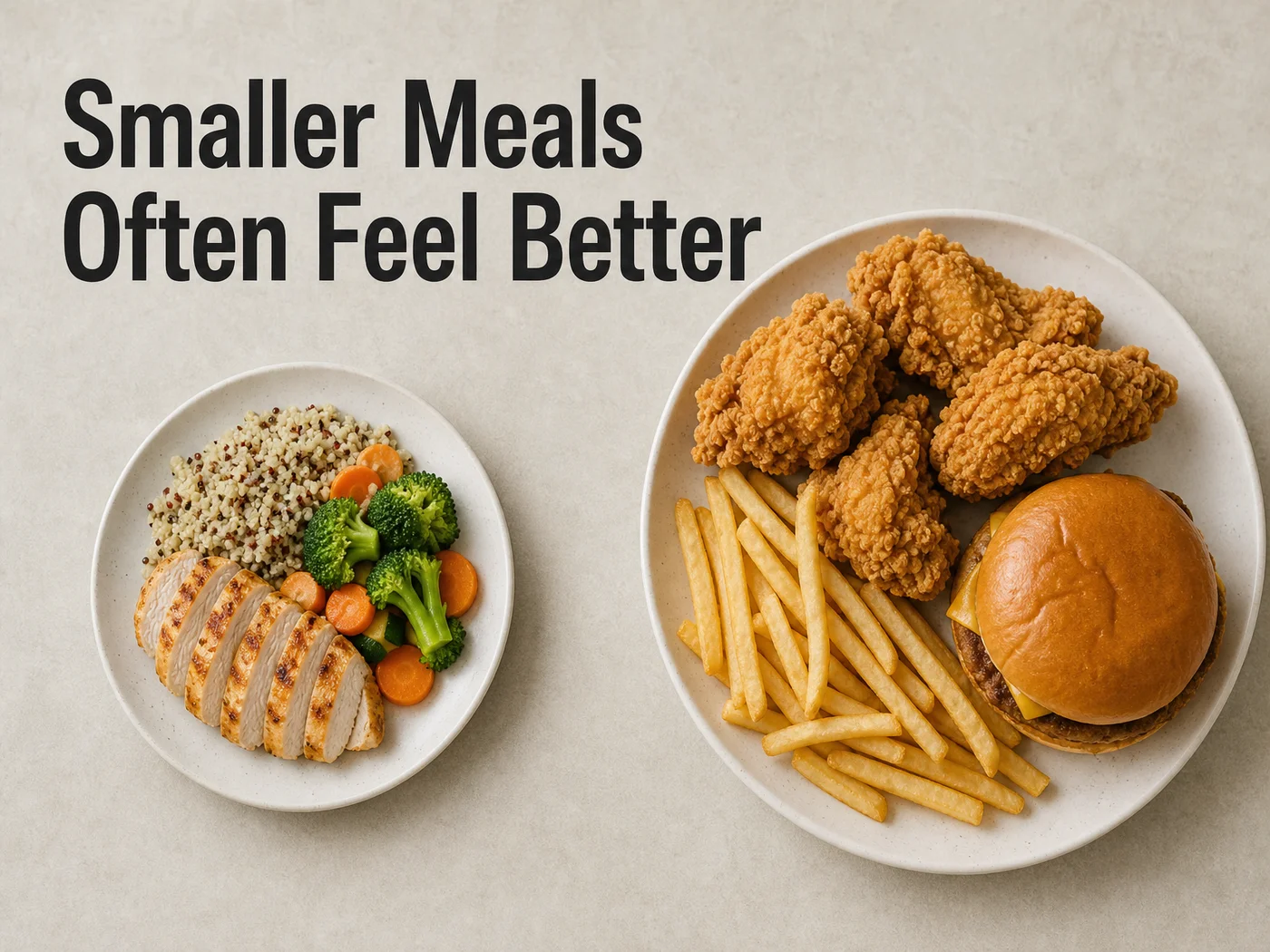 Portion size and fat content both change how a meal feels on semaglutide.
For the wider picture of what to expect and when, our guide to Ozempic side effects covers nausea, bloating, and the rest in detail. Whether symptoms ease with time varies by person; a week-by-week timeline is something many people look for, but your own log is the more reliable guide.
The short version: the drug changes how fast food moves. Meal size and fat content are the two levers you control.
Are Fried Foods on the Ozempic Foods to Avoid List Off-Limits?
Not off-limits, but they are the most consistent trigger. Fat slows digestion on its own, and semaglutide slows it further, so a greasy meal can leave you nauseated or bloated for hours. Many people find a smaller portion, or a less fatty version, is tolerable.
Fat is not the villain in every case. Plenty of people tolerate olive oil on vegetables or a handful of nuts without a problem. The trouble is the combination of large volume and heavy fat, as in a burger, fries, and a milkshake.
The table below summarizes common triggers and gentler options to try. These are starting points to test, not prescriptions.
| Common trigger | Why it tends to bother people | Option to try instead |
|---|---|---|
| Fried food, fast food | High fat delays emptying | Baked, grilled, or air-fried version in a smaller portion |
| Large single meals | Stomach is already slow to empty | Several small meals or a half portion |
| Sweet drinks, desserts | Concentrated sugar, can feel nauseating | Water, unsweetened tea, fruit in small amounts |
| Creamy or rich sauces | Fat plus volume | Tomato- or broth-based sauces |
| Carbonated drinks | Gas adds to bloating | Still water, sipped slowly |
| Alcohol | Stomach irritation, dehydration | Test cautiously, see below |
One caution about this table: "tends to" is doing real work. Reactions are personal, which is exactly why the tracking section below matters.
What Foods Help With Ozempic Nausea and Bloating?
Bland, low-fat, easy-to-digest foods and plenty of fluids are the usual first moves: toast, rice, crackers, broth, bananas, and plain yogurt. Smaller meals eaten slowly, with protein first, tend to sit better than big plates. These are common strategies, not a clinical protocol.
Bland is a short-term tool, though, not a lifestyle. If you live on crackers for weeks you will run into a different problem, which is eating too little protein.
Protein matters because rapid weight loss on GLP-1 medication can include lean mass. Our piece on Ozempic muscle loss goes into why protein-first meals are the common advice, and what the research actually shows.
Practical moves people commonly report helping:
- Stop eating at the first sign of fullness, not at "clean plate".
- Eat slowly and put the fork down between bites.
- Sip water through the day rather than gulping with meals.
- Pick softer proteins (eggs, yogurt, fish, tofu) when nausea is high.
- Avoid lying down right after eating.
Quick win: if a meal makes you queasy, note the size and fat content, not just the food name. Half the portion of the same dish is often the cleaner test.
Is Alcohol Safe to Drink on Ozempic?
Ozempic's labeling does not forbid alcohol, but it can add to nausea, dehydration, and low-appetite drinking, so many prescribers advise caution or limiting it. Whether it is safe for you depends on your dose, your health, and your doctor's advice.
There are two practical problems. Alcohol irritates the stomach, which compounds the nausea semaglutide already causes. It also contributes to dehydration, and vomiting or diarrhea from the medication can stack on top of that.
Because appetite is suppressed, people also report that drinks hit harder on a lightly fed stomach. That is anecdote rather than a measured effect, so treat it as a reason to be careful, not a fact. If you do drink, the cautious approach is one drink, with food and water, and a note in your log of how you felt the next day.
For the broader interaction picture, including medicines and supplements, see what not to mix with semaglutide. It covers the interaction list so this page does not have to repeat it.
Common mistake: assuming a symptom came from the food when it came from the drink, or the reverse. Log both.
How Do You Track What You Eat and How You Feel?
Write down what you ate, roughly how much, and any symptom with its timing and severity. After one to two weeks, patterns show up that no generic list can predict. A written log is the only way to tell which foods are your triggers.
Without a log, memory does the work and memory is bad at this. The nausea that hit at 9 p.m. might have been dinner, the glass of wine, or the dose you took two days earlier. A paper notebook works fine; so does a notes app. Our look at the ozempic tracking app options covers what to look for if you want something more structured.
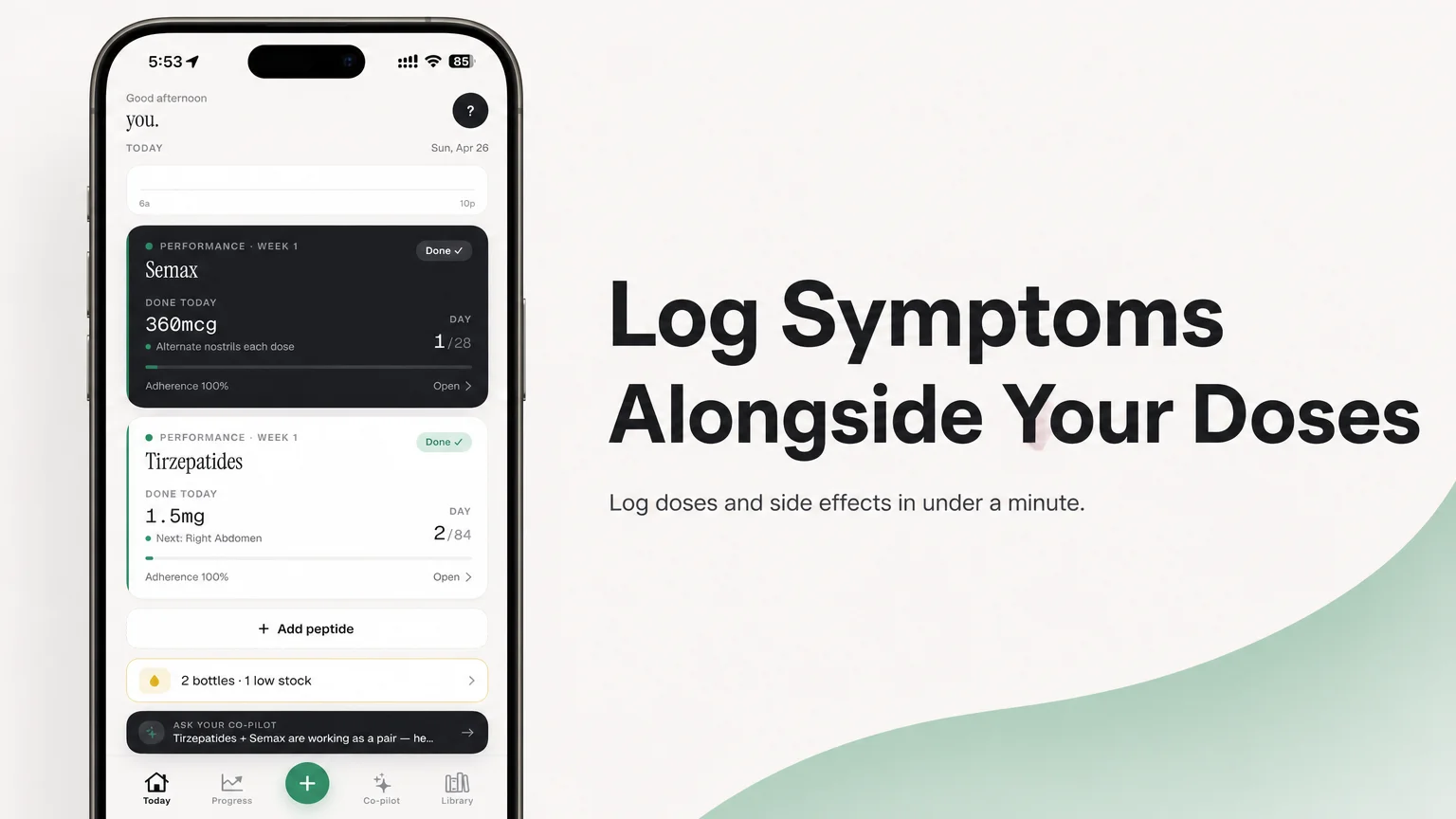 The PeptideIQ Today screen: protocols, dose status, and the co-pilot card in one view.
PeptideIQ is built around this exact problem. In the planned dose-logging flow, a quick-tap side-effect grid includes Nausea, Bloating, Hunger Changes, and Joint Pain, among others, and each symptom is tagged Mild, Moderate, or Severe. Logging a side effect automatically brings up the AI co-pilot, which already has your dose history for context.
Put that next to a food note and the question "what did I eat before the bloating?" becomes answerable. A meal scanner for nutrition logging is also planned. The screenshot above shows the Today screen only, so it does not show those features.
PeptideIQ is an iOS app, currently pre-launch. A waitlist is open at peptideiq.io, and pricing has not been announced.
When Should You Call Your Doctor About Food Reactions?
Call your prescriber for severe or persistent vomiting, severe stomach pain that does not pass, signs of dehydration, or any symptom that stops you eating or drinking. Food changes will not fix these. They need medical advice, and some need urgent care.
Ozempic's prescribing information warns about pancreatitis, whose hallmark is severe abdominal pain that may spread to the back, with or without vomiting. It also notes that vomiting and diarrhea can cause dehydration and, in some people, kidney problems. Do not wait for a food log to confirm what a symptom like that means.
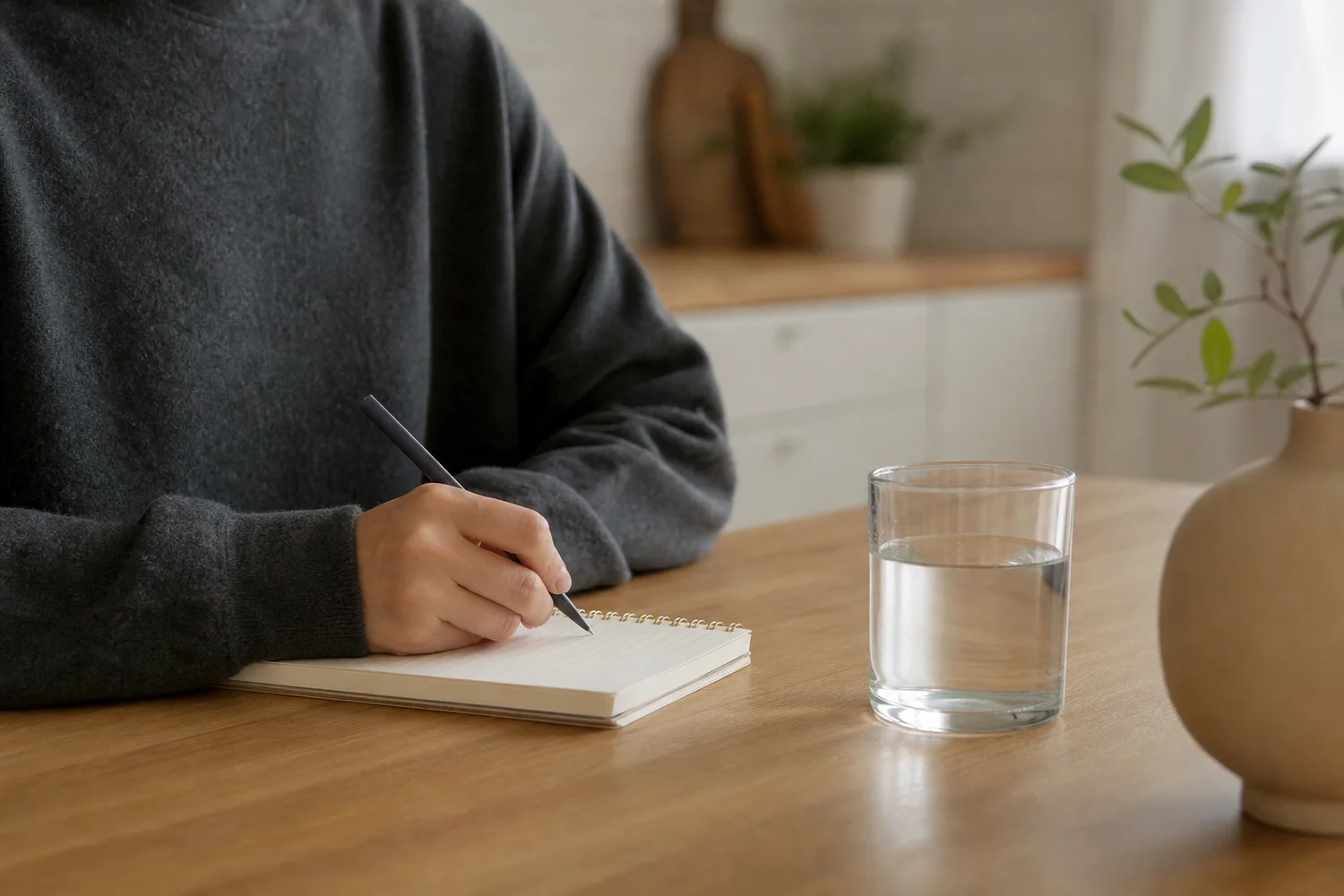 A written symptom history makes the appointment shorter and more useful.
Contact your prescriber promptly if you notice:
- Vomiting that continues for more than a day, or you cannot keep fluids down
- Severe, persistent abdominal pain
- Dizziness, very dark urine, or a racing heart that suggests dehydration
- Symptoms that worsen after a dose increase
Bring your log to the appointment. Dates, doses, meals, and severity ratings let a clinician see in two minutes what a memory-based account takes ten to explain. And if weight loss stalls, a plateau is often a food-habit question you can bring to them with data rather than guesses.
Get Started with PeptideIQ
If you are on semaglutide, a combined record of doses, symptoms, and meals is the fastest way to find your own triggers. PeptideIQ is an iOS app, currently pre-launch, with a waitlist open.
FAQ
What are the worst foods to eat on Ozempic?
Fried and greasy foods, very large portions, sugary drinks and sweets, and alcohol are the most commonly reported triggers. None is formally banned. Fat and volume matter most, because semaglutide already slows stomach emptying and heavy meals make that delay feel worse.
Can you eat sugar on Ozempic?
Yes, but sugary drinks and sweets are a common nausea trigger, especially in large amounts. Small portions with food are often tolerated. Sugar is also easy to overeat because appetite is lower, so many people limit it and test their own tolerance by logging.
What should you not eat on semaglutide?
Nothing is strictly prohibited, but most people limit fried food, large meals, sweet drinks, and alcohol. Foods that are heavy, greasy, or very rich tend to cause nausea and bloating. Your prescriber can give guidance specific to your health and dose.
Why does food make me nauseous on Ozempic?
Semaglutide slows how fast the stomach empties, so food lingers longer. A large or fatty meal stays even longer and can cause nausea, bloating, or fullness. Eating smaller portions more slowly, and choosing lower-fat foods, often eases it.
Can you drink coffee on Ozempic?
Ozempic's labeling does not prohibit coffee. Some people find it worsens nausea or reflux on an empty stomach, others notice no change. Try it with food, avoid sugary versions, drink water too, and note how you feel in your log.
How long do food side effects last on Ozempic?
It varies. Gastrointestinal effects are most noticeable when starting or after a dose increase, and many people find them lessening over time, though not everyone does. Persistent or severe symptoms need your prescriber, whatever the timeline.