
What Not to Mix With Semaglutide | PeptideIQ
What Not to Mix With Semaglutide: The Full Interaction Guide
Something's off, and it's not just the semaglutide. Maybe it's the ibuprofen you take for a headache, the wine at dinner, or the multivitamin you've swallowed every morning for years. Knowing what not to mix with semaglutide is the piece most people skip — and it's often the real reason results stall or side effects get worse.
Key Takeaways
- Semaglutide interacts with certain medications, supplements, and alcohol in ways that can reduce effectiveness or increase side effects — knowing these combinations matters for protocol safety.
- Alcohol raises the risk of nausea, dehydration, and blood sugar swings on semaglutide; most users limit it strictly or cut it out during dose increases.
- The medications to flag first are other diabetes drugs, blood thinners, and frequent high-dose NSAIDs — always check with your provider before adding anything new.
- Timing matters: some supplements are safe alongside semaglutide but need 2+ hours of separation to avoid absorption interference.
- Logging what you take alongside semaglutide is the only reliable way to tell whether a new symptom is a normal side effect or an actual interaction.
Contents
- What Not to Mix With Semaglutide: Medications and Supplements to Watch?
- Can You Drink Alcohol While on Semaglutide?
- What Not to Mix With Semaglutide at Mealtime: Foods and Drinks to Avoid?
- Does Semaglutide Interact With Birth Control or Hormonal Medications?
- Should You Take Semaglutide With Vitamins or Supplements?
- How Do You Know if Something Is Interacting With Your Dose?
- What Happens if You Accidentally Mix Semaglutide With Something Unsafe?
- Why PeptideIQ Users Never Guess at Interactions
What Not to Mix With Semaglutide: Medications and Supplements to Watch?
The medications most likely to cause problems with semaglutide are insulin and sulfonylureas (risk of severe low blood sugar), blood thinners like warfarin, and frequent high-dose NSAIDs, which compound semaglutide's slower gastric emptying into GI irritation. None of these make semaglutide unsafe to use — they make it a drug that needs a coordinated medication list, not a solo decision.
Semaglutide slows how fast your stomach empties. That single mechanical effect is behind most of its drug interactions, because it changes how — and how quickly — other oral medications get absorbed. Combine that with its blood-sugar-lowering effect and you get a short list of categories worth real caution.
If you're still working out your starting dose, our semaglutide dosing for weight loss protocol guide is worth reading first — the higher your dose, the more these interactions matter.
| Category | Examples | Risk When Combined | What to Do |
|---|---|---|---|
| Insulin & sulfonylureas | Insulin, glipizide, glimepiride | Compounded blood sugar drop — risk of dangerous hypoglycemia | Confirm a dose adjustment with your provider before starting semaglutide |
| Blood thinners | Warfarin, acenocoumarol | Slower gut absorption can shift anticoagulant response | Increase INR monitoring in the first few weeks of dosing |
| Frequent NSAIDs | Ibuprofen, naproxen (daily use) | Slowed stomach emptying stacks with GI irritation risk | Use the lowest effective dose, short-term only |
| Oral contraceptives | Combined pill, some progestin-only pills | Delayed absorption may reduce effectiveness during dose escalation | Add backup contraception per your prescribing label |
| Thyroid medication | Levothyroxine | Slower gut transit changes absorption timing | Take on an empty stomach, well spaced from your semaglutide dose |
Worth knowing: Most of these aren't dealbreakers — they're coordination points. Your prescriber needs your full list, and you need to know what to watch for.
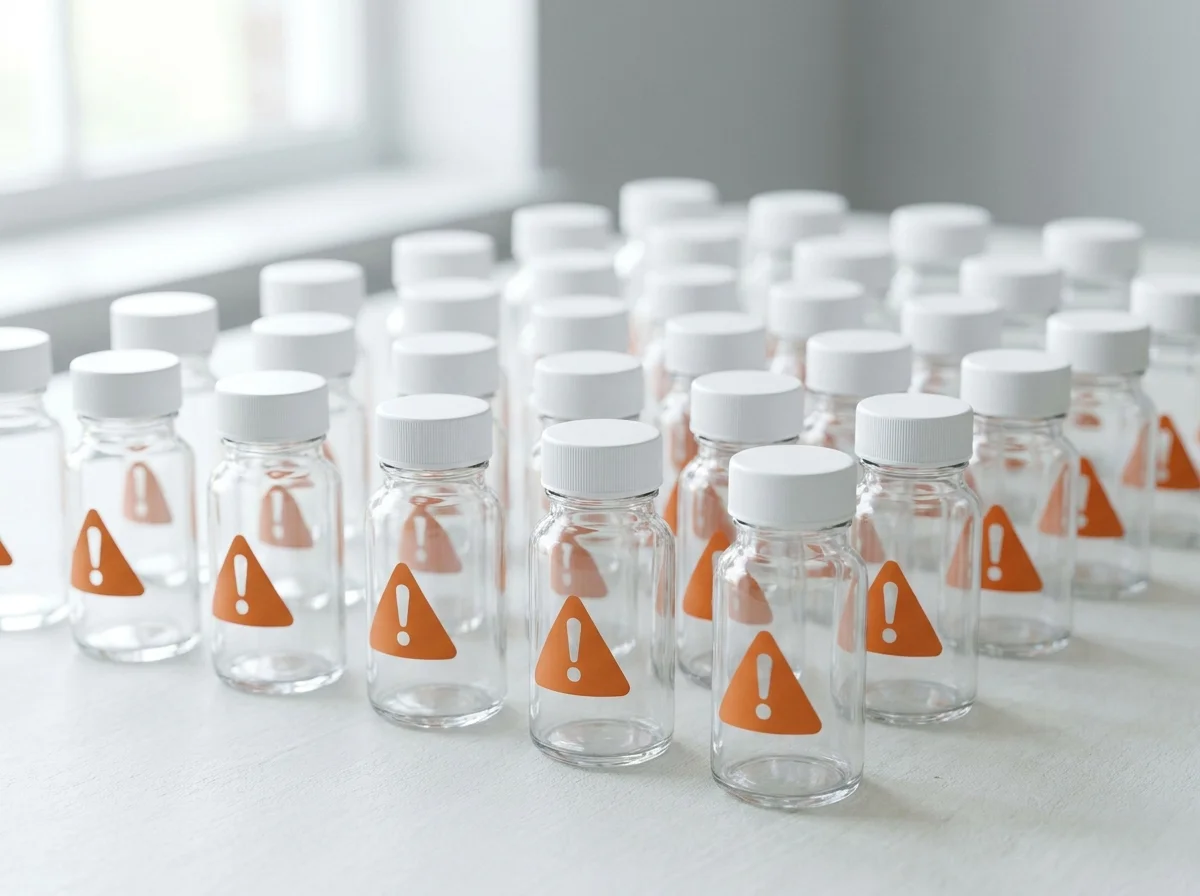 Interactions cluster into a few predictable categories — most are manageable with the right timing.
Can You Drink Alcohol While on Semaglutide?
Alcohol isn't off-limits on semaglutide, but it stacks two risks: nausea gets worse on an already-slowed stomach, and blood sugar can drop further than expected — especially on an empty stomach. Most people don't stop drinking entirely; they cut back sharply and never drink without eating first.
Semaglutide already tends to lower blood sugar, and alcohol does the same thing through a completely different pathway in the liver. Layer them together and the drop can be sharper and harder to predict than either one alone.
Dehydration compounds the problem. Semaglutide's most common side effects — nausea, reduced appetite, occasional vomiting — already put people at risk of running low on fluids, and alcohol accelerates that.
- Eat something with protein or fat before drinking, never on an empty stomach
- Space alcohol at least a few hours from your injection when possible
- Watch for shakiness, confusion, or cold sweats — signs of low blood sugar, not a hangover
- Hydrate before and after; alternate alcoholic drinks with water
For the full research picture on this specific interaction, our semaglutide and alcohol deep dive covers what studies actually show, not just forum consensus.
 Eating before drinking blunts both the nausea and the blood-sugar risk.
What Not to Mix With Semaglutide at Mealtime: Foods and Drinks to Avoid?
High-fat, greasy, and heavily fried foods are the biggest mealtime problem on semaglutide, because they sit in an already-slowed stomach longer and intensify nausea, bloating, and reflux. Large portions cause the same effect even with lighter food — semaglutide shrinks your comfortable meal size well before it changes what you crave.
Common culprits: fried chicken, pizza, cream-based soups, full-fat dairy, and anything swimming in oil. None of these are forbidden forever — they're just poorly timed during dose increases, when your stomach is adjusting the fastest.
One myth worth killing directly: eggs are not a documented semaglutide interaction. The "no eggs on Ozempic" idea traces back to fat and protein density triggering nausea in some users on higher doses — the same mechanism as any rich food, not something unique to eggs.
A dedicated foods-to-avoid breakdown — including what to eat instead when appetite is low — is coming to this cluster soon, covering the nutrition side of this equation in more depth than any single section can here.
Common mistake: Blaming a single "bad" food when the real issue is portion size or fat content. Track what you actually ate, not just the food name.
Does Semaglutide Interact With Birth Control or Hormonal Medications?
Semaglutide can reduce the effectiveness of oral contraceptives during dose increases, because slower gastric emptying delays how quickly the pill is absorbed — not because the drugs directly conflict. This is documented on GLP-1 prescribing labels, which is why backup contraception is standard advice during titration.
The effect is temporary and tied to dose changes, not constant. Once your stomach adjusts to a stable dose — usually within a few weeks — absorption timing normalizes for most people.
This isn't limited to birth control. Any hormone replacement therapy taken orally follows the same logic: slower gut transit, slightly delayed absorption, more relevant right after a dose increase than at a steady maintenance dose.
- Use a backup method (condoms, etc.) during any dose increase, per your contraceptive's label
- Consider a non-oral option if you're increasing doses frequently
- Flag hormone therapy to your prescriber when starting semaglutide, not after
Should You Take Semaglutide With Vitamins or Supplements?
Most vitamins and supplements are compatible with semaglutide, but a handful — high-dose vitamin E, certain fat-soluble vitamins, and stimulant-based fat burners — either compete for absorption or amplify side effects like jitteriness and nausea. The safest habit is a 2-hour gap between your supplement stack and any oral medication, semaglutide included.
Protein and fiber supplements are generally fine and often helpful, since semaglutide's reduced appetite makes it easy to under-eat protein. That matters directly for muscle retention — our semaglutide and muscle loss guide covers why protein timing (and some supplement choices) affects how much lean mass you keep on a GLP-1 protocol.
Garcinia cambogia and high-dose green tea extract are worth extra caution. Both have documented liver-stress case reports on their own, and stacking them with a medication that already slows digestion isn't a combination anyone should guess their way through.
Pro tip: New supplement, new symptom within a week? That's not a coincidence worth ignoring — it's a pattern worth logging.
How Do You Know if Something Is Interacting With Your Dose?
The clearest sign of an interaction is a new symptom that shows up within days of adding something new — a medication, a supplement, or a habit change — rather than a symptom that's been present since you started semaglutide. Timing is the entire diagnostic tool here; correlation without a log is just a guess.
Semaglutide side effects already shift week to week on their own, which makes this genuinely hard to untangle without records. Our semaglutide side effects guide breaks down what's expected at each stage versus what's worth flagging to a provider.
- Note the exact day you started anything new — supplement, medication, even a diet change
- Watch for symptoms appearing within 3-5 days of that change
- Rule out dose changes first — new side effects often line up with a dose increase, not an interaction
- Bring a real list to your provider, not a memory of "a few things"
What Happens if You Accidentally Mix Semaglutide With Something Unsafe?
Most accidental combinations cause manageable symptoms — worse nausea, dizziness, or a blood sugar dip — that resolve once the other substance clears your system, but severe symptoms like confusion, fainting, or a racing heart warrant immediate medical attention. Panic isn't useful here; a clear read on your symptoms is.
If you suspect a genuine interaction — say, you took an NSAID daily for a week without realizing the GI risk, or mixed alcohol with a fresh dose increase — the response is the same: stop the second substance, hydrate, eat something if blood sugar symptoms appear, and call your provider or a poison control line if symptoms escalate.
Mild nausea or a rough day isn't an emergency. Slurred speech, chest pain, or loss of consciousness always is — that distinction matters more than which specific substance was involved.
Why PeptideIQ Users Never Guess at Interactions
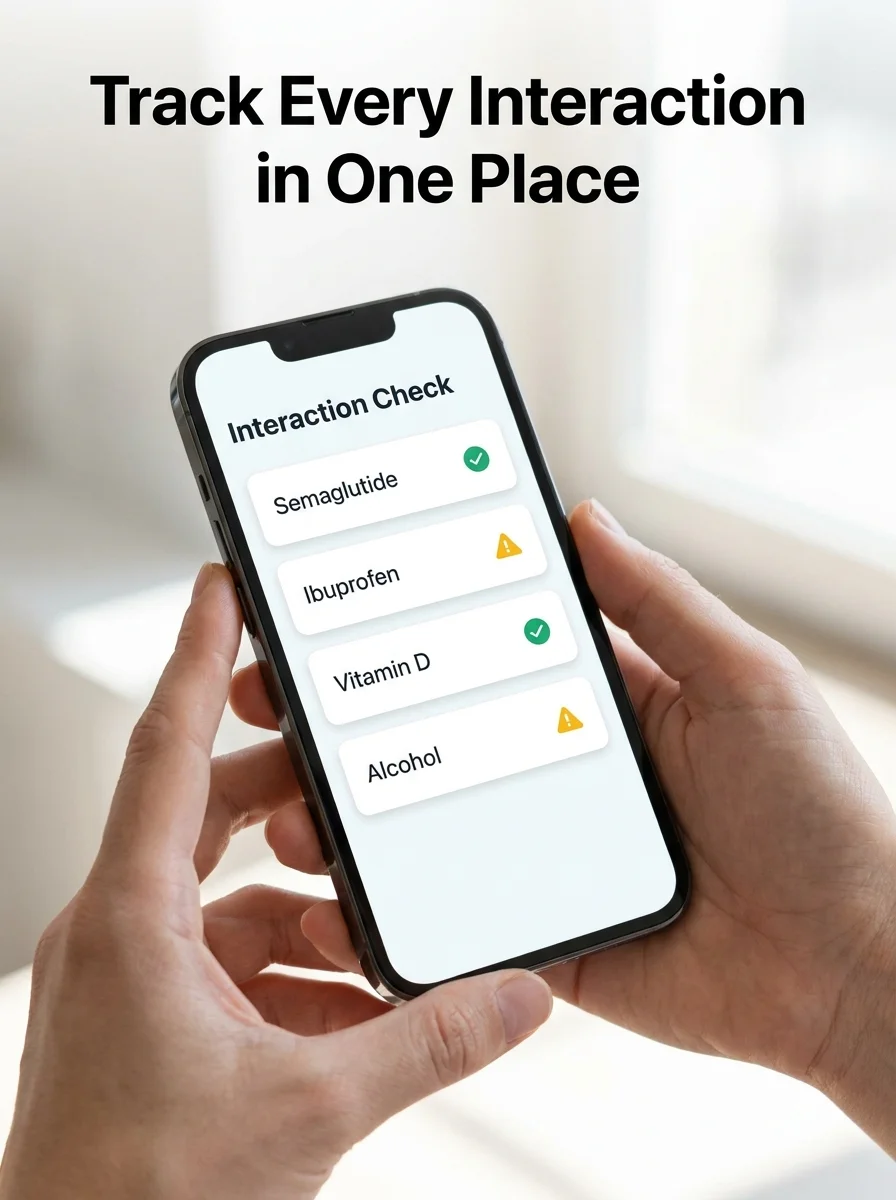 Every supplement and medication in your stack, checked against your active protocol.
Everything above requires you to remember what you took and when. PeptideIQ's Supplement and Interaction Tracker does that part automatically. Select your active peptides — semaglutide included — and the tracker surfaces known synergies with supplements, potential conflicts within your stack, and timing guidance on what to space apart, all without opening the AI.
The AI co-pilot layer goes further. Because it already knows your full stack and supplement log, you can ask something like "I started taking a green tea extract this week — does that interact with anything I'm already on?" and get an answer grounded in your actual protocol, not a generic drug-interaction database result. That context is the difference between reading a list of possible interactions and knowing whether one applies to you specifically.
For someone already mid-protocol and second-guessing a new symptom, that's the entire value proposition: stop cross-referencing forum threads and start checking your actual stack.
Get Started with PeptideIQ
Guessing at interactions is exactly the kind of decision semaglutide protocols shouldn't run on. PeptideIQ logs your full stack, flags known conflicts, and keeps your AI co-pilot updated on everything you're taking alongside your dose.
Download PeptideIQ on the App Store
Frequently Asked Questions
What drugs cannot be taken with semaglutide?
No drug is strictly forbidden, but insulin, sulfonylureas, and frequent high-dose NSAIDs need the most caution due to low-blood-sugar and GI-irritation risk. Blood thinners like warfarin also need closer monitoring. Always share your full medication list with your prescriber before starting semaglutide, not after.
Why can't you eat eggs on Ozempic?
Eggs aren't a documented interaction — the myth comes from fat and protein density triggering nausea in some users, the same mechanism as any rich food. If eggs specifically bother you, it's likely portion size or preparation (fried in butter versus plain), not the egg itself.
What can I mix semaglutide with?
Semaglutide pairs well with adequate protein, fiber, and hydration, all of which help offset its appetite-suppressing effects. Most standard vitamins are also fine with a 2-hour spacing buffer. The combinations to actually avoid are alcohol on an empty stomach, high-dose NSAIDs, and greasy meals during dose increases.
Can I take Tylenol with semaglutide?
Yes — acetaminophen (Tylenol) doesn't carry the same GI-irritation risk that frequent NSAID use does, making it generally the safer choice for occasional pain relief on semaglutide. Still mention it to your provider if you're using it regularly rather than occasionally.
How long after semaglutide can I drink alcohol?
There's no fixed waiting window, but most guidance suggests eating a full meal first and spacing alcohol a few hours from your injection, especially right after a dose increase. Monitor for shakiness or confusion, which signal blood sugar dropping lower than expected.
Is it safe to take vitamins the same day as my semaglutide injection?
Yes, for most standard vitamins — the injection itself doesn't interact the way oral medications can. The 2-hour spacing guidance applies to oral supplements relative to each other and to any other oral medication, not specifically to the injection timing.