
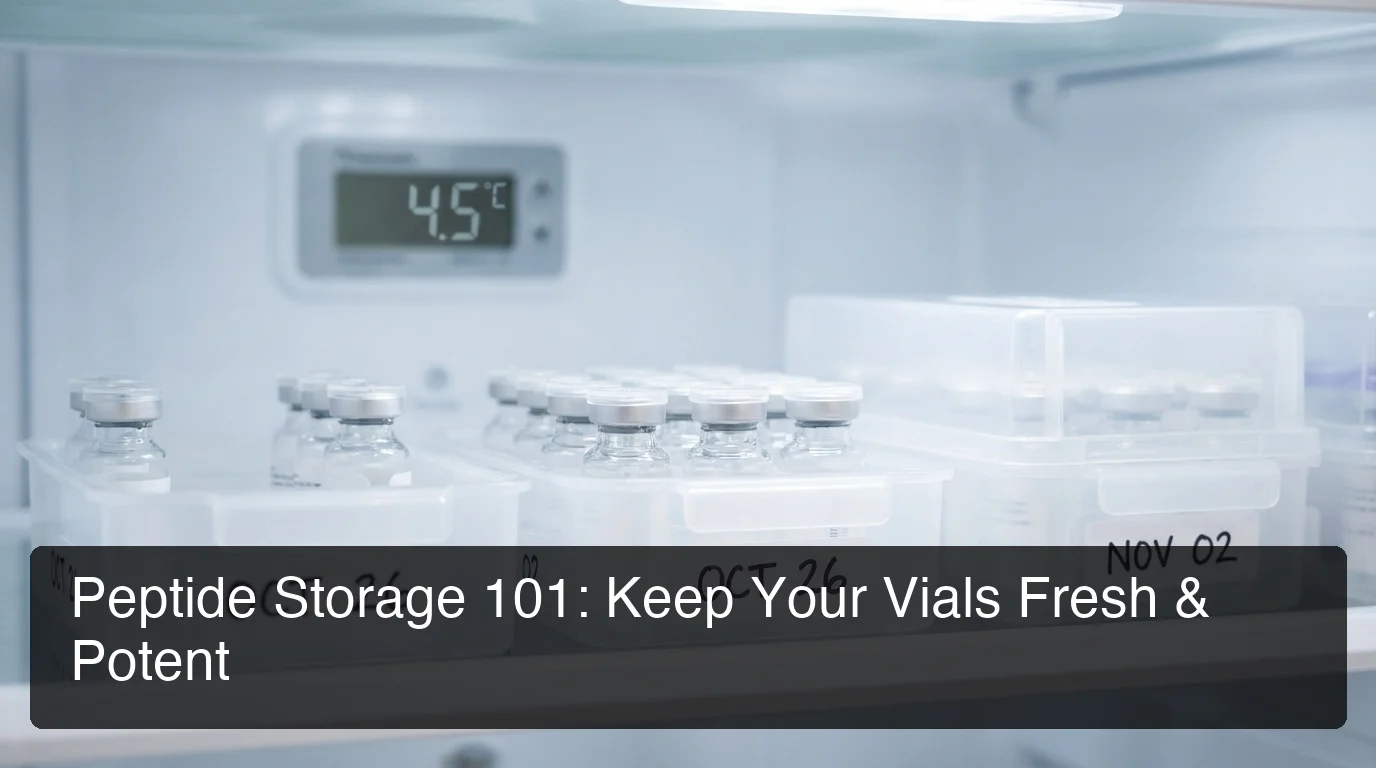
Peptide Vial Storage: Shelf Life, Temp & Tracking
Peptide Vial Storage: Temperature, Shelf Life & Expiry Tracking
30 days. That is the reconstituted shelf life of BPC-157 at 2–8°C. GLP-1 compounds like semaglutide get up to 90 days.
Most peptide users applying one timeline to the wrong compound are injecting from degraded stock without knowing it. The problem is not ignorance of the rules — it is the absence of any system to enforce them.
Proper peptide vial storage comes down to three variables: temperature, elapsed time since reconstitution, and contamination control. Get any one wrong and you lose potency silently, with no visible signal until the compound stops working.
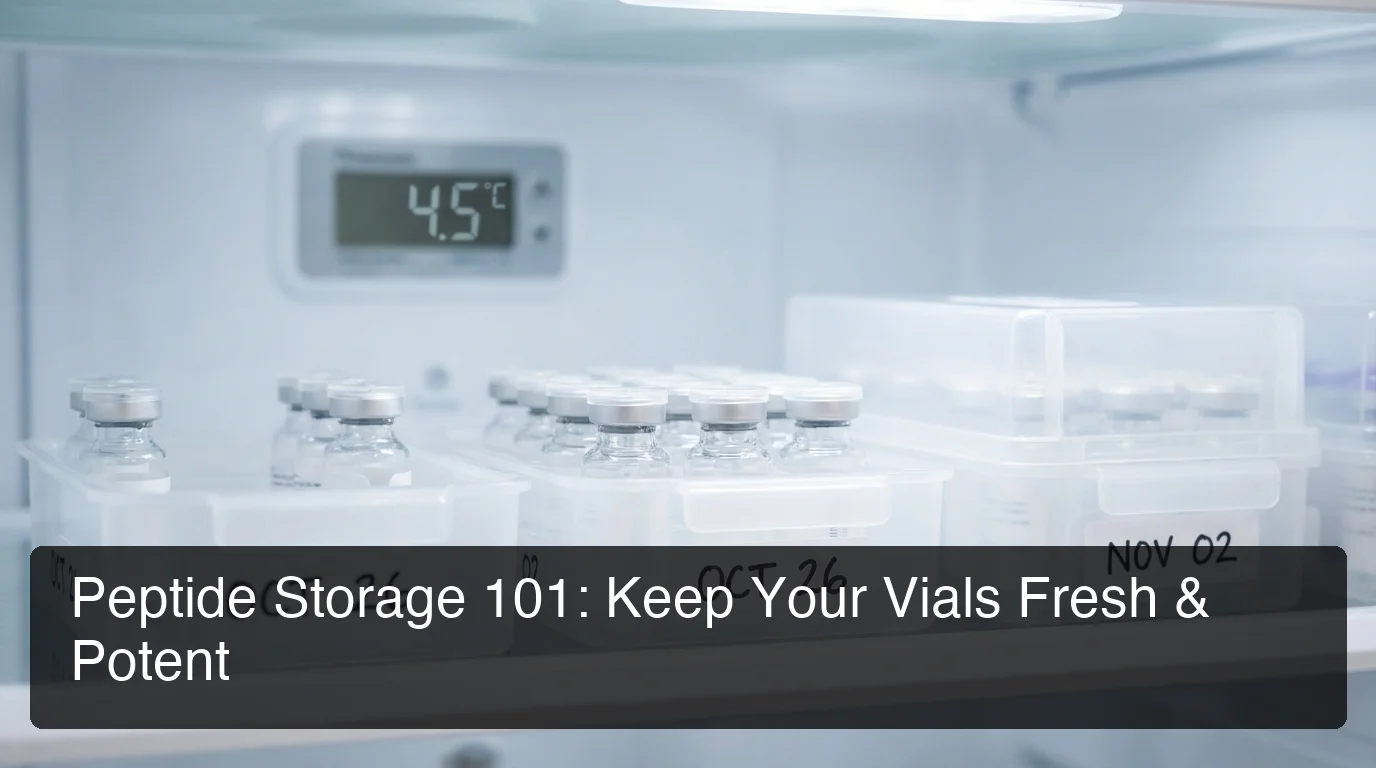 Organized refrigerator storage at 2–8°C is the baseline for every reconstituted peptide.
Key Takeaways
- Reconstituted peptide vials must be stored at 2–8°C; shelf life ranges from 30 days (BPC-157, GHK-Cu) to 90 days (GLP-1 compounds like semaglutide) before meaningful potency loss.
- Freeze-dried, unreconstituted peptides are far more stable — refrigerating lyophilized stock extends shelf life by years; freezing extends it further.
- Each freeze-thaw cycle degrades reconstituted peptide potency slightly; freeze only for surplus beyond a 3-month window, not as a routine storage method.
- Temperature fluctuations, light exposure, and contamination from improper draw technique drive most degradation — all three are directly preventable.
- Active users who do not track reconstitution dates risk injecting from expired vials, losing an estimated 10–15% of protocol effectiveness without visible indication.
Contents
- What Is the Ideal Temperature for Peptide Vial Storage?
- How Long Can Reconstituted Peptides Stay in the Refrigerator?
- Can You Freeze Peptides for Long-Term Storage?
- What Are the Best Peptide Vial Storage Containers?
- What Happens If Peptides Are Stored at the Wrong Temperature?
- How Do You Prevent Peptide Degradation During Storage?
- How PeptideIQ Prevents Wasted Cycles Through Inventory Tracking
What Is the Ideal Temperature for Peptide Vial Storage?
The optimal peptide vial storage temperature for reconstituted compounds is 2–8°C — standard household refrigerator range. At this temperature, most peptides maintain full biological activity for 30–90 days depending on the compound class. Temperatures above 25°C accelerate degradation measurably; every 10°C rise roughly doubles the rate at which peptide chains unfold.
Lyophilized (freeze-dried) peptides that have not yet been reconstituted tolerate considerably more variance. Sealed vials stored at 2–8°C maintain activity for 2+ years. Room temperature accelerates lyophilized degradation over months — not days — but there is no reason to leave valuable stock unrefrigerated.
| Peptide Class | Examples | Reconstituted Shelf Life (2–8°C) | Lyophilized Shelf Life |
|---|---|---|---|
| Healing peptides | BPC-157, TB-500 | 30 days | 2+ years refrigerated |
| GLP-1 compounds | Semaglutide, Tirzepatide | Up to 90 days | 2+ years refrigerated |
| GHRPs / GHRHs | CJC-1295, Ipamorelin, Sermorelin | 30–45 days | 2+ years refrigerated |
| Longevity peptides | GHK-Cu, Epitalon | 30 days | 2+ years refrigerated |
| Growth hormone variants | Tesamorelin, Retatrutide | 30–60 days | 2+ years refrigerated |
By the numbers: GLP-1 compounds get three times the post-reconstitution window of most healing and longevity peptides — 90 days versus 30. Applying a semaglutide timeline to a BPC-157 vial means injecting from degraded stock for 60 days without realizing it.
How Long Can Reconstituted Peptides Stay in the Refrigerator?
Reconstituted shelf life is compound-specific, not a universal rule. BPC-157 and most healing peptides last 30 days at 2–8°C; GLP-1 compounds maintain potency up to 90 days. Use bacteriostatic water — not sterile water — to extend usability; benzyl alcohol inhibits bacterial growth throughout the storage window.
The 30-day limit for BPC-157 is the conservative but correct figure for refrigerated conditions. Community reports occasionally suggest 45 days of apparent stability — but peptide potency assays are not available to end users. At Day 35, you are accepting degradation risk on a compound that took real investment to source.
Log reconstitution date the moment BAC water meets powder — not hours later. That timestamp is the only anchor for every expiry calculation that follows. A wrong date cascades into every alert and decision downstream.
If you are working through the foundational question of why cold chain is non-negotiable for both states of the compound, our refrigeration requirements guide explains the mechanism and conditions for each.
Can You Freeze Peptides for Long-Term Storage?
Reconstituted peptides can be frozen at -18°C or lower to extend usability beyond 6 months. Each freeze-thaw cycle degrades potency slightly from ice crystal formation, so frozen storage works best for surplus you won't use within the refrigerated window. For standard 30–90 day cycles, consistent refrigeration at 2–8°C outperforms freezing.
Lyophilized peptides freeze exceptionally well. Storage at -20°C extends shelf life beyond 3–5 years with minimal degradation. Most gray-market peptides arrive lyophilized and should stay frozen until two to three weeks before planned reconstitution.
Thaw overnight in the refrigerator — never at room temperature — to minimize thermal stress. Each rapid thaw shortens the effective life of the compound before you have even drawn a dose.
What Are the Best Peptide Vial Storage Containers?
The original septa-sealed glass vial handles nearly every storage requirement. The rubber septa keeps the reconstituted liquid sealed against contamination and oxygen exposure while allowing repeated needle access without exposing the solution. Secondary organization adds value — a refrigerator rack or foam insert case keeps vials upright, separated, and away from the door shelf.
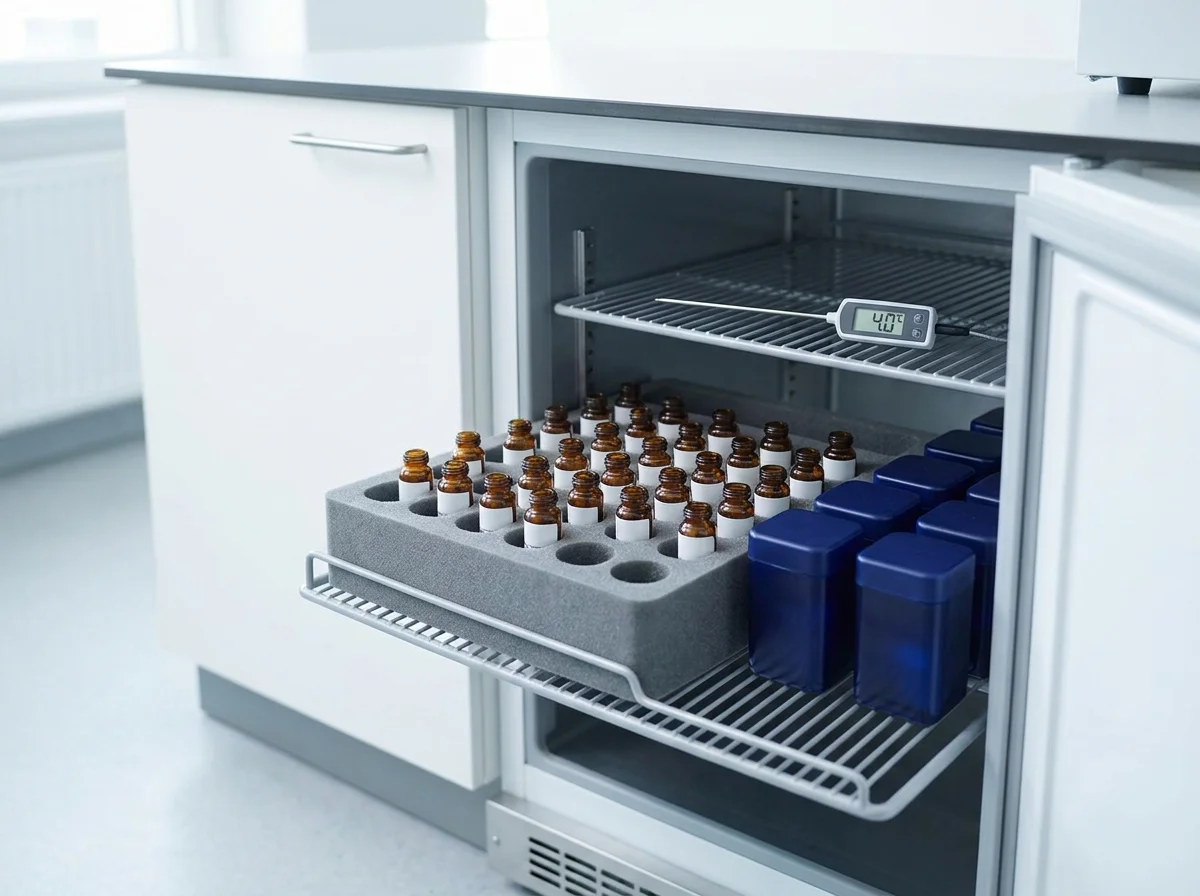 A foam insert tray keeps vials upright and away from the door shelf — the highest-variance temperature zone in any refrigerator.
Four rules that eliminate most contamination and thermal damage:
- Keep vials upright — horizontal storage can partially saturate the septa over time
- Use an opaque container or drawer to block light if your vials are clear glass
- Wipe the septa with an alcohol swab before and after every draw
- Never transfer reconstituted peptide to a secondary container — each handling step adds contamination risk
For a broader look at container materials, freezer organization, and complete storage setup options, the full peptide storage guide covers every configuration from bench-top to travel kit.
What Happens If Peptides Are Stored at the Wrong Temperature?
Temperature excursions above 25°C cause peptide chain unfolding — the three-dimensional structure essential for receptor binding degrades irreversibly. Visual signs include cloudiness, particulate matter, or color change in a previously clear vial. Do not inject from any vial showing these changes; potency loss from thermal damage cannot be reversed.
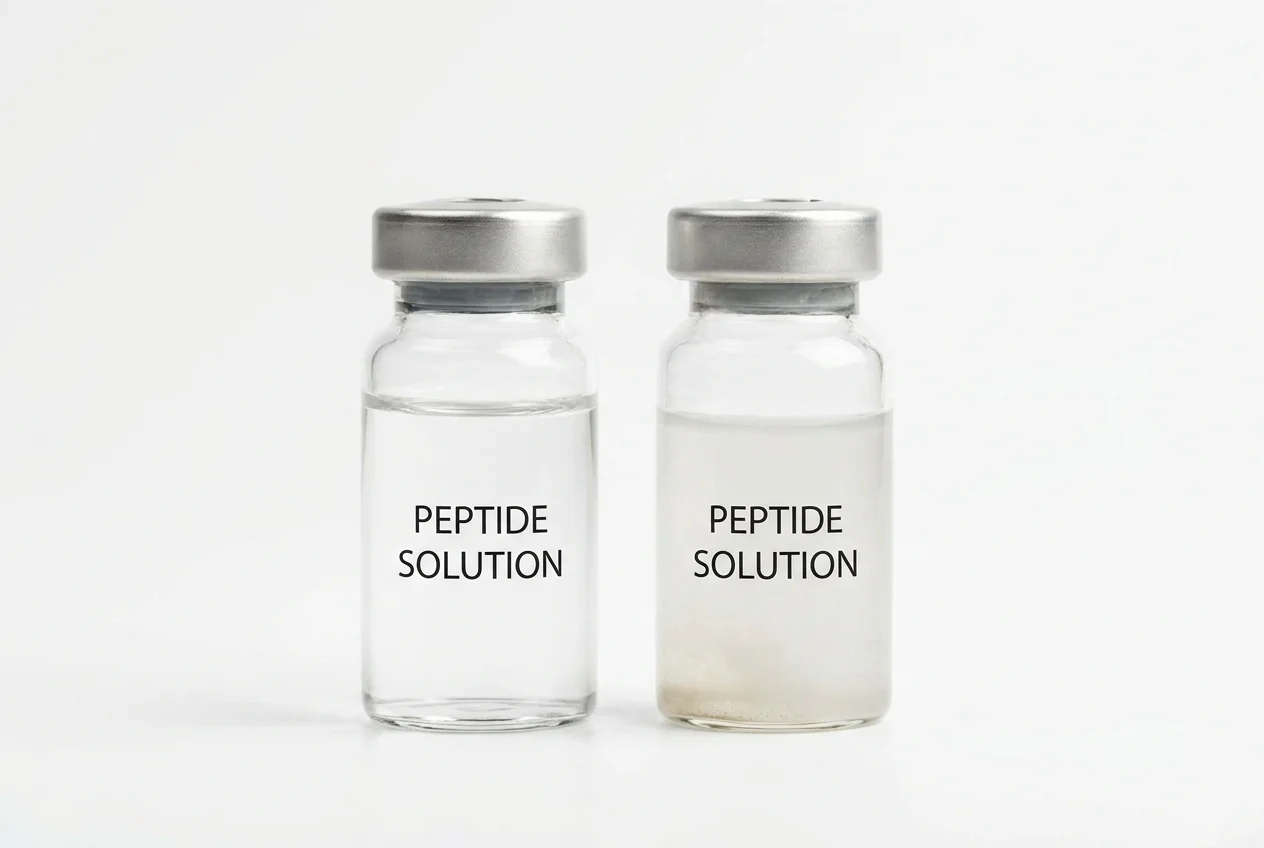 Clear liquid indicates a properly stored vial. Cloudiness or particulates — even faint ones — are a rejection signal.
Worth knowing: The refrigerator door shelf is the worst storage location in a standard fridge. Every time the door opens, temperature at the door spikes 3–5°C for several minutes. Repeated thermal cycling across a 30-day window accelerates degradation independent of the baseline refrigerator temperature.
Light also degrades peptides. Amber-tinted vials provide built-in protection. Clear glass vials should be stored in an opaque container or a dedicated drawer — not on an open fridge shelf under interior lighting.
How Do You Prevent Peptide Degradation During Storage?
The three controllable degradation vectors are temperature, light, and bacterial contamination. Each has a direct countermeasure: store at 2–8°C away from the door, shield vials from light, and maintain strict aseptic draw technique on every use. The fourth vector — injecting from an expired vial without realizing it — requires a tracking system, not technique.
A functional storage checklist covers all four:
- Reconstitute with bacteriostatic water, not sterile water
- Label each vial with reconstitution date at the moment of mixing
- Store at 2–8°C in an interior fridge compartment, away from the door
- Keep vials shielded from light — opaque case or closed drawer
- Visually inspect before every draw; reject any vial showing cloudiness or particles
- Track days elapsed per vial — apply the correct shelf life for each compound, not a generic figure
These same principles apply on the road. Maintaining proper peptide vial storage while traveling requires the same discipline — temperature consistency, light protection, and active date tracking — applied to a changing environment.
How PeptideIQ Prevents Wasted Cycles Through Inventory Tracking
Manual vial tracking fails for a predictable reason: it relies on memory across a 30–90 day window filled with dozens of logged doses and normal life. A sticky note on the vial is not a tracking system. Most users lose track of elapsed time within the first week.
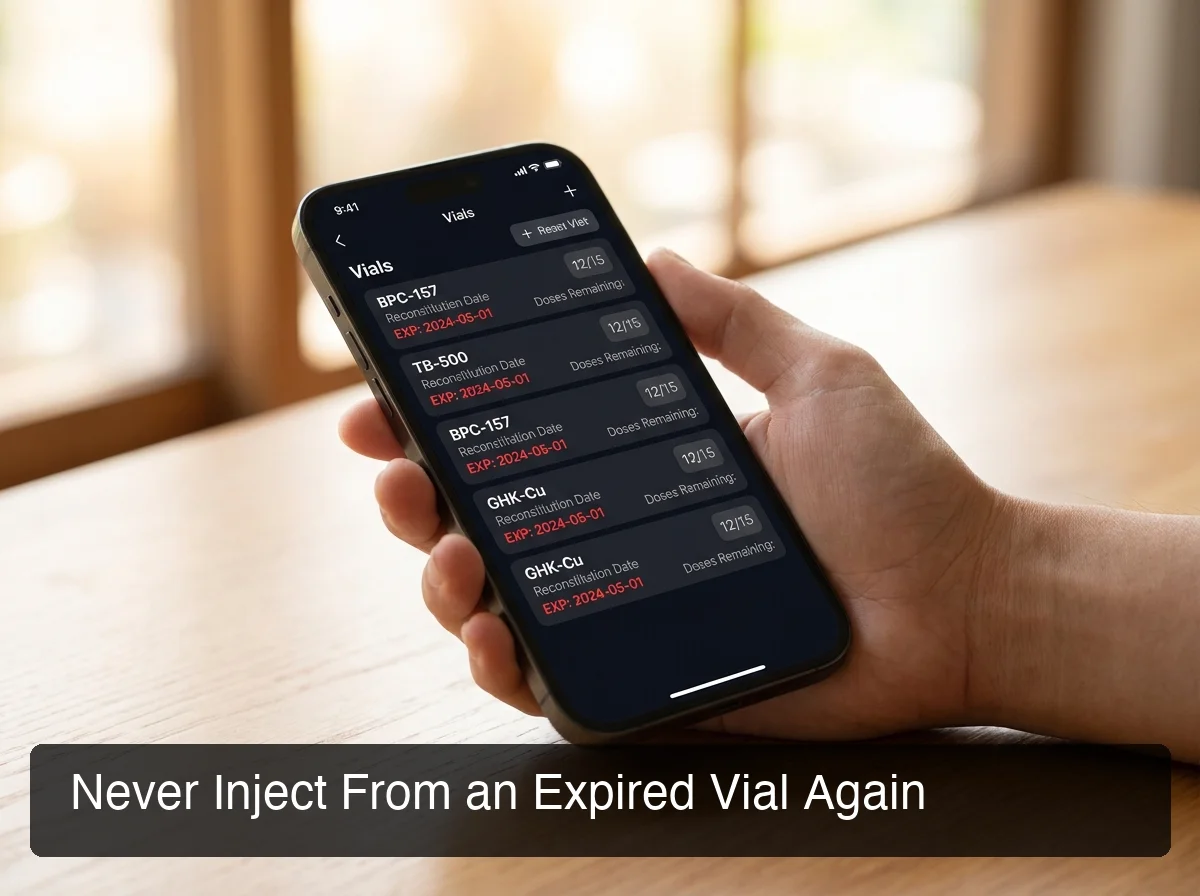 PeptideIQ's Inventory Manager auto-calculates expiry by peptide type and surfaces alerts before you reach the degradation window.
PeptideIQ's Inventory Manager solves this directly. When you add a reconstituted vial, the app calculates the expiry date automatically based on the specific peptide type. BPC-157 gets a 30-day window, GLP-1 compounds get 90 days — no manual date math required.
Two alerts prevent expiry-related waste:
- Expiry warning: Fires 5 days before the calculated expiry date, regardless of how many doses remain — enough lead time to plan a replacement vial
- Low stock alert: Fires when fewer than 7 days of doses remain, configurable to match your reorder timeline
Both surface on the Protocol Hub and as push notifications — once, not daily. When you start a new vial, the old one archives with its full history intact. Expiry records follow you across every completed cycle.
Active users who skip this tracking layer lose an estimated 10–15% of protocol effectiveness by running expired or near-expired vials unknowingly. A BPC-157 vial used past Day 30 may retain partial activity — but it is not the protocol you designed, and the results it produces are not the results you are measuring.
For a full look at how inventory tracking integrates with dose logging and AI-driven insights, the peptide tracking app guide covers the complete PeptideIQ system.
Get Started with PeptideIQ
Knowing the storage rules is the first step. Enforcing them across every vial, every compound, and every cycle — without relying on memory — requires a system that runs automatically. PeptideIQ tracks your vial inventory, fires expiry alerts before the window closes, and integrates with dose logging so every draw is accounted for.
Download PeptideIQ on the App Store
FAQ
Are peptides bad if not refrigerated?
Reconstituted peptides degrade meaningfully within 24–48 hours at room temperature above 20°C. Leaving them unrefrigerated beyond 4–6 hours risks potency loss that cannot be reversed. Cold chain from reconstitution through every dose is the only reliable way to protect your investment.
How long does a peptide vial last after opening?
Shelf life starts from reconstitution, not from first injection. BPC-157 with bacteriostatic water lasts 30 days at 2–8°C; GLP-1 compounds (semaglutide, tirzepatide) maintain potency up to 90 days; most growth hormone peptides fall in the 30–45 day range. Log the reconstitution date the moment you add BAC water, not when you draw the first dose.
How long can you leave peptides unrefrigerated?
Reconstituted vials tolerate 4–6 hours unrefrigerated in normal ambient conditions — practical for same-day travel. Lyophilized peptides handle 24–48 hours at room temperature without significant degradation, but routine storage outside refrigeration shortens shelf life progressively over months. Cold chain from supplier delivery through every storage day is the standard that protects potency.
How often should you check stored peptide vials for signs of degradation?
Inspect every vial before each draw — look for cloudiness, particulate matter, color change, or unusual viscosity. Any deviation from the original clear appearance is a hard rejection; do not inject from a visually degraded vial. Tracking reconstitution dates prevents most expiry issues before they become visible.