
Tirzepatide Peptide: How It Works, Dosage & Results
What Is Tirzepatide Peptide? How It Works and What to Expect
Tirzepatide is a synthetic peptide that produced 22.5% average body weight reduction in the SURMOUNT-1 trial — the strongest result recorded for any non-surgical weight loss intervention at that point. The tirzepatide peptide activates two hunger-suppressing receptors simultaneously, which separates it from every other GLP-1 compound in wide clinical use.
Contents
- What Is Tirzepatide Peptide and How Does It Work?
- How Does Tirzepatide Peptide Compare to Semaglutide?
- What Is the Tirzepatide Dosage Range and How Does Escalation Work?
- How Long Does It Take to See Results on Tirzepatide?
- What Are the Most Common Tirzepatide Side Effects?
- Can Tirzepatide Help with Muscle Building or Just Weight Loss?
- Why Tracking Tirzepatide Progress Week-to-Week Matters
- Frequently Asked Questions
What Is Tirzepatide Peptide and How Does It Work?
Tirzepatide is a 39-amino-acid synthetic peptide classified as a dual GLP-1/GIP receptor agonist. It mimics two gut hormones — glucagon-like peptide-1 and glucose-dependent insulinotropic polypeptide — activating both at once. This dual activation reduces appetite more aggressively than single-agonist compounds, producing 20–22% body weight reduction in controlled 68-week trials.
The GLP-1 pathway does the heavy lifting: it slows gastric emptying, suppresses the hunger hormone ghrelin, and signals the hypothalamus that caloric needs are met. GIP activation adds a second mechanism — enhancing insulin sensitivity and influencing fat storage pathways in adipose tissue. Both receptors are distributed across the gut, brain, and pancreas.
Sold as Mounjaro (type 2 diabetes) and Zepbound (obesity/weight management), tirzepatide received FDA approval for weight management in November 2023. It is administered as a once-weekly subcutaneous injection — the same delivery model as semaglutide.
Readers newer to GLP-1 compounds will find our weight loss peptides guide useful — it covers the full evidence landscape for semaglutide, tirzepatide, and gray-market alternatives with clinical data ranked honestly.
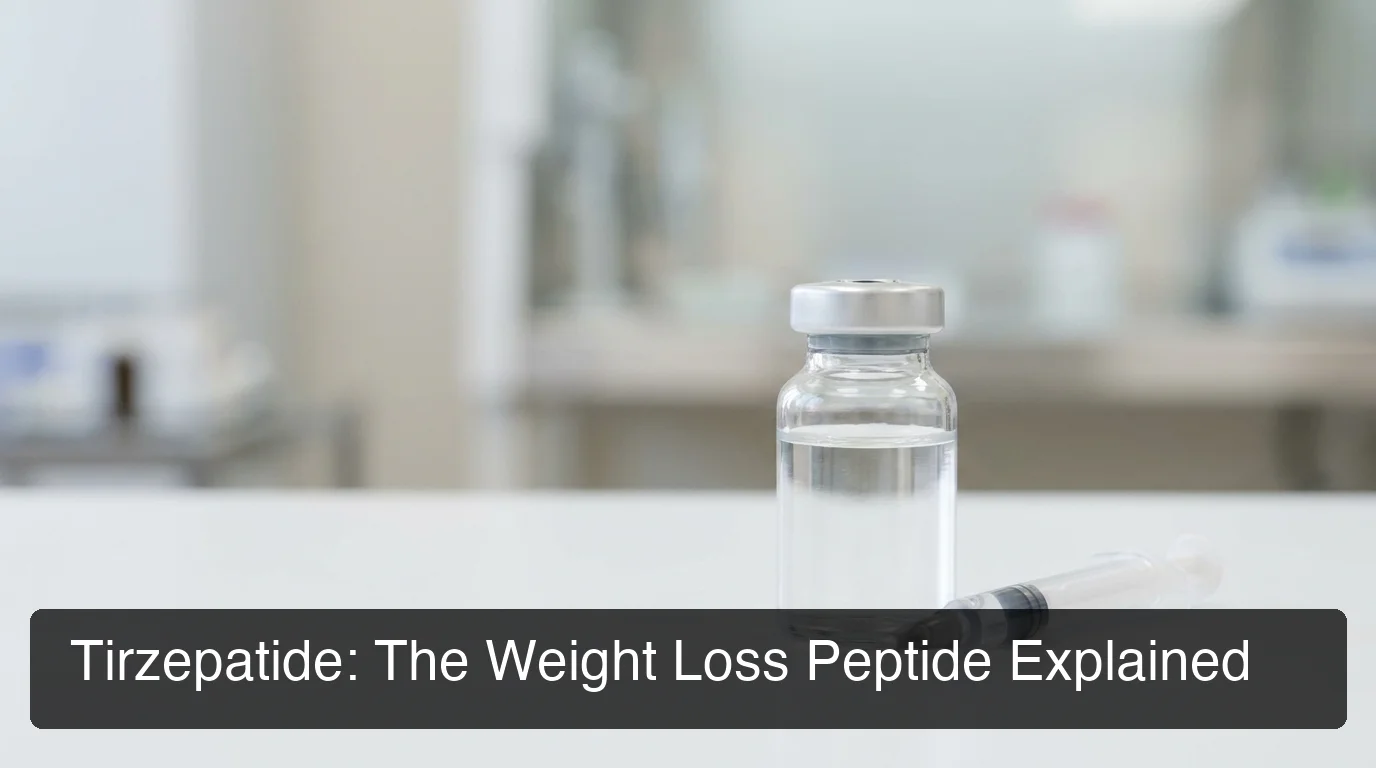 Tirzepatide is a weekly injectable peptide — not a pill or patch — delivered as a once-weekly subcutaneous injection.
Key Takeaways
- Tirzepatide (Zepbound/Mounjaro) is a GLP-1/GIP receptor agonist that activates two appetite-suppressing pathways simultaneously, producing stronger weight loss than single-agonist GLP-1 peptides like semaglutide.
- The standard protocol starts at 2.5mg weekly and escalates every 4 weeks up to 15mg — following defined phases that give the body time to adapt at each dose level.
- Most users notice appetite suppression within 3–5 days and see measurable weight loss by weeks 2–3; results accelerate through weeks 4–8 as the dose reaches therapeutic levels.
- Common early side effects — nausea, GI discomfort — peak in weeks 1–2 at each dose escalation and diminish as adaptation occurs.
- Tracking weekly adherence, side effects, and weight trend identifies protocol problems before they become plateaus.
How Does Tirzepatide Peptide Compare to Semaglutide?
Tirzepatide and semaglutide are both once-weekly injectable GLP-1 agonists, but tirzepatide's added GIP pathway drives meaningfully stronger average weight loss: 20–22% versus 15–16% for semaglutide over 68 weeks in head-to-head trial data. The tradeoff is a longer initial adaptation window and, in some users, more pronounced early GI side effects.
| Tirzepatide | Semaglutide | |
|---|---|---|
| Mechanism | GLP-1 + GIP dual agonist | GLP-1 agonist only |
| Avg. weight loss (68 wks) | 20–22% | 15–16% |
| Starting dose | 2.5 mg/week | 0.5 mg/week |
| Max dose | 15 mg/week | 2.4 mg/week |
| FDA-approved brands | Mounjaro, Zepbound | Ozempic, Wegovy |
| Escalation interval | Every 4 weeks | Every 4 weeks |
Both follow the same 4-week dose escalation model — a parallel worth noting when comparing protocols or switching between them. Tirzepatide has a similar phase-based escalation structure to semaglutide; we cover the semaglutide escalation schedule in detail in our upcoming semaglutide dosing guide.
Cost is where the real difference lies for most people. Compounded versions of both now exist in similar price ranges — see our peptide therapy cost breakdown for a transparent per-month comparison.
By the numbers: SURMOUNT-1 participants on 15mg tirzepatide lost 22.5% of body weight over 72 weeks. The STEP-1 trial for semaglutide at 2.4mg showed 14.9% over 68 weeks. Both represent landmark results in obesity pharmacology — the comparison matters when choosing a protocol.
What Is the Tirzepatide Dosage Range and How Does Escalation Work?
Tirzepatide starts at 2.5mg once weekly and escalates in 2.5mg increments every 4 weeks: 2.5 → 5 → 7.5 → 10 → 12.5 → 15mg. Most users reach a maintenance dose of 10–15mg by month 5 or 6. Accelerating this schedule increases GI side effect risk significantly without improving efficacy at any earlier phase.
Each 4-week phase lets the body adapt to the current dose before increasing. This is not an optional element — compressed escalation is the most common driver of protocol dropout in GLP-1 users.
PeptideIQ's Cycle Planner structures tirzepatide protocols with this escalation built in. Phase timelines are set visually — Phase 1 (weeks 1–4 at 2.5mg), Phase 2 (weeks 5–8 at 5mg), continuing through each level — with automatic phase transition reminders and dose updates that require your confirmation before the change takes effect. The escalation runs on schedule without manual tracking.
 The 4-week-per-phase escalation is a clinical standard, not a suggestion — compressed escalation is the most avoidable reason GLP-1 protocols fail.
Our upcoming tirzepatide dosing guide covers injection timing, missed-dose protocols, and full phase-by-phase guidance in depth.
How Long Does It Take to See Results on Tirzepatide?
Appetite suppression typically appears within 3–5 days of the first injection. Most users see 1–3 lbs of measurable weight loss by weeks 2–3. Results accelerate through weeks 4–8 as the dose increases and the body's hunger set point begins to shift. Weeks 12+ are when cumulative weight loss becomes substantial for users maintaining adherence.
A realistic phase-by-phase breakdown:
- Days 3–5: Appetite noticeably reduced; feeling satisfied with smaller meals
- Weeks 1–2: GI side effects peak; energy may temporarily dip
- Weeks 2–3: First measurable weight drop for most users
- Weeks 4–8: Appetite suppression deepens at each escalating dose; weekly loss rates increase
- Months 3–6: Plateau risk rises; protocol adjustments or lifestyle changes often produce the next wave of results
The week-to-week pattern is not a straight line — side effects and appetite suppression fluctuate at each dose increase. Logging the curve is the only way to distinguish expected adjustment from a genuine protocol problem.
What Are the Most Common Tirzepatide Side Effects?
Nausea, diarrhea, constipation, and vomiting are the most reported tirzepatide side effects — appearing in 20–44% of clinical trial participants. They peak in weeks 1–2 at each escalation point and decline as the body adapts to the new dose. Injection site reactions are common and self-resolving. Rare but serious risks include pancreatitis and gallbladder disease.
Side effects follow a dose-event pattern: they spike at each escalation and settle within 1–2 weeks. Users tracking weekly side effect logs recognize this curve and distinguish it from genuine intolerance early enough to course-correct.
Our honest peptide safety review and medical research summary on peptide therapy cover GLP-1 safety data with clear evidence-level labeling — useful context for skeptics and for users managing their own risk tolerance.
Can Tirzepatide Help with Muscle Building or Just Weight Loss?
Tirzepatide is not a muscle-building compound — its mechanism is metabolic and appetite-regulatory, not anabolic. GH-axis peptides (CJC-1295, Ipamorelin, GHRP variants) operate through different pathways and serve a different population.
For most tirzepatide users, the practical concern is lean mass preservation during aggressive caloric restriction. SURMOUNT program data indicates roughly 25–30% of total weight lost is lean mass — comparable to semaglutide and consistent with what happens in any significant caloric deficit. High protein intake and resistance training are the primary variables that reduce lean mass loss. The peptide itself does not preferentially protect muscle; your training and nutrition protocol does.
Why Tracking Tirzepatide Progress Week-to-Week Matters
 Week-to-week tracking turns a complex dual-pathway process into a readable timeline — showing you whether tirzepatide is working before a plateau becomes a setback.
Week-to-week data answers three questions a monthly snapshot cannot: whether the current dose is producing the expected appetite change, whether side effects are tracking the normal adaptation curve, and whether weight trend is following the expected trajectory or diverging early enough to address.
The Cycle Planner in PeptideIQ structures tirzepatide protocols with automatic dose escalation built in — transitioning from 2.5mg to 5mg, 7.5mg, and upward on the 4-week schedule with confirmation prompts and auto-updated dose logging. The progress view annotates your weight trend with cycle events: dose increases, side effects logged, doses missed — context that turns raw numbers into a legible protocol history.
For a prescriber reviewing your progress, that annotated timeline is real clinical data. For you, it is the difference between feeling like things are vaguely working and actually knowing they are.
Get Started with PeptideIQ
Tirzepatide results depend on protocol precision — the right dose, escalated at the right intervals, tracked week-to-week to catch problems before they become plateaus. PeptideIQ structures your full tirzepatide escalation protocol, tracks weekly progress, and surfaces AI insights grounded in your actual cycle data. Download PeptideIQ on the App Store and take control of your protocol before your next dose.
Not ready to start yet? Explore PeptideIQ's peptide library — free access to evidence-rated information on every peptide in the app.
Frequently Asked Questions
Is tirzepatide peptide the same as Mounjaro?
Tirzepatide is the active compound in both Mounjaro and Zepbound — the identical synthetic peptide, sold under different brand names with different FDA indications. Mounjaro targets type 2 diabetes; Zepbound carries the obesity and weight management indication. Compounded tirzepatide contains the same active molecule at a fraction of branded pricing.
How much does tirzepatide cost compared to semaglutide?
Brand-name tirzepatide (Mounjaro, Zepbound) runs $900–$1,200/month without insurance or manufacturer coupons. Compounded tirzepatide from licensed pharmacies typically costs $200–$400/month. Compounded semaglutide runs a similar $200–$500/month range. See our peptide therapy cost breakdown for a full comparison by source type.
What is the best peptide to add to tirzepatide?
Tirzepatide is typically run as a standalone weight management protocol. Most users do not stack additional peptides during active GLP-1 use — the metabolic load and adaptation period are significant enough that adding other compounds increases side effect complexity without established synergy data for the combination.
What is the difference between compounded and brand-name tirzepatide?
The active ingredient is chemically identical. Compounded tirzepatide is manufactured at licensed compounding pharmacies and costs significantly less than branded Mounjaro or Zepbound. The key distinction is regulatory: branded products carry FDA approval with standardized manufacturing oversight; compounded versions operate under pharmacy compounding exemptions without the same batch consistency requirements.