
Epitalon Peptide Protocol: Dosing & Cycle Data | PeptideIQ
Epitalon Peptide Protocol: Dosing, Cycles, and the Data Behind It
Search five sources for an epitalon peptide protocol and you'll find five different numbers. One vendor page recommends 10 mg nightly for ten days. A published trial tested 0.5 mg daily for twenty days, sublingually. A decades-old Russian dosing table lands somewhere in between, injected intramuscularly.
None of those sources agree, and that disagreement is the actual starting point for understanding epitalon — not a detail to skim past.
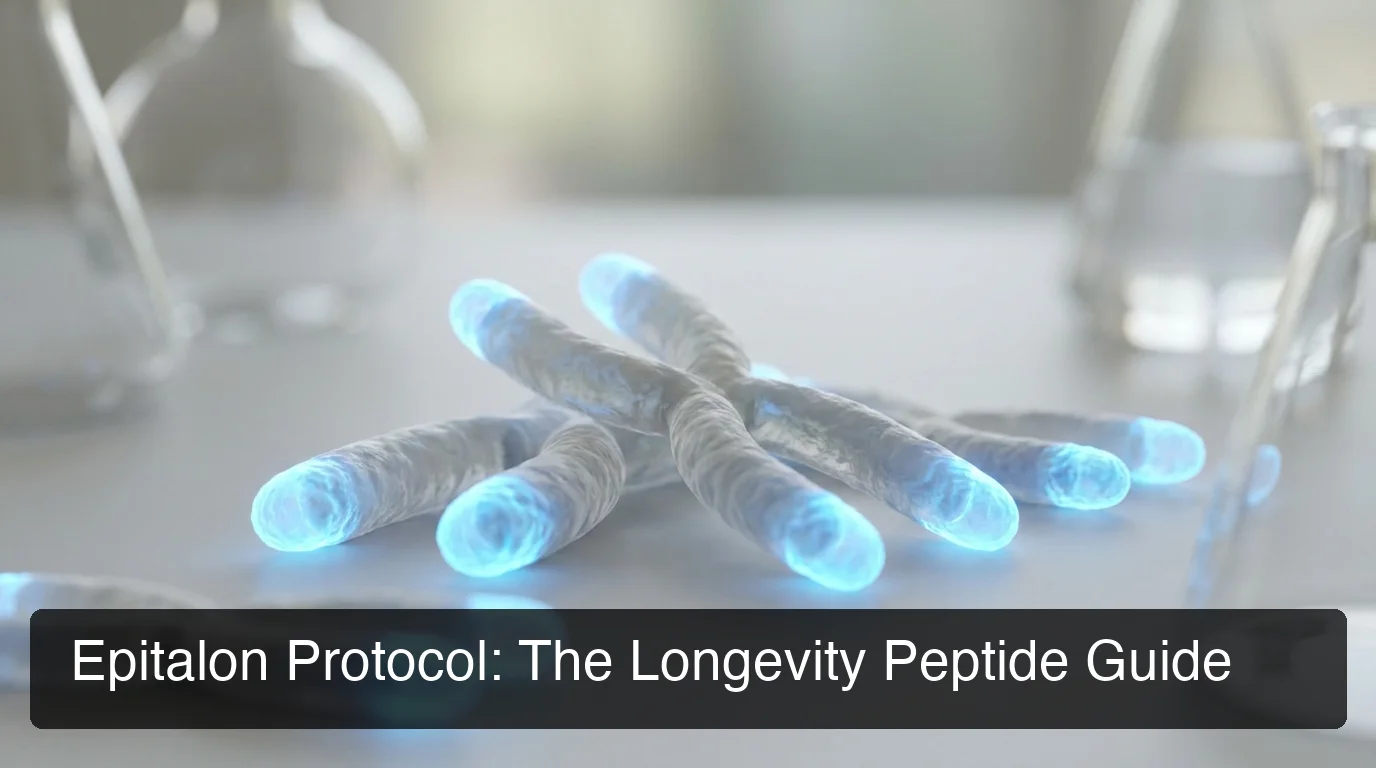 Telomere biology is the reason epitalon shows up in longevity protocols at all.
Key Takeaways
- Epitalon is a synthetic tetrapeptide studied for its effect on telomerase activity and cellular aging, with evidence from early human trials — not FDA approval or large-scale clinical consensus.
- Reported protocols cluster into two patterns: high-dose injectable (5–10 mg daily, 10–20 days) and low-dose sublingual (0.5 mg daily, 20 days), with cycle length mattering more than the exact milligram figure.
- Most longevity users stack epitalon with GHK-Cu, MOTS-c, or other cellular-support peptides rather than running it alone, and track the combination against bloodwork rather than by feel.
- Meaningful signal — energy, recovery, skin quality, and biomarkers like IGF-1 — typically takes 8–12 weeks of consistent cycling to show up, not days.
- Reconstituted epitalon holds potency for up to 30 days refrigerated at 2–8°C; freezing extends shelf life but can affect solubility in some batches.
What Is Epitalon and How Does It Work for Longevity?
Epitalon (also spelled epithalon) is a synthetic version of epithalamin, a peptide naturally produced by the pineal gland. Research has focused on its effect on telomerase — the enzyme that rebuilds the protective caps on the ends of chromosomes — with laboratory studies showing measurable telomerase activation using the TRAP (telomere repeat amplification protocol) assay.
Telomeres shorten every time a cell divides. Once they get too short, the cell stops dividing or dies — one of several mechanisms researchers associate with cellular aging. Epitalon's proposed mechanism is upstream of that: nudge telomerase activity, and the shortening slows. (If peptide mechanisms in general are new territory, what a peptide actually is is worth reading first.)
That's the theory, and it's grounded in real published research. It is not the same as a guarantee of anti-aging effects in every user, which is where a lot of vendor copy overstates what the science actually says.
A frequently cited randomized trial gave 75 women sublingual epitalon at 0.5 mg per day for 20 days and compared outcomes against a placebo group — one of the few controlled human studies behind any longevity peptide. That's a meaningfully different evidence tier than most compounds circulating in gray-market channels, even though it's still early-stage.
What Is the Standard Epitalon Peptide Protocol Dosage?
There is no single official epitalon dosage protocol — dosing splits into two distinct traditions. Higher-dose injectable protocols run 5–10 mg per day for 10–20 consecutive days, while a lower-dose sublingual approach uses roughly 0.5 mg daily over 20 days. The route you choose changes both the number and how you should read it.
| Protocol Type | Typical Dose | Cycle Length | Administration |
|---|---|---|---|
| High-dose injectable (older Russian-protocol style) | 10 mg (20 units) nightly | 10 consecutive days | Intramuscular, once daily |
| Moderate injectable | 5–10 mg per day | 10–20 consecutive days | Subcutaneous, daily or split AM/PM |
| Low-dose sublingual (RCT-studied) | 0.5 mg per day | 20 days | Sublingual, once daily |
| PeptideIQ Peptide Library range | 2–10 mg per administration | 10–30 days | Subcutaneous, 1–2x weekly to daily |
Injectable protocols dominate the gray-market supply chain, which is part of why 10 mg nightly shows up so often — it traces back to older intramuscular dosing tables rather than the sublingual trial data. Neither tradition has been formally reconciled against the other in a head-to-head study.
By the numbers: Injectable epitalon protocols cluster around two figures — 10 mg nightly for a tight 10-day run, or 5–10 mg daily stretched across 10–20 days. Sublingual users work with roughly a twentieth of that dose.
If you're translating any of these numbers into an actual draw on a syringe, a peptide dosing calculator removes the guesswork around reconstitution ratios and unit conversion — a step where a decimal error is easy to make and hard to notice.
How Long Should an Epitalon Cycle Run?
Most epitalon protocols run 10 to 30 days on, followed by a rest period, rather than continuous daily use. Shorter 10-day cycles are repeated roughly every 6 months; longer 20–30 day cycles are often spaced further apart, closer to once or twice a year.
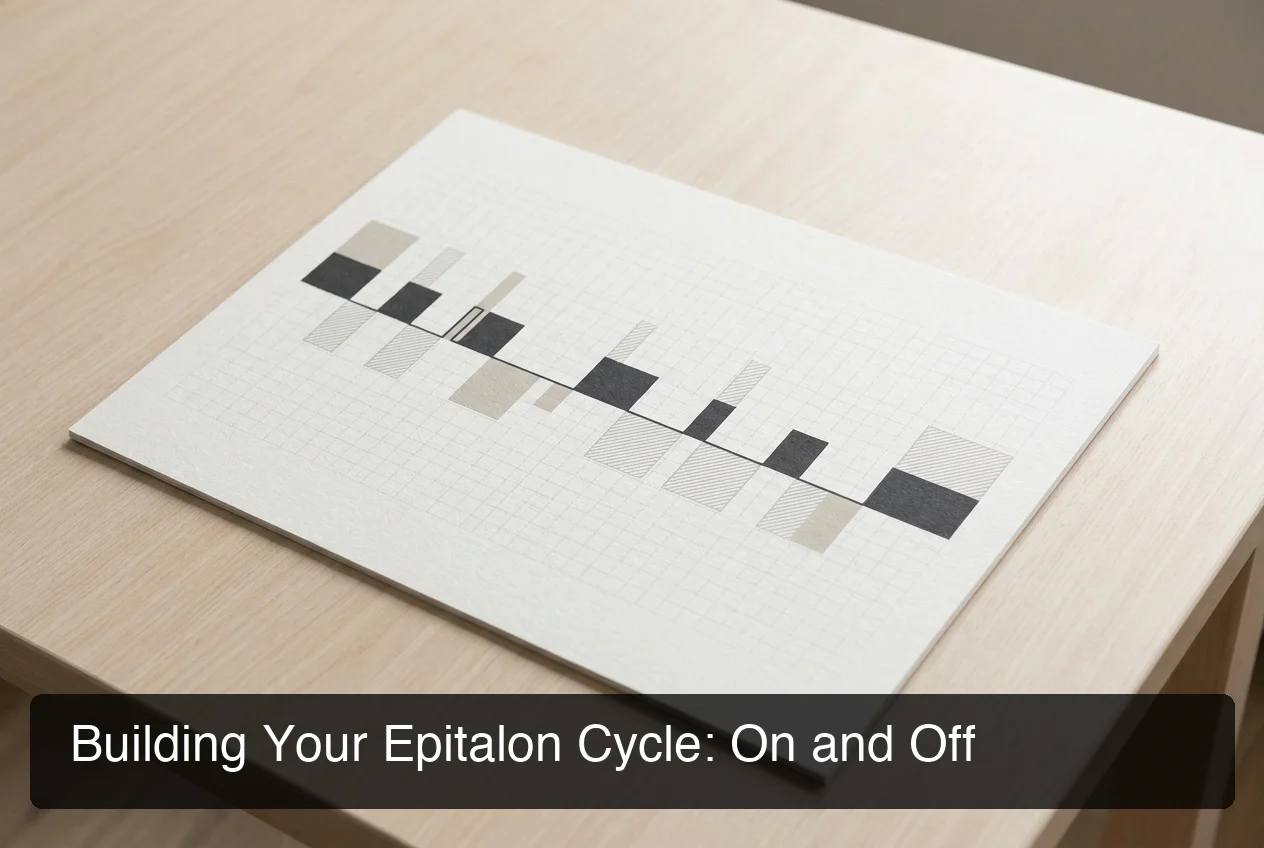 Cycle length and rest interval vary more than the daily dose does across published protocols.
The rest period isn't arbitrary padding — it's built into the underlying theory. If epitalon works by triggering a telomerase response, continuous daily use indefinitely doesn't obviously make that response stronger, and no published protocol recommends it.
Worth knowing: Repeat cycles are typically spaced 3–6 months apart for shorter protocols, or up to a year for the higher-dose 10-day approach — running back-to-back cycles without a rest window isn't supported by any protocol in the published literature.
Users running epitalon as part of a broader plan generally log the cycle dates alongside whatever else they're taking, since a missed rest window is easy to lose track of once you're juggling more than one peptide's schedule.
What Results Can You Realistically Expect From an Epitalon Peptide Protocol?
Users report subjective changes in energy, sleep quality, and skin appearance, typically emerging 8 to 12 weeks into consistent cycling rather than within the first cycle. Objective markers — IGF-1 levels and, where testing is available, telomerase activity — move on a similar or slower timeline and require baseline testing to interpret.
That timeline matters because it's the opposite of how most users evaluate a new protocol. A week or two of "I don't feel anything different" isn't a signal that epitalon isn't working — it's inside the expected window where nothing measurable should have changed yet.
Reality check: Subjective reports (energy, skin, sleep) tend to show up before any biomarker moves, and biomarker movement is the only way to separate a real cellular effect from a placebo response over a single cycle.
Without a before-and-after baseline, there's genuinely no way to know if a cycle did anything. That's less a philosophical point than a practical one — it's the difference between finishing a cycle with an impression and finishing one with data.
Is Epitalon Safe? What Does the Evidence Actually Show?
Epitalon has not been FDA-approved for any indication and remains a research compound with a limited human evidence base — primarily one controlled trial and a body of animal and in-vitro telomerase research. Reported side effects in existing literature are minimal, but the sample size behind that safety picture is small compared to approved pharmaceuticals.
This is where evidence-level labeling matters more than marketing language. Inside PeptideIQ's Peptide Library, every compound carries an honest evidence badge — FDA-Approved, Strong Animal Evidence, Early Human Trials, or Anecdotal Only — and epitalon sits under Early Human Trials, categorized specifically under longevity and telomere health rather than generic anti-aging.
The short version: "Early Human Trials" means real controlled research exists, but it's thin compared to an approved drug — worth knowing before you decide how much weight to put on any specific claimed benefit.
For a broader look at how evidence tiers work across the whole peptide category — not just epitalon — is peptide therapy safe walks through what "safe" actually means when a compound sits outside FDA approval.
How Does Epitalon Compare to GHK-Cu, MOTS-c, and Other Longevity Peptides?
Epitalon, GHK-Cu, and MOTS-c target different mechanisms within the same broad longevity goal — epitalon works through telomerase, GHK-Cu through collagen and tissue repair signaling, and MOTS-c through mitochondrial and metabolic pathways. They are commonly stacked together rather than used as substitutes for one another.
- Epitalon — telomerase activation, pineal-gland-derived mechanism, cycled dosing
- GHK-Cu — copper peptide, skin and tissue regeneration, commonly used topically or via injection
- MOTS-c — mitochondrial-derived peptide, metabolic and exercise-capacity research
- Thymosin Alpha 1 — immune modulation, often added for infection resistance and recovery support
Longevity-focused users rarely run just one of these. It's common to see epitalon run alongside GHK-Cu for a combined telomere-and-tissue approach, with Thymosin Alpha 1 layered in separately for immune support on a different cadence.
That layering is where a spreadsheet breaks down fast — three cycle lengths, three rest windows, one set of bloodwork to interpret against all of it.
How Should You Store Epitalon to Maintain Potency?
Reconstituted epitalon should be refrigerated at 2–8°C, where it typically maintains stability for up to 30 days. Freezing extends usable shelf life beyond that window but can reduce solubility in some batches upon thawing, so refrigeration is the more reliable default for an active cycle.
Lyophilized (unreconstituted) powder is considerably more stable and can be stored per the vendor's instructions until you're ready to mix it — the 30-day clock only starts once BAC water is added.
For the full breakdown on temperature ranges across different peptide classes, including what changes if you're traveling with a reconstituted vial, peptide storage temperature covers the reasoning behind each threshold.
How PeptideIQ Tracks Epitalon Protocols at Scale
 Bloodwork trends and cycle history sit on the same screen instead of a separate spreadsheet.
A 47-year-old running epitalon alongside GHK-Cu doesn't need a louder gym-app interface — she needs her cycle dates, her doses, and her IGF-1 trend in one place her doctor can actually read. That's the gap PeptideIQ's Peptide Library and Bloodwork Tracker are built to close.
Inside the library, Epitalon's entry shows its Early Human Trials evidence badge, a typical protocol range, and storage notes up front — then "Add This to My Protocol" drops it straight into the Cycle Planner with the dose and rest structure pre-filled. From there, the AI co-pilot has context on the actual cycle day, so a question like "is 8 weeks in too early to expect IGF-1 movement" gets an answer grounded in that specific protocol, not a generic peptide FAQ. It's a different approach than the spreadsheets and generic loggers most peptide trackers offer, built specifically around bloodwork instead of dose counts alone.
Download PeptideIQ on the App Store to get the Peptide Library and bloodwork trend tracking on your phone before your next cycle starts.
Frequently Asked Questions
How long should you take Epitalon peptide?
Most protocols run 10 to 30 consecutive days per cycle, followed by a rest period before repeating. Shorter 10-day cycles are typically repeated roughly every 6 months; longer cycles are often spaced further apart, closer to annually.
Where is the best place to inject Epitalon?
Subcutaneous injection into the abdomen is the most commonly reported site, similar to other peptide protocols, though some published dosing tables use intramuscular injection. Rotating the injection site reduces localized irritation over a multi-day cycle.
What can you stack Epitalon with?
GHK-Cu and MOTS-c are the most frequently reported pairings for longevity-focused users, targeting tissue repair and mitochondrial function respectively. Thymosin Alpha 1 is also commonly layered in on a separate schedule for immune support.
Does Epitalon cause tiredness or fatigue?
Existing user reports and the limited published literature don't identify fatigue as a common side effect, though individual responses vary. Any new or persistent fatigue during a cycle is worth logging against your dose and cross-checking with bloodwork rather than assuming it's the peptide.