
GLP-1 Tracking App: The Data Behind Results | PeptideIQ
GLP-1 Tracking App: The Adherence Data Behind Faster Results
Two people can start the same GLP-1 dose on the same day and land in completely different places eight weeks later — and the drug usually isn't the reason. Users who stay 95%+ consistent with a GLP-1 tracking app tend to hit visible results two to three weeks sooner than people who miss doses without noticing. Most never realize how inconsistent they've actually been until the data is sitting in front of them.
Key Takeaways
- A GLP-1 tracking app consolidates dose logging, side effect tracking, and progress monitoring in one place — critical since GLP-1 cycles run 8-12 weeks and missed data can hide real problems.
- Users who stay 95%+ adherent to their GLP-1 dosing schedule typically see results 2-3 weeks faster than those who skip doses.
- Automated injection site rotation guidance helps prevent lipohypertrophy (tissue thickening) that can reduce how well the medication absorbs.
- AI-powered apps compare your specific data — your dose, your cycle stage, your side effects — against what's normal week by week, instead of handing you generic advice.
- Multi-protocol tracking flags interactions when a GLP-1 is stacked with a recovery peptide, keeping dosing and injection timing safe.
What Is a GLP-1 Tracking App and Why Should You Use One?
A GLP-1 tracking app is a mobile tool that logs your semaglutide, tirzepatide, or other GLP-1 doses alongside side effects, weight, and adherence in one place. It replaces guesswork with a running record, so you can tell within days — not weeks — whether your protocol is actually working.
Most people start a GLP-1 cycle with a doctor's dosing schedule and nothing to check it against day to day. Some fall back on a spreadsheet or a note on their phone; others just try to remember.
A dedicated tracking app should handle:
- Dose amount, timing, and injection site
- Side effects tagged by severity, not a vague "I felt off"
- Weight or goal-metric trend, separated from daily noise
- Adherence rate, visible without doing the math yourself
By the numbers: FDA testing found up to 40% of online peptide products carried incorrect dosages or undeclared ingredients. Accurate self-tracking is one of the few checks a user actually controls once the vial is already in hand.
What Data Should Your GLP-1 Tracking App Collect?
The most useful GLP-1 tracking apps log five data types: dose amount and timing, injection site, side effects with severity, wellness metrics like energy and sleep, and weight or goal-metric trends. Miss any one of these and it gets harder to tell whether a plateau or a side effect is normal, or something worth flagging.
| Data Point | Why It Matters | How Often to Log |
|---|---|---|
| Dose + timing | Confirms adherence, flags missed doses within hours | Every dose |
| Injection site | Prevents lipohypertrophy from reusing the same spot | Every dose |
| Side effects (severity) | Separates expected onboarding effects from ones needing attention | Daily during titration |
| Wellness metrics | Surfaces patterns like low energy tied to poor sleep, not the drug | Daily or every check-in |
| Weight/goal metric | Shows the real trend instead of daily fluctuation noise | Weekly |
How Do GLP-1 Tracking Apps Help You Stay Consistent With Dosing?
GLP-1 tracking apps catch missed doses within hours instead of weeks by sending adherence reminders and flagging gaps in the log. The better ones pair that with a same-day nudge — "did you take it?" — so a missed Tuesday dose doesn't quietly turn into a missed week.
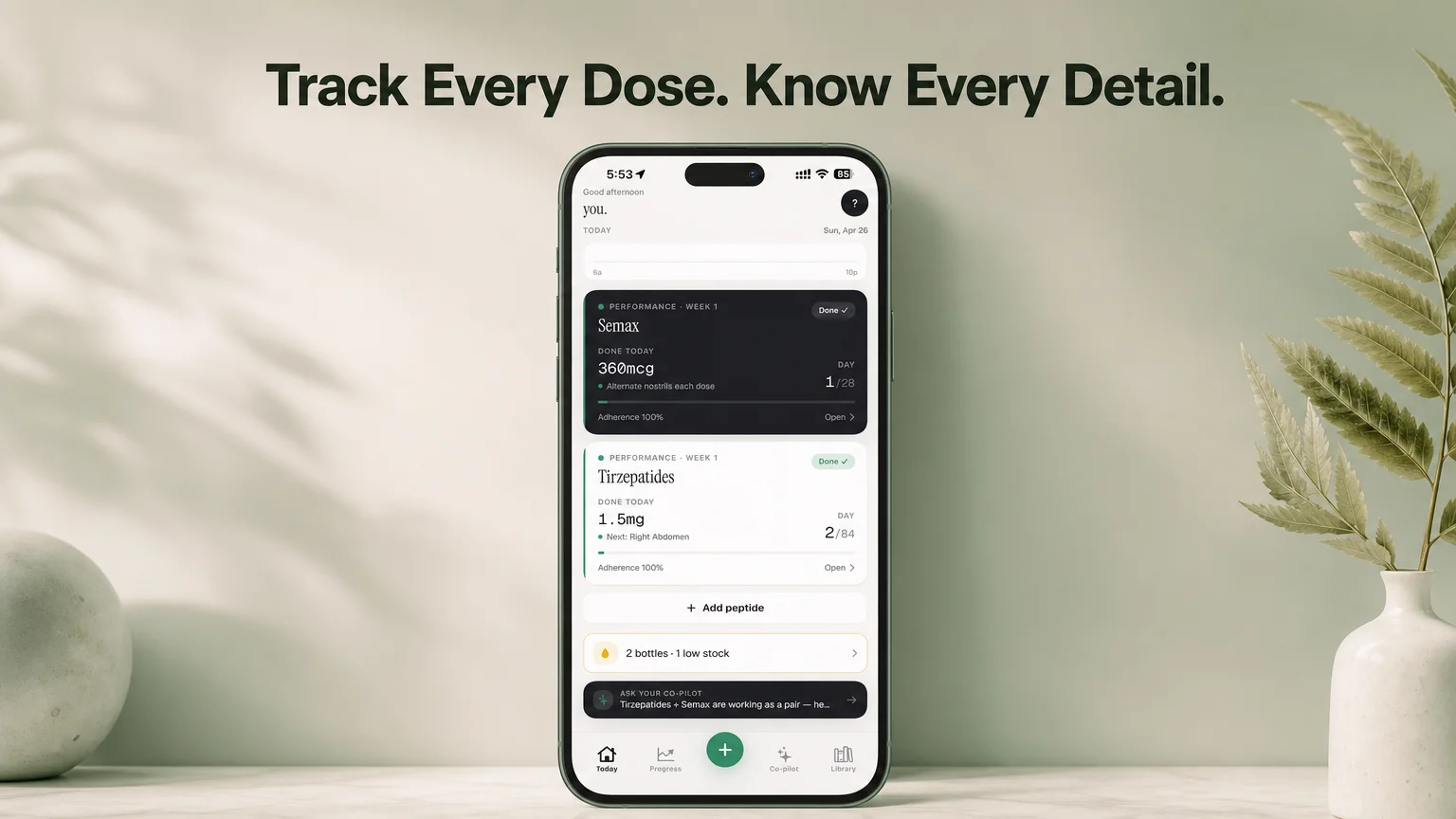
On PeptideIQ's Today screen, for example, two active protocols show up as separate cards: Semax at 360mcg on Day 1 of 28, and a GLP-1-class protocol dosed at 1.5mg on Day 2 of 84 — each marked "Adherence 100%" the moment the dose is logged. A low-stock notice ("2 bottles · 1 low stock") and an "Ask Your Co-Pilot" card sit just below, so refill timing and questions surface before they become a missed dose.
If a dose goes unlogged, the nudge arrives within a 6-hour window with three options: "I took it, just forgot to log," "I want to take it now," or "skip this dose" — with GLP-1-specific guidance behind that last choice, since missed-dose advice differs by peptide class. For anyone tracking peptides beyond GLP-1s, our broader guide to peptide tracking apps covers why consistent logging matters across every protocol type, not just weight-loss ones.
Worth knowing: Injection site rotation isn't cosmetic. Reusing the same spot within 48 hours is flagged in a well-designed app because repeated injections in one area can cause tissue thickening that slows absorption over time.
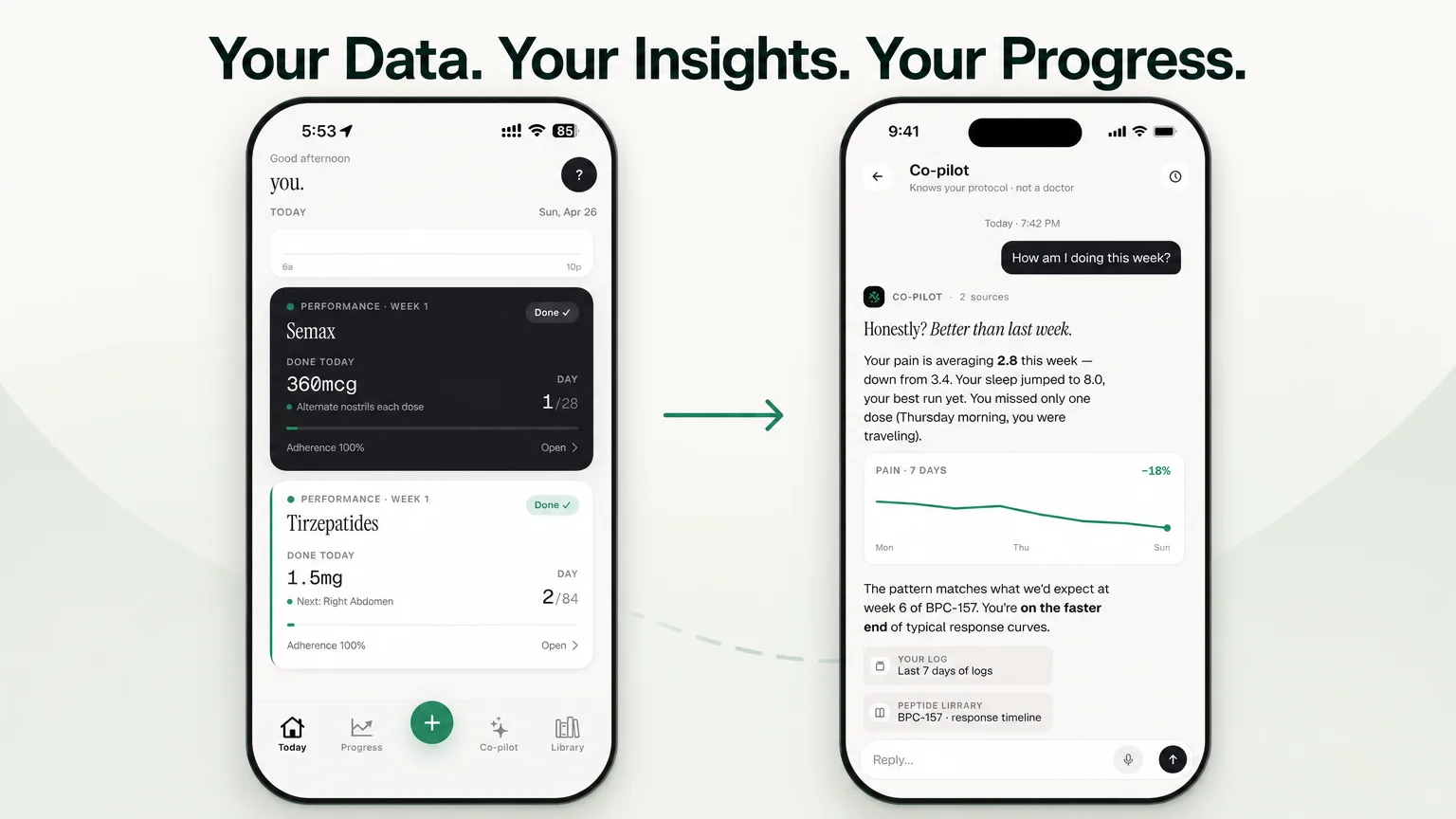 Daily logging on the left feeds a weekly AI insight on the right — the same flow behind every active protocol, GLP-1 included.
Why GLP-1 Users Need Smart Tracking (and How PeptideIQ Built It)
Logging a dose answers "did I do it." It doesn't answer "is it working." That second question is where most GLP-1 tracking apps stop and where an AI layer starts to matter.
Real-time insight, not just real-time logging, is what separates an AI co-pilot from a plain logbook. Every dose, side effect, and wellness slider you log feeds a weekly insight card — a plain-language summary generated from that week's actual data, not a canned template. Here's a real example the co-pilot generated for an active user: "Your pain is averaging 2.8 this week — down from 3.4. Your sleep jumped to 8.0, your best run yet. You missed only one dose (Thursday morning, you were traveling). The pattern matches what we'd expect at week 6 — you're on the faster end of typical response curves." The same engine that produced that summary watches a GLP-1 protocol just as closely, correlating adherence, side effects, and your goal metric instead of just confirming a dose happened.
That distinction — a system that thinks alongside you versus one that only records — is the gap most GLP-1 trackers on the App Store haven't closed yet.
How Does Multi-Protocol Tracking Keep a GLP-1 Stack Safe?
Multi-protocol tracking flags timing conflicts and logs each peptide separately when a GLP-1 is stacked with a second compound — a recovery peptide like BPC-157 run alongside tirzepatide for weight loss and joint support, for instance. Without it, users manage two dosing schedules from memory, which is exactly where missed doses and rotation mistakes happen.
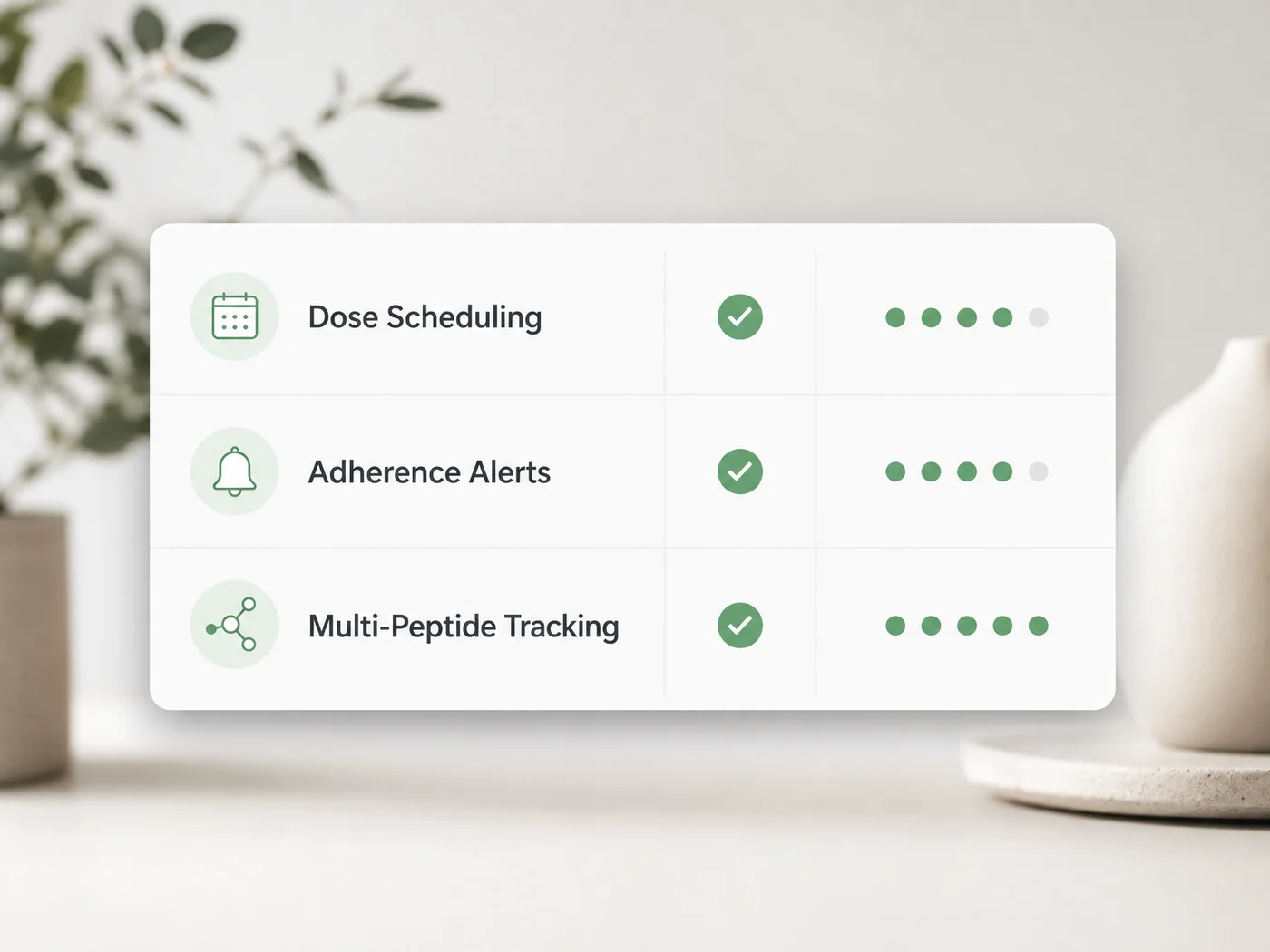 The three features that separate a multi-protocol GLP-1 dose tracker from a single-peptide logger.
Three things matter most in a multi-protocol view:
- Dose scheduling — separate reminders per peptide, color-coded so a GLP-1 shot and a second protocol never blur together
- Adherence alerts — a same-day nudge if either protocol's dose goes unlogged
- Multi-peptide tracking — one card per active peptide, so stacking two protocols never means losing track of either one
For a fuller breakdown of how an AI co-pilot handles stacked protocols specifically, see what PeptideIQ actually does under the hood.
Reality check: Stacking is common — GLP-1s for weight loss plus a recovery or longevity peptide isn't rare — but almost no dumb logger app was built to track two protocols at once without the user doing the cross-referencing manually.
Can a GLP-1 Tracking App Predict Your Results Timeline?
Not exactly — but AI-powered apps can compare your adherence and side-effect pattern against typical response curves to flag whether you're tracking ahead, on pace, or behind for your cycle stage. That's a meaningfully different signal than "the scale hasn't moved this week."
A half-life visualizer is one way this shows up in practice: it charts how much of your last dose is still active in your system, so a plateau at week 4 doesn't get mistaken for "not working" when levels simply haven't finished accumulating yet. We'll cover week-by-week weight-loss expectations on semaglutide specifically in a dedicated results-timeline guide.
How Do You Choose the Right GLP-1 Tracking App?
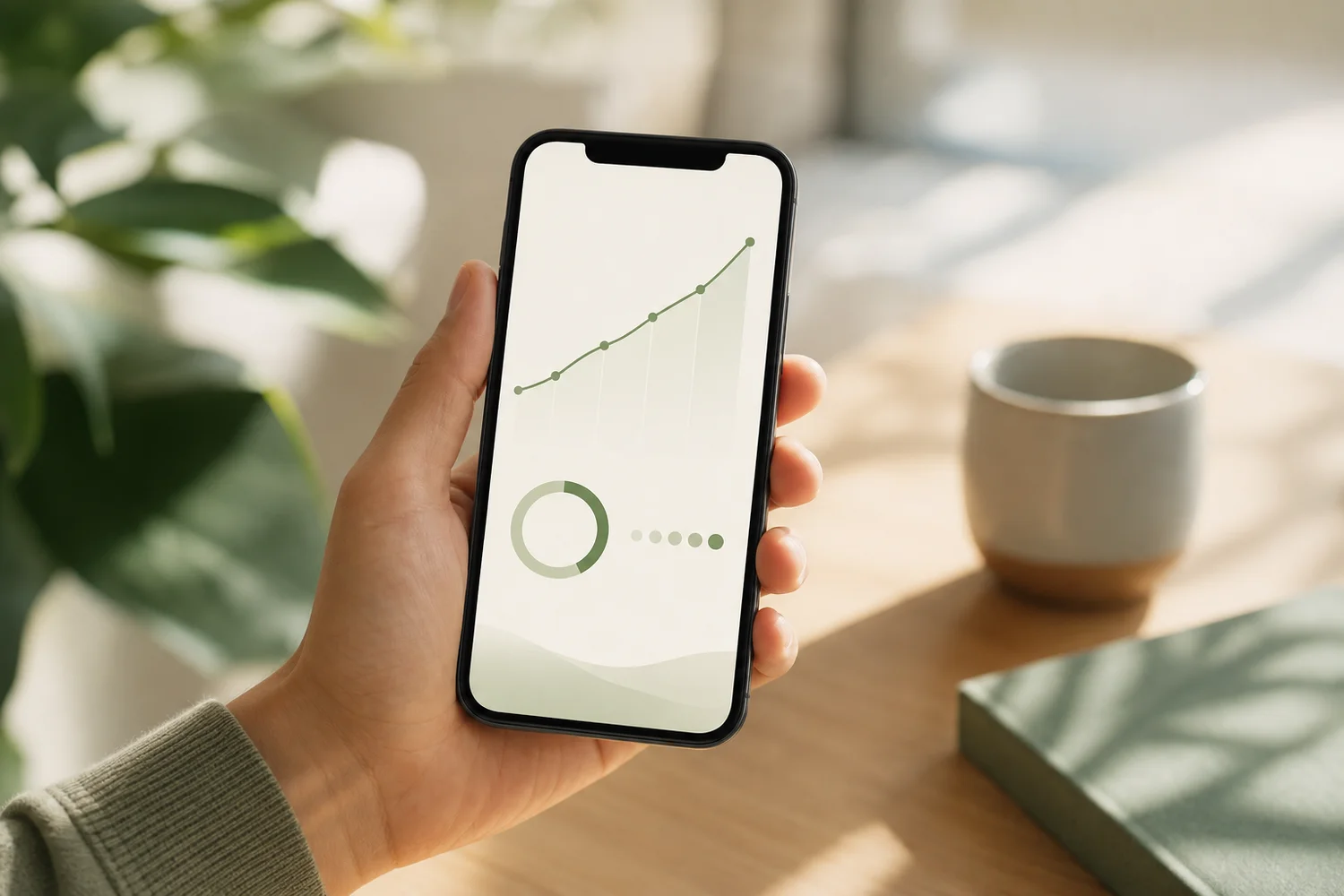 Weeks of consistent logging turn into a visible trend line — the payoff for sticking with the app past week one.
Run through this checklist before picking one:
- Does it log dose, site, side effects, and weight in under 60 seconds?
- Does it rotate injection sites automatically, or leave that to memory?
- Does it correlate side effects with hydration, sleep, or timing — or just record them?
- Does it support more than one active protocol if you're stacking?
- Can you export a doctor-friendly summary, or is the data locked in the app?
If you're specifically on semaglutide rather than tirzepatide, our Ozempic tracking app comparison narrows this list further to that use case. For a broader feature-by-feature breakdown, see what to look for in the best app to track peptide injections, or browse our best peptide tracker roundup for alternatives worth comparing. We'll also publish a dedicated semaglutide tracking app comparison and a step-by-step guide to tracking your GLP-1 progress soon for anyone who wants a narrower walkthrough.
Get Started with PeptideIQ
Guessing at your GLP-1 protocol for 8-12 weeks is a long time to fly blind. PeptideIQ turns every dose, side effect, and wellness check-in into a weekly AI insight that tells you where you actually stand — not just whether you logged today.
Join the PeptideIQ Waitlist — track your GLP-1 protocol with real-time adherence data and AI insights built for your specific cycle.
FAQ
How do I track my GLP-1 progress? Log your dose, injection site, side effects, and weight after every shot, then check weekly trends instead of daily fluctuations. A dedicated GLP-1 tracking app automates the logging and surfaces patterns — like a plateau or a hydration-linked headache — that are easy to miss by memory alone.
What is the best GLP-1 tracking app? The best GLP-1 tracking app depends on what you need: basic loggers like Shotsy or MeAgain cover doses and side effects, while AI-powered apps like PeptideIQ add personalized weekly insights, injection site rotation, and multi-protocol safety for anyone stacking a GLP-1 with another peptide.
Is there a free GLP-1 dose tracker? Several GLP-1 dose trackers offer free tiers covering basic dose and side-effect logging, with subscriptions for AI insights or advanced analytics. PeptideIQ follows the same model — core protocol tracking is free, with AI co-pilot features available on subscription once the app launches.
Can I use a GLP-1 tracking app for Ozempic specifically? Yes — Ozempic is a semaglutide brand, so any GLP-1 tracking app that logs semaglutide doses works for it. Look for one that recognizes your specific compound and titration schedule rather than treating every GLP-1 the same way.