
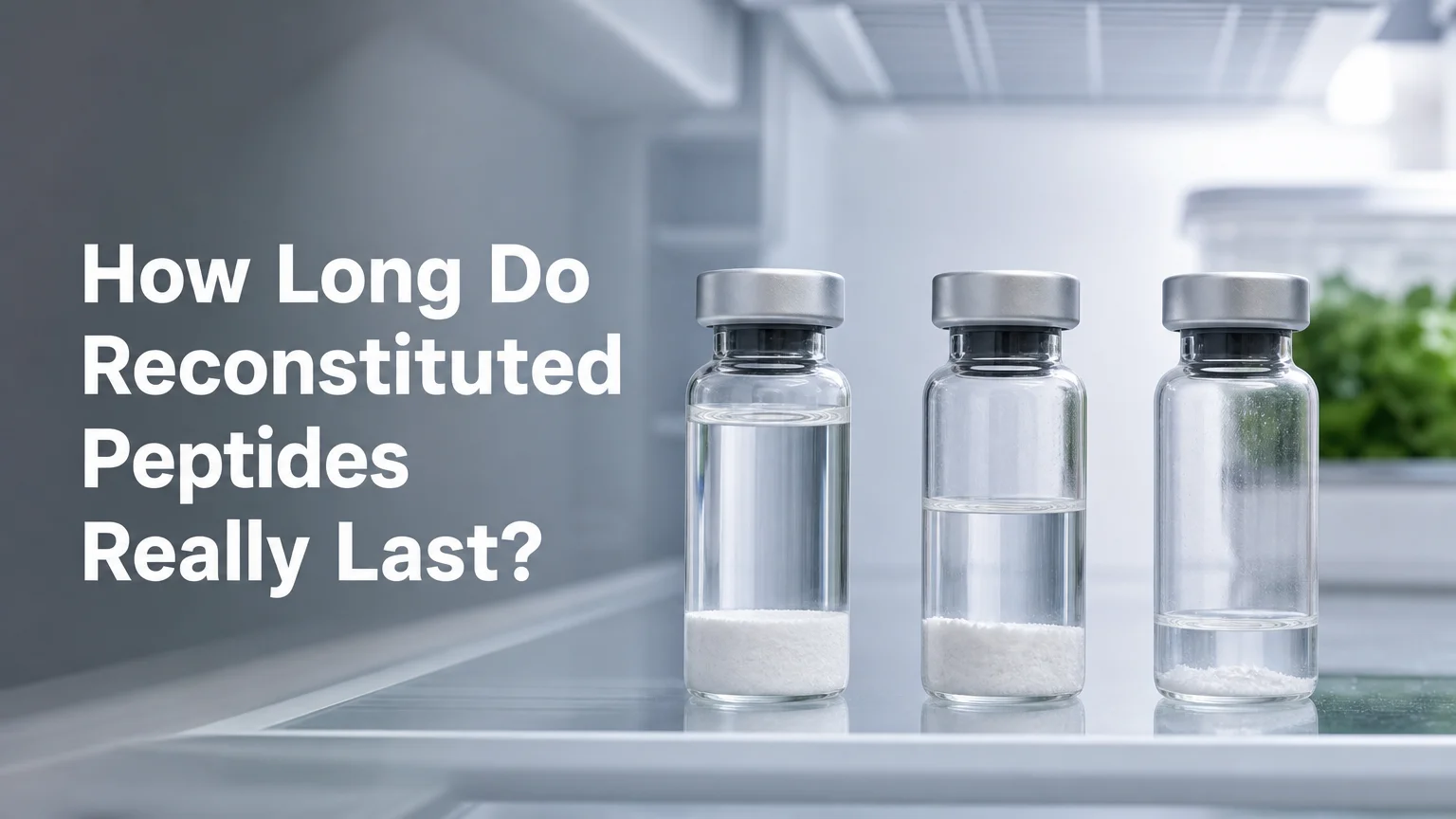
Reconstituted Peptide Shelf Life | PeptideIQ
Reconstituted Peptide Shelf Life: How Long Each Type Lasts
A reconstituted BPC-157 vial is finished at 30 days. A reconstituted semaglutide vial can still be usable at day 90. That's not a rounding error — it's a 3x spread between two peptides that might be sitting in the same fridge door, and reconstituted peptide shelf life depends entirely on which compound you're holding, not a generic "a few weeks" answer.
Key Takeaways
- Reconstituted peptides typically last 14–90 days refrigerated (2–8°C), depending on the type — BPC-157 runs about 30 days, GLP-1s (semaglutide, tirzepatide) up to 90 days, and Semax/Selank about 14 days.
- Room-temperature storage degrades peptides 3–5x faster than the fridge; a vial left on a counter overnight loses far more potency than one day of refrigerated aging would.
- Freezing extends shelf life for most peptides, but not all — Semax and Selank are freeze-sensitive and should stay refrigerated only.
- Cloudiness, discoloration, or an unusual odor mean the vial is done, regardless of what the calendar says.
- Inventory tools that auto-calculate expiry dates by peptide type remove the guesswork that causes most wasted vials.
What Is Reconstituted Peptide Shelf Life?
Reconstituted peptide shelf life ranges from about 14 to 90 days when refrigerated at 2–8°C, and the exact number depends on the peptide's structure — shorter-chain, less stable compounds like Semax degrade fastest, while larger, more robust peptides like semaglutide hold up far longer. There's no single universal answer, which is why "how long does a peptide last" needs a follow-up question: which peptide?
Here's how that plays out across three commonly used categories, based on documented stability windows for each:
| Peptide / Class | Shelf Life After Reconstitution (2–8°C) | Freeze-Safe? |
|---|---|---|
| BPC-157 | ~30 days | Generally kept refrigerated only |
| GLP-1s (semaglutide, tirzepatide) | Up to 90 days | Often freeze-tolerant — check the specific product label |
| Semax / Selank | ~14 days | No — freeze-sensitive, refrigerate only |
Before reconstitution, the picture is completely different. Freeze-dried powder has no water content to drive degradation, so an unopened peptide vial shelf life is usually measured in months, not days — many manufacturers list 12 to 24 months when the lyophilized powder is stored cold and away from light. The clock only starts running fast once bacteriostatic water goes in.
How Long Does a Reconstituted Peptide Last in the Fridge?
A reconstituted peptide typically lasts 14 to 90 days in the fridge at 2–8°C, with the peptide type determining exactly where in that range your vial falls. The fridge door is usually the worst spot — temperature swings every time the door opens — so the back of a middle shelf holds a steadier temperature. For the fuller category-by-category breakdown, our how long peptides last in the fridge guide is a useful companion read.
Two variables outside the peptide itself change this number:
- BAC water purity. Using bacteriostatic water for peptides that's contaminated or expired introduces bacteria that shorten stability regardless of temperature.
- Light exposure. UV light breaks down peptide bonds; vials left near a window or bright fridge light degrade faster than ones stored in the dark.
For a full breakdown of the temperature range itself, see our guide to peptide storage temperature and the baseline question of whether peptides need to be refrigerated at all before reconstitution.
Which Peptides Have the Longest Shelf Life After Reconstitution?
GLP-1 peptides — semaglutide and tirzepatide — hold the longest reconstituted shelf life of any commonly used category, often remaining stable for up to 90 days refrigerated. Their molecular structure is comparatively more resistant to hydrolysis than shorter research peptides, which is part of why they've made it through FDA-approved drug development in the first place.
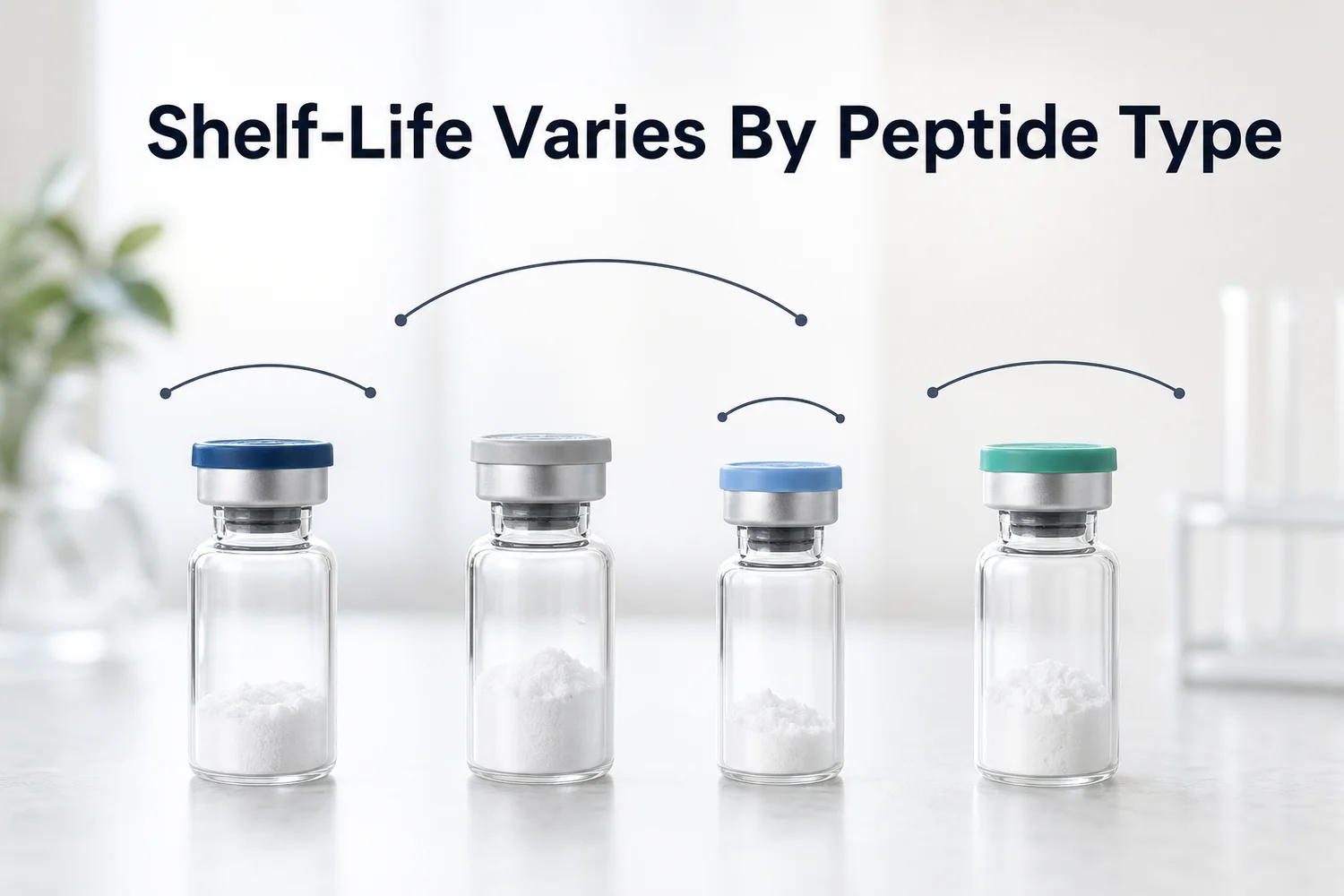 Semax and Selank sit at the short end of the timeline; GLP-1s sit at the long end — and BPC-157 lands in between.
BPC-157 sits in the middle of the pack at roughly 30 days. Semax and Selank sit at the short end, at around 14 days, which catches people off guard if they're used to thinking of "peptides" as one category with one rule.
Do Reconstituted Peptides Expire Faster at Room Temperature?
Yes — reconstituted peptides degrade roughly 3 to 5 times faster at room temperature than they do refrigerated at 2–8°C, which means a vial left out overnight can lose more stability than several days in the fridge would. Heat accelerates the same hydrolysis process that eventually breaks the peptide down anyway; it just compresses weeks into days.
By the numbers: A BPC-157 vial good for 30 days refrigerated could realistically be compromised within a week if it's routinely left at room temperature between doses.
This is where most wasted vials actually happen — not from age, but from a vial sitting on a counter during travel, at the gym, or overnight after a late dose. Consistent 2–8°C storage is the single biggest lever a user has over how long a vial stays usable.
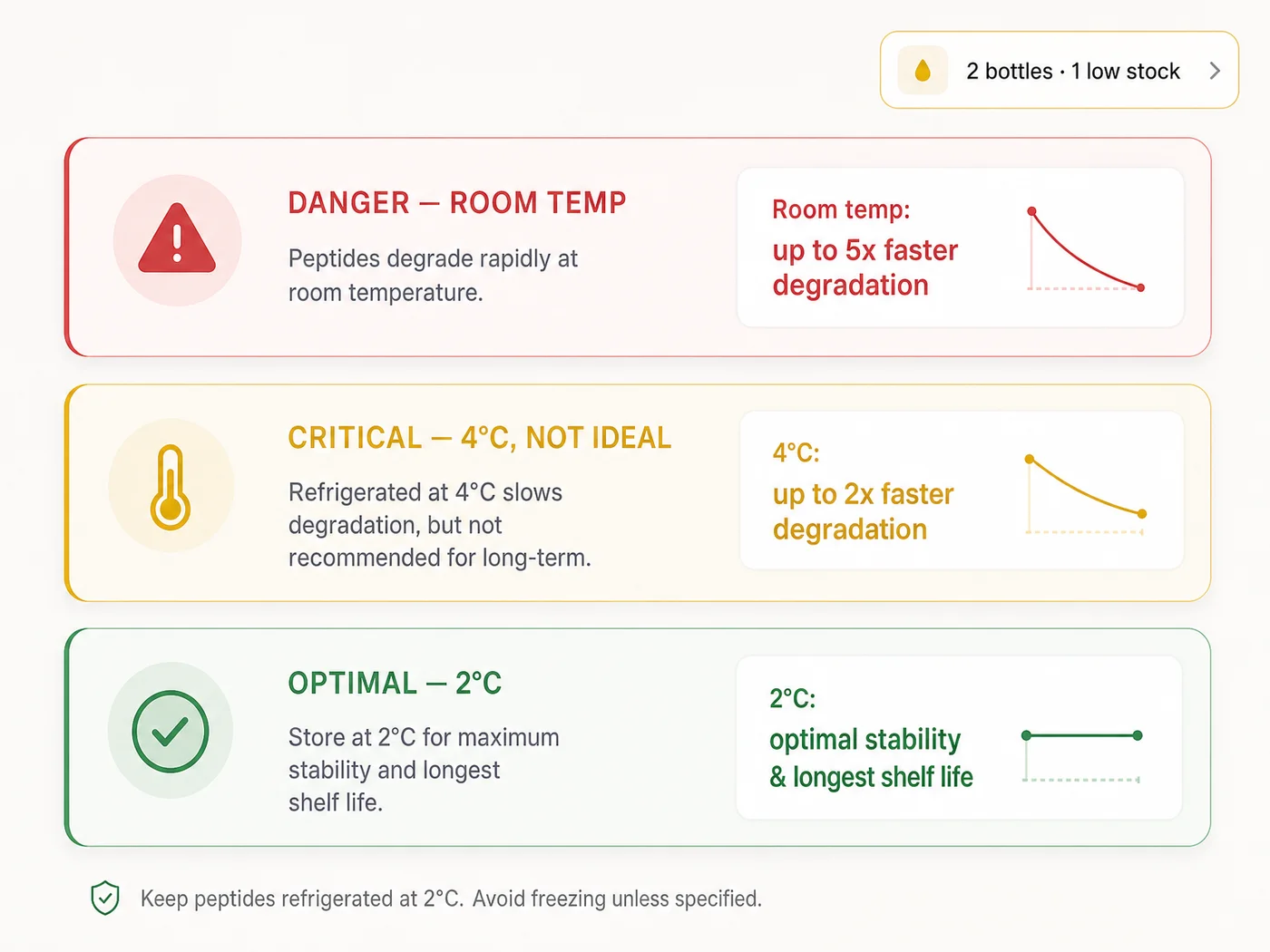 Room temperature, a warm car, and a mini-fridge that isn't quite cold enough all shorten the same countdown.
How PeptideIQ Tracks Expiry Dates Automatically
Knowing the number — 30 days, 90 days, 14 days — only helps if something is actually tracking it against the date you reconstituted. PeptideIQ's inventory manager logs the reconstitution date per vial, auto-calculates expiry by peptide type, and fires a warning five days before that date hits, the same way its "2 bottles · 1 low stock" alert flags when a vial is running low on doses. Neither notification requires the user to do math or remember a date written on a piece of tape.
Should You Freeze Reconstituted Peptides to Extend Shelf Life?
Freezing extends shelf life for most reconstituted peptides, but it isn't universal — some, including Semax and Selank, are freeze-sensitive and lose potency from ice crystal formation, so they should stay refrigerated only. Before freezing anything, check whether that specific peptide tolerates it; assuming yes across the board is how vials get ruined faster, not slower.
For peptides that do tolerate freezing, the tradeoff is convenience: a frozen vial isn't something you can draw a dose from on short notice, so most users only freeze a reserve vial they don't plan to touch for weeks. Our deeper look at freezing peptides covers which compounds handle it well and which don't.
How Can You Tell If a Reconstituted Peptide Has Gone Bad?
A reconstituted peptide has likely gone bad if the solution looks cloudy, has changed color, or smells off — any one of these signs means the vial should be discarded regardless of how many days it's been since reconstitution. The calendar is a guideline; the vial itself is the final word.
Watch for these specifically:
- Cloudiness or visible particles — properly reconstituted peptide solution should be clear.
- Discoloration — a yellow or brown tint that wasn't there on day one.
- Unusual odor — a sour or "off" smell beyond the neutral scent of BAC water.
- Reduced or absent effect — subtler, but worth noting if a normally noticeable peptide suddenly does nothing.
Poor-quality BAC water accelerates all four of these. If you're not sure your water is the issue, that's the first thing worth ruling out.
Why Does Reconstituted Peptide Shelf Life Vary by Type?
Reconstituted peptide shelf life varies by type because different amino acid sequences and molecular structures break down at different rates once water is introduced — some bonds are simply more vulnerable to hydrolysis than others. This is the same reason a loaf of bread and a jar of honey don't spoil on the same timeline even sitting on the same shelf.
Smaller, more delicate peptides like Semax tend to be more reactive and shorter-lived once reconstituted. Larger, more structurally resilient peptides — the GLP-1 class in particular — hold their shape longer against the same water exposure. Storage conditions can shift the number within a peptide's range, but they can't override the underlying chemistry.
Keeping Peptides Cold While Traveling
Travel is where shelf-life math meets the real world — a hotel mini-fridge that doesn't hold 2–8°C, a flight with no fridge access at all, or a full day between wake-up and check-in. An insulated travel case with gel ice packs, checked periodically, keeps a vial within its stability window even outside a normal fridge.
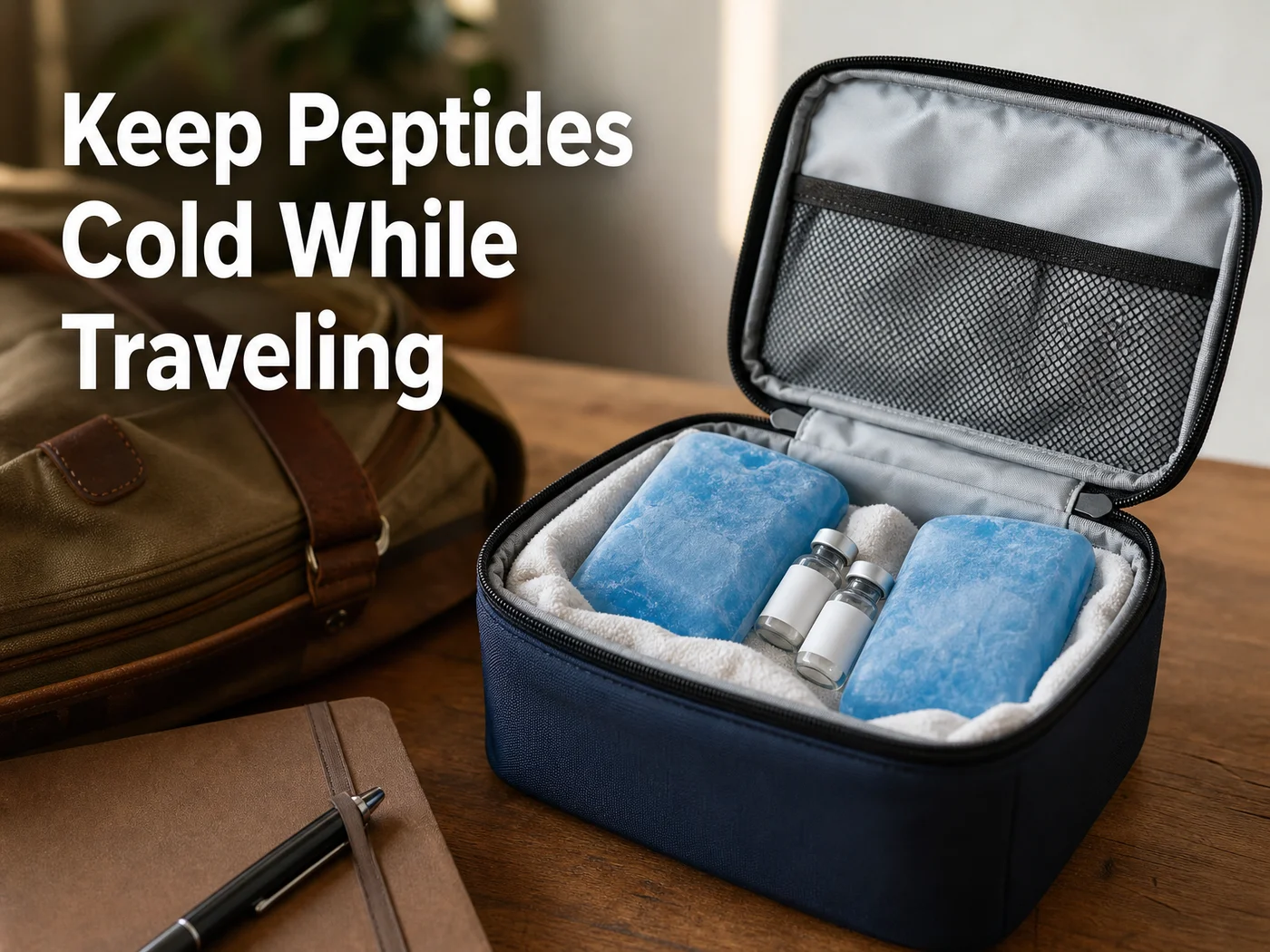 A soft-sided cooler with two ice packs holds 2–8°C for roughly 6–8 hours in most climates — enough for a travel day.
We'll cover the specifics of traveling with peptides — TSA rules, cooler duration limits, and what to do on multi-day trips — in a dedicated guide. For now, the short version: pack cold, check often, and don't assume a hotel mini-fridge is actually at fridge temperature.
Get Started with PeptideIQ
Tracking reconstitution dates across multiple vials by memory is exactly the kind of math that leads to a wasted vial or a degraded dose. PeptideIQ's protocol tracker calculates expiry automatically per peptide type and flags it before you'd ever have to guess.
FAQ
How long does a reconstituted peptide last unrefrigerated?
Most reconstituted peptides degrade significantly within days at room temperature — roughly 3 to 5 times faster than refrigerated storage. A peptide good for 30 days in the fridge could lose meaningful stability within a week if left unrefrigerated consistently. Cold storage isn't optional; it's the primary variable under a user's control.
Does reconstituted peptide stability differ between BPC-157 and semaglutide?
Yes, significantly. Reconstituted BPC-157 typically holds stability for around 30 days refrigerated, while reconstituted semaglutide can remain usable for up to 90 days under the same 2–8°C conditions. The difference comes down to molecular structure, not storage technique.
What is a typical unopened peptide vial shelf life?
An unopened, freeze-dried peptide vial is far more stable than a reconstituted one, often listed at 12 to 24 months when kept cold and out of light. That window collapses to weeks once bacteriostatic water is added, which is why reconstitution date — not purchase date — is what actually matters.
Can you extend a peptide reconstitution expiry date by freezing it?
For many peptides, yes — freezing after reconstitution can extend usable life beyond the standard refrigerated window. Exceptions exist: Semax and Selank are freeze-sensitive and should stay refrigerated only, since ice crystal formation degrades them faster than normal fridge storage would.
What should I do if my peptide vial is past its shelf life?
Discard it. Using a peptide past its stability window risks reduced potency or, in cases with visible cloudiness or odor, possible contamination. There's no reliable way to "test" a vial's remaining potency at home, so the safer move is always to treat an expired or visually off vial as unusable.