

Peptide Dosage Cheat Sheet: 10 Popular Peptides
Peptide Dosage Cheat Sheet: Standard Ranges for 10 Popular Peptides
You've got a vial in hand and need fast dosing guidance — this peptide dosage cheat sheet gives you the answer in under 60 seconds, no math required.
Key Takeaways
- A peptide dosage cheat sheet provides quick reference ranges for BPC-157, TB-500, GLP-1, GHK-Cu, CJC-1295, Ipamorelin, Sermorelin, and Epithalon without requiring complex calculations.
- Most peptides fall within 100–500 mcg dosing ranges, but protocol-specific adjustment is critical for safety and efficacy.
- Body weight, individual tolerance, and injection frequency all affect optimal dosing — one-size-fits-all guidance leads to under- or overdosing.
- Common beginner mistakes include ignoring reconstitution ratios, forgetting to adjust for body weight, and not tracking cumulative dose over time.
- A bookmark-friendly dosing reference saves time, reduces injection errors, and keeps you on safe, established protocols.
Contents
- What is a peptide dosage cheat sheet?
- How do you read and use a peptide dosage cheat sheet?
- What are the standard dosing ranges for popular peptides?
- How do peptide dosages compare across different injection protocols?
- Can you adjust peptide dosages based on body weight?
- What should beginners know about peptide dosing safety?
- What are common dosing mistakes with peptides?
- Why use a dosing reference guide instead of just asking online?
- Get Started with PeptideIQ
- Frequently Asked Questions
 Your quick-reference guide to standard peptide dosing ranges — accurate to 2026 protocols.
What is a peptide dosage cheat sheet?
A peptide dosage cheat sheet is a quick-reference table listing standard dosing ranges, injection frequency, and cycle lengths for commonly used peptides. It's designed for users who already know which peptide they're taking and need a fast sanity check before drawing their dose — no complex math required.
Think of it as the label that most peptide vials don't come with. Unlike a full peptide dosing calculator, a cheat sheet skips the derivations and gives you pre-calculated protocol ranges based on thousands of documented user reports and emerging 2026 research.
This reference covers 10 of the most popular peptides — from healing compounds like BPC-157 and TB-500 to GLP-1s like semaglutide and recovery peptides like CJC-1295 and Ipamorelin.
Key insight: This is a reference tool, not a prescription. Use it to sanity-check your dose — not to design a protocol from scratch for the first time.
How do you read and use a peptide dosage cheat sheet?
Each row in the cheat sheet covers one peptide. Columns show: standard dose range (in mcg or mg), injection frequency, typical cycle length, and administration route. The "standard dose" column reflects the most commonly used starting dose — not a ceiling or a target for day one.
Understanding the column headers
Here's what each data point means in practice:
- Dose range: The low end is the conservative starting dose; the high end is the upper range used in active, established protocols. Do not jump to the high end immediately.
- Frequency: How often you inject. Daily = every day; EOD = every other day; 2×/week = twice per week.
- Cycle length: How long most users run the protocol before a planned rest period.
- Route: SubQ = subcutaneous (into the fat layer under skin); IM = intramuscular (into muscle). Most peptides use SubQ.
For precise syringe unit calculations — converting your mcg dose to insulin syringe units based on your vial concentration — use the peptide reconstitution calculator after you've confirmed your dose from this reference.
Bottom line: This cheat sheet tells you what to dose. The reconstitution calculator tells you how to draw it accurately.
 Standard dosing ranges at a glance — covering the 10 most commonly used peptides in 2026.
What are the standard dosing ranges for popular peptides?
Standard peptide dosages range from 100 mcg (conservative starter doses for GH-stimulating peptides) to 2.4 mg/week (Semaglutide therapeutic ceiling). The table below covers 10 widely used peptides with their typical dose ranges, frequency, cycle length, and injection route — calibrated to 2026 established protocols.
| Peptide | Standard Dose Range | Frequency | Cycle Length | Route |
|---|---|---|---|---|
| BPC-157 | 250–500 mcg/day | Once or twice daily | 4–12 weeks | SubQ or IM |
| TB-500 | 2–2.5 mg loading; 200–300 mcg maintenance | 2×/week loading → weekly | 4–6 weeks loading; ongoing maintenance | SubQ |
| GHK-Cu | 200–500 mcg/day | Daily | 4–8 weeks | SubQ |
| Semaglutide (GLP-1) | 0.25 mg/week (start) → up to 2.4 mg/week | Once weekly | Ongoing titration | SubQ |
| CJC-1295 | 100–300 mcg/dose | 2–3×/week | 8–12 weeks | SubQ (fasted) |
| Ipamorelin | 200–300 mcg/dose | 2–3×/day | 8–12 weeks | SubQ (fasted) |
| Sermorelin | 100–500 mcg | Once daily at bedtime | 3–6 months | SubQ |
| Epithalon | 5–10 mg | Daily for 10–20 days | 1–2 courses/year | SubQ or IM |
| MOTS-c | 10–15 mg/dose | 2–3×/week | 4–8 weeks | SubQ or IM |
| Tirzepatide (GLP-1/GIP) | 2.5 mg/week (start) → up to 15 mg/week | Once weekly | Ongoing titration | SubQ |
Notes on semaglutide and GLP-1 dosing
GLP-1 peptides like semaglutide and tirzepatide follow a titration schedule — you start well below the therapeutic dose and increase slowly to minimize nausea and GI side effects. Starting at the maximum dose is one of the most common and avoidable errors among new GLP-1 users.
Notes on BPC-157 dosing
BPC-157 is one of the most-researched peptides for tissue repair. The 250 mcg twice-daily protocol is consistent across the majority of established user reports. Beginners can start at 250 mcg once daily and assess tolerance before splitting into two daily injections.
By the numbers: Most peptides in this cheat sheet have an active dose window under 500 mcg/day. GLP-1s are the outlier — dosed in milligrams on a weekly titration schedule, they represent the highest-volume peptides in common 2026 use.
How do peptide dosages compare across different injection protocols?
Injection frequency is as important as dose size. Peptides with short half-lives (Ipamorelin: ~2 hours) require multiple daily injections to maintain active blood levels. Peptides with long half-lives (TB-500: ~7 days; Semaglutide: ~7 days) can be dosed once weekly without meaningful level drop.
SubQ vs. IM and fasted timing
Most peptides default to subcutaneous (SubQ) injection — into the fat layer under the skin, typically the abdomen or thigh. Intramuscular injection is sometimes used for BPC-157 near a specific injury site, but SubQ remains the safer default for self-injection beginners.
CJC-1295, Ipamorelin, Sermorelin, and Tesamorelin must be injected fasted — typically 2+ hours after eating. Elevated insulin blunts growth hormone release, significantly reducing efficacy. For full injection technique guidance see the subcutaneous injection guide.
Can you adjust peptide dosages based on body weight?
Yes — body weight affects optimal peptide dosing, particularly for GH-secretagogues (CJC-1295, Ipamorelin, Sermorelin) and systemic peptides like TB-500. A lighter user may see strong effects at the low end of the range; a larger user may need the mid-to-high end to achieve equivalent peptide exposure per kilogram of tissue.
 Dose adjustment tiers by body weight — a starting framework. Always titrate up based on response, not just weight.
Body weight dose adjustment tiers
Use these tiers as your starting framework. Adjust based on observed response, not weight alone.
| Body Weight | Dose Tier | Adjustment |
|---|---|---|
| Under 65 kg (143 lbs) | Low | Start at or below the low end of the standard range |
| 65–90 kg (143–198 lbs) | Standard | Use the standard dose range as written above |
| 90–115 kg (198–253 lbs) | Mid-high | Consider mid-to-high end after 2 weeks at standard dose |
| Over 115 kg (253+ lbs) | High | May require upper end of range; always titrate slowly |
When body weight matters most
For GLP-1 peptides, titration speed matters more than body weight — the 0.25 mg/week starting dose applies regardless of size. For healing peptides like BPC-157 and TB-500, users in the 65–100 kg range typically find standard doses effective; body weight adjustment becomes relevant only when there's no response after 3–4 weeks.
Key insight: If you see no effects after 3–4 weeks at the standard dose, body weight is one factor to reassess. The other common cause is incorrect reconstitution — verify your peptide dose calculator math before increasing the dose.
What should beginners know about peptide dosing safety?
Peptide dosing safety begins with three rules: start at the lowest effective dose, run one peptide at a time until you understand your personal response, and verify your reconstitution math before every injection. Most adverse events in peptide users trace to dose errors, not the compounds themselves.
If you're new to peptides, the peptide guide for beginners covers the fundamentals before you use this table. For safety risk profiles by peptide class, see are peptides safe.
Safe dosing framework for first-time users
- Verify reconstitution math first. If your BAC water calculation is wrong, every dose you pull from that vial is wrong. The peptide reconstitution calculator eliminates this error.
- Start at the low end. Spend at least 7 days at the bottom of the dose range before considering any increase.
- Log every injection. Side effects, energy, sleep quality — you cannot identify what's working or causing a problem without consistent data.
- One peptide at a time. Running a stack on day one makes it impossible to isolate what's causing any response, positive or negative.
- Know your peptide's half-life. A missed dose of Ipamorelin has minimal lasting impact. A missed semaglutide dose on a titration schedule may require protocol adjustment.
Bottom line: The most dangerous element of peptide dosing is overconfidence. Starting conservatively and logging everything costs nothing — and protects you from the errors that cause real problems.
What are common dosing mistakes with peptides?
The most common peptide dosing mistakes are: starting too high, skipping reconstitution math, not tracking cumulative dose across a cycle, and confusing mg with mcg. Each error leads to under-dosing (wasted protocol) or over-dosing (increased side effect risk and potential safety concerns).
The 6 most common mistakes
1. Skipping reconstitution math. If you add 2 mL of BAC water to a 5 mg vial and target 250 mcg, you must draw exactly 0.1 mL (10 units on a U-100 syringe). Many beginners skip this and guess — producing wildly inconsistent doses. The peptide reconstitution calculator takes 30 seconds and eliminates this entirely.
2. Ignoring the titration principle. For semaglutide and tirzepatide, starting at the therapeutic dose instead of 0.25 mg/week is one of the primary causes of severe nausea and early discontinuation. The titration schedule is not optional.
3. Redosing too soon. TB-500 and semaglutide have week-long half-lives. Doubling up "because nothing happened yet" creates accumulation and amplifies side effects without proportional benefit.
4. Confusing mg and mcg. BPC-157 is dosed in mcg (250–500 mcg). Semaglutide is dosed in mg (0.25–2.4 mg). Confusing these units creates a 1,000× error. Always confirm units before drawing.
5. Not accounting for body weight. A 90 kg user and a 65 kg user will have meaningfully different plasma concentrations at the same absolute dose. Use the weight tier table above as a calibration starting point.
6. Ignoring cycle length limits. Running BPC-157 for 16 continuous weeks doesn't accelerate healing — it increases tolerance and reduces signal. Respect the cycle lengths in the cheat sheet table, then take the recommended rest period.
By the numbers: FDA testing found up to 40% of online peptide products contained incorrect dosages or undeclared ingredients — meaning even a perfectly calculated dose can be wrong if sourced poorly. Accurate dosing starts with verifying your source, then verifying your math.
Why use a dosing reference guide instead of just asking online?
Online forums and social media give conflicting dosing guidance because users share anecdotal protocols without context — body weight, tolerance level, specific goal, or peptide purity. A structured reference built from documented protocols gives you a consistent, traceable framework that individual forum posts cannot provide.
Three specific problems with forum-sourced dosing:
1. No context for individual variation. A protocol that worked for a 95 kg athlete may not suit a 65 kg user beginning injury recovery.
2. Outdated norms. The February 2026 RFK Jr. policy change brought 14 previously restricted peptides back to legal compounding. Guidance from 2023 Reddit threads may not reflect current protocols.
3. No accountability. A reference guide can be verified and updated. A forum post cannot — you have no way to know the context behind the advice.
If you're still evaluating whether peptides are right for you, the what is a peptide primer covers mechanisms, evidence levels, and realistic expectations from the ground up.
Get Started with PeptideIQ
Knowing the right dose is step one. Accurately tracking every injection, every cycle phase, and how your body is responding — with AI that knows your specific data — is what separates a guesswork protocol from one that actually shows you results.
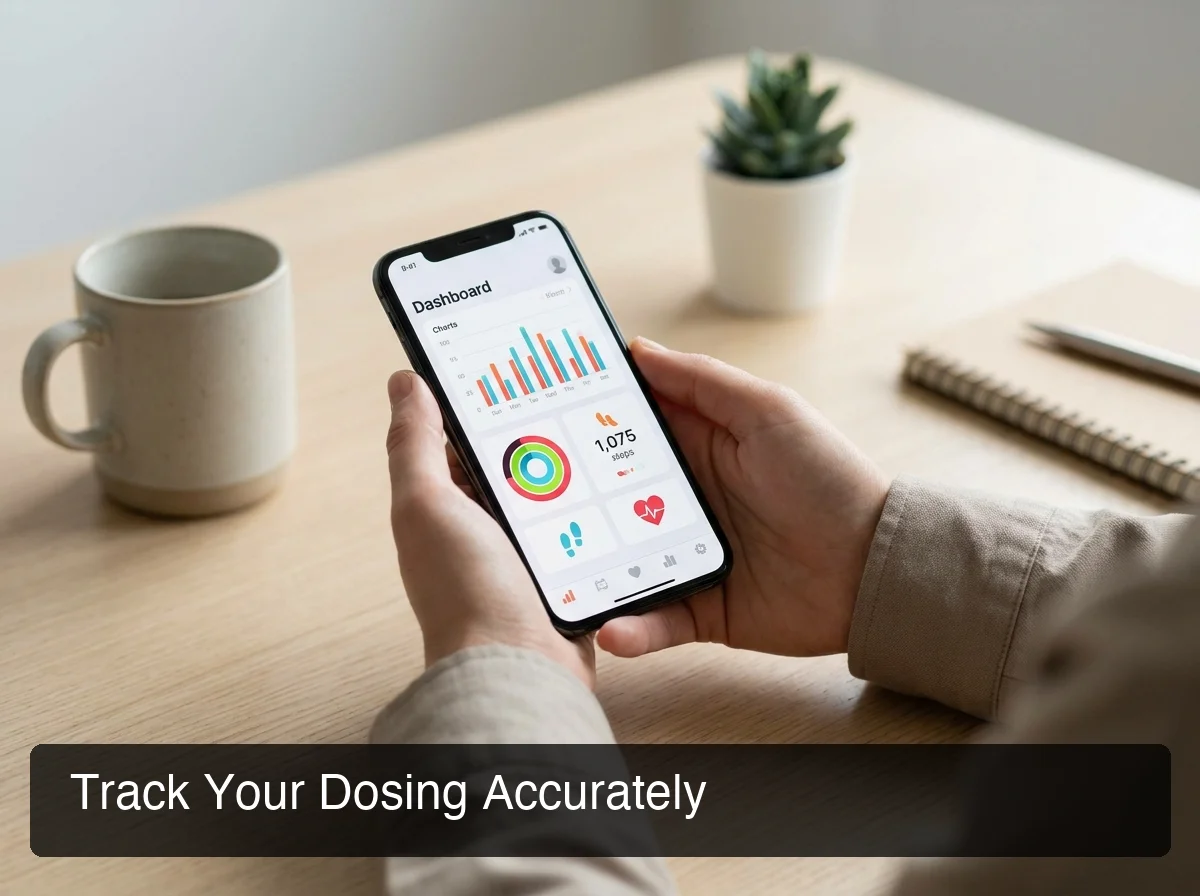 PeptideIQ tracks every dose, flags missed injections, and surfaces AI insights specific to your protocol and cycle day — not generic advice.
PeptideIQ is the AI-powered guided system for peptide users — protocol tracking, built-in reconstitution calculators, and a personalized AI co-pilot initialized with your specific cycle data. Available now on the App Store.
Download PeptideIQ on the App Store
Frequently Asked Questions
What is the standard dose for BPC-157?
The standard BPC-157 dose is 250–500 mcg per day, typically split into one or two subcutaneous or intramuscular injections. Most users start at 250 mcg once daily for the first week before moving to twice daily. Cycle length is 4–12 weeks with a rest period before repeating.
How do I convert mcg to syringe units for my peptide dose?
To convert mcg to insulin syringe units, divide your target dose (mcg) by your vial concentration (mcg/mL), then multiply by 100. For example: a 250 mcg dose from a 2.5 mg/mL (2,500 mcg/mL) concentration = 10 units on a U-100 syringe. Use the peptide reconstitution calculator to automate this calculation.
Can I run BPC-157 and TB-500 at the same time?
Yes — BPC-157 and TB-500 are among the most commonly combined healing peptides. They work via different mechanisms (BPC-157 promotes angiogenesis and GI repair; TB-500 promotes systemic cell migration and regeneration) and are typically run simultaneously at standard doses of each. No significant interaction concerns are documented at normal dosing ranges.
What is the starting dose for semaglutide?
The standard starting dose for semaglutide is 0.25 mg once weekly for the first 4 weeks. This sub-therapeutic starting dose minimizes GI side effects while building tolerance. Doses then increase in 0.25–0.5 mg increments every 4 weeks, up to a maximum of 2.4 mg/week for weight management indications.
Do peptide dosages need to be adjusted for body weight?
Yes, particularly for GH-secretagogues like CJC-1295, Ipamorelin, and Sermorelin, where plasma concentration scales with body size. A practical framework: users under 65 kg start at the low end of ranges; 65–90 kg users follow standard ranges; users above 90 kg may approach the mid-to-high end after 2 weeks at standard dosing.
How do I know if I'm dosing my peptide correctly?
Three signals confirm correct dosing: expected effects appear within the typical onset window (2–4 weeks for most peptides), side effects remain mild and transient, and your reconstitution math verifies cleanly. Log every injection and track wellness metrics consistently — 3–4 weeks of data reveals whether your protocol is calibrated correctly for your body.
Why do some peptides require fasted injections?
Growth hormone secretagogues like Ipamorelin, CJC-1295, and Sermorelin require fasted injection because elevated insulin blunts growth hormone release. Injecting within 2 hours of a meal significantly reduces efficacy. A 2–3 hour fast before injection is the standard protocol for all GHRH and GHRP-class compounds in this cheat sheet.